

HowGood–Sweep partnership brings product-level emissions data into sustainability reporting
Ingredion deepens collaboration with HowGood to advance circular ingredient initiatives

Key takeaways
- The HowGood–Sweep partnership enables food and agriculture companies to integrate product- and ingredient-level carbon emissions data directly into enterprise sustainability reporting.
- Sweep CEO Rachel Delacour and HowGood CEO Alexander Gillet emphasize that the collaboration provides a single, audit-ready system that replaces generic averages with granular, actionable data.
- Ingredion leverages HowGood’s data to quantify environmental impacts, advance circular ingredient initiatives, such as citrus fiber, and enhance broader corporate sustainability strategies.

Food and agriculture companies can now gain unprecedented access to product-level carbon data through a strengthened partnership between HowGood and Sweep. The collaboration allows companies to bring ingredient- and product-level emissions data directly into enterprise sustainability platforms, transforming the way organizations measure, manage, and report on environmental impact.
HowGood, a global leader in product carbon footprint automation, has integrated its extensive database of over 12 million product carbon footprints into Sweep, an AI-powered sustainability intelligence platform. This integration enables companies to use precise emissions data for scope 3 carbon accounting, supplier engagement, and regulatory reporting, all without manual data collection.
“Food companies sit on some of the most complex sustainability data in any industry, and too often it stays locked in spreadsheets and disconnected systems, too fragmented to report on with confidence,” says Sweep’s CEO and co-founder, Rachel Delacour.

“By bringing HowGood’s world-class product-level data directly into Sweep, we’re giving food and agriculture companies what they’ve been missing: a single, audit-ready foundation they can use across every framework they report to, and every decision they need to make.”
From pilot to strategic capability
The HowGood–Sweep partnership initially began as a pilot focused on product-level screening but has evolved into a strategic capability that empowers companies to make data-driven sustainability decisions. The collaboration now enables organizations to assess emissions at the ingredient and product level and incorporate them directly into enterprise sustainability systems.
Key capabilities of the integration include:
- Product-level carbon footprint assessments
- Alignment of new product development with UN Sustainable Development Goals
- Integration of product data directly into customer sustainability systems
- Use of farm-level data through HowGood’s FieldScope tool to refine scope 3 calculations
These tools allow companies to track emissions from the very origin of ingredients through to finished products, offering a full, transparent view of their environmental footprint.
Driving supplier engagement and product-level action
One of the most significant benefits of the partnership is its ability to enhance collaboration across the supply chain. Access to product-level emissions data enables companies to engage suppliers more effectively, identify high-impact areas for emissions reduction, and develop reformulation strategies that reduce environmental impact.
HowGood’s CEO, Alexander Gillet, explains that “generic industry averages have long been the weakest link in corporate carbon accounting for food companies, introducing uncertainty that keeps companies from being able to bridge the gap from reporting to reduction.”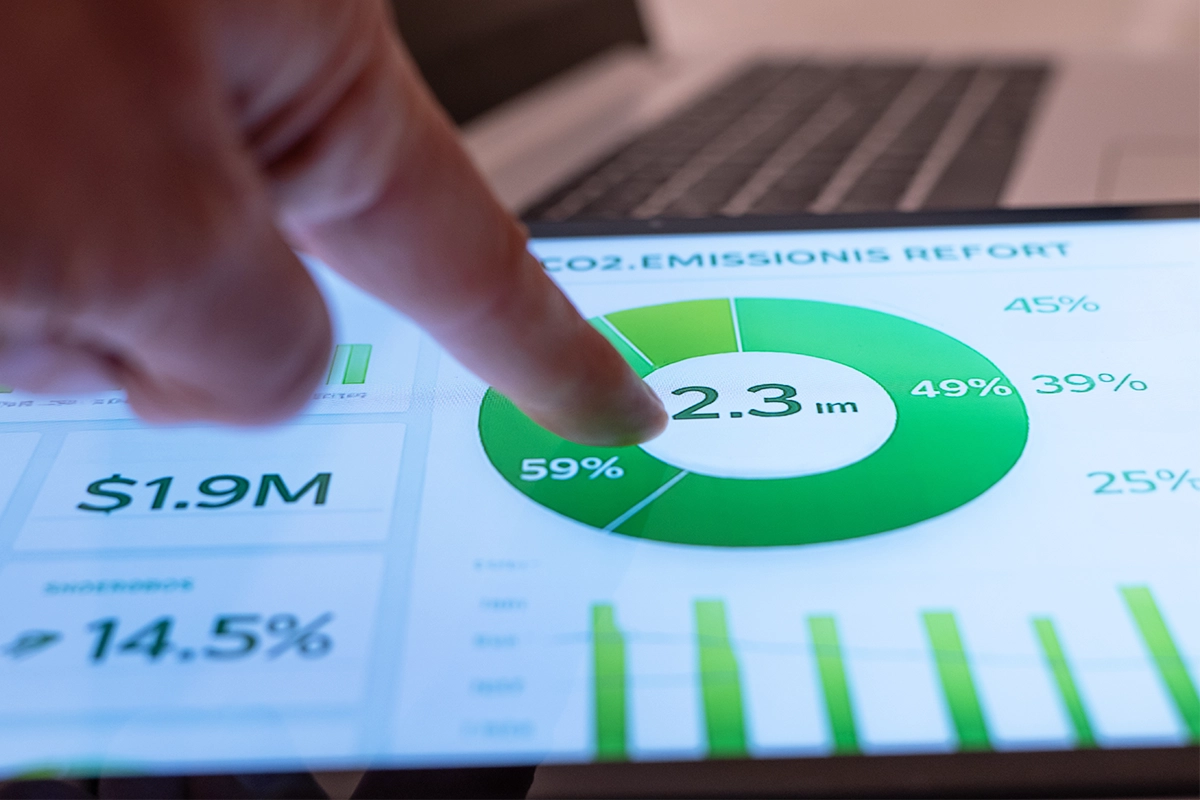 HowGood and Sweep provide a single, audit-ready system that transforms product-level emissions data into actionable insights for food companies.
“By bringing HowGood’s granular emissions data directly into Sweep’s reporting infrastructure, we’re replacing that uncertainty with auditable and actionable numbers that reflect how a company actually sources and manufactures.”
“And for our existing customers, this partnership means they can now move seamlessly from product-level carbon footprinting all the way through to corporate disclosures, without the data ever leaving a single connected system. That kind of end-to-end interoperability is what turns sustainability data into a genuine business asset.”
By leveraging HowGood’s data, companies can share emissions insights with customers and suppliers, enabling joint efforts to improve sustainability performance across the value chain. This approach moves sustainability conversations beyond generic targets and into tangible, product-level action.
Ingredion as a case example
Ingredion is among the companies adopting HowGood’s data to enhance sustainability reporting and drive circular ingredient initiatives. By integrating product-level emissions data into customer-facing systems, Ingredion refines scope 3 calculations and gains actionable insights to reduce greenhouse gas emissions.
At Climate Week NYC (US), Ingredion highlighted its work in upcycled ingredients, such as turning citrus peels into citrus fiber, demonstrating how waste streams can be repurposed into functional, high-performance food ingredients. Historically, waste streams like corn protein and steep liquor were directed to animal feed. Now, these byproducts are being used in food, pet food, and nutrition products, creating value while reducing environmental impact.
By leveraging HowGood’s data, Ingredion is able to quantify the environmental impact of these initiatives and integrate them into broader corporate sustainability strategies, including customer engagement and product reformulation.
We spoke to Ingredion’s VP for corporate sustainability, Brian Nash, at IFT First 2025 in Chicago, US, about the company’s partnership with HowGood, which began in 2022.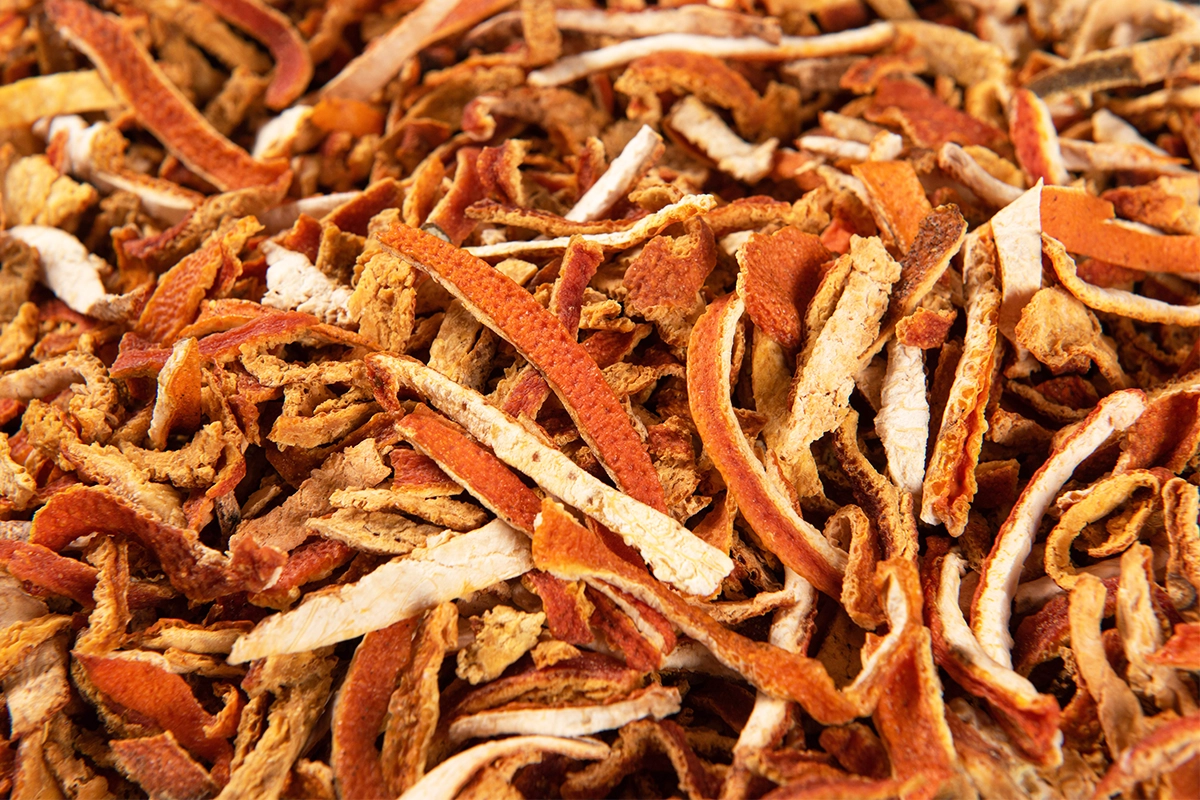 Ingredion uses HowGood data to turn citrus peels into circular ingredients while enhancing scope 3 carbon reporting.
“HowGood helps us better understand formulating for sustainability and the trade-offs,” Nash explained. “For example, a customer wanted low-carbon footprint stevia. I said, ‘The lowest carbon footprint and highest yield stevia comes from the Xinjiang province (China), which has some human rights allegations of forced labor.’ The customer said, ‘No, no, no, we don’t want it from there.’ And I said, ‘So what you want is the lowest carbon footprint, ethically sourced stevia?’ And they said, ‘Yes.’ That’s a perfect example of the trade-offs in sustainability.”
“The biggest challenge is that there’s too much noise, and we’re seeing the cost of sustainability going up. It’s important that a company has a “North Star” and a sustainability strategy that’s integrated with the business strategy, so we can decide what spaces we will play in,” he added.
Ingredion’s 2025 sustainability performance
Ingredion’s broader sustainability efforts in 2025 highlight the company’s commitment to operational and environmental excellence. The company invested US$150 million across facilities in Cedar Rapids, Iowa, and Indianapolis (US) to expand specialty starch production, including alternatives to traditional plastic linings in paper packaging. These investments also supported operational efficiency improvements.
Globally, Ingredion completed 47 plastics circular economy projects, including seven new initiatives in 2025, projected to reduce plastic use by approximately 1.08 million kilograms annually.
In addition, the collaboration with HowGood expanded to support product-level carbon footprint assessments and sustainability data integration. Upcycled ingredient initiatives, such as converting citrus peels into citrus fiber, further demonstrate the company’s commitment to circularity and resource efficiency.
A model for the industry
The HowGood–Sweep partnership provides a blueprint for integrating product-level emissions data into enterprise sustainability reporting. Companies now have a path to accurate, audit-ready scope 3 reporting, improved supplier engagement, and the ability to make sustainability a driver of product innovation.
By combining robust data platforms with hands-on circular ingredient initiatives, companies like Ingredion are setting new standards for measurable, actionable sustainability in the food ingredients sector. The integration of HowGood’s data into enterprise systems demonstrates how technology and collaboration can drive meaningful environmental impact, from ingredient origin to finished product.