Valio, Raisio and Solar Foods: Inside Finland’s ingredient innovation drive

Key takeaways
- Finland’s ingredient sector competes through scientific expertise, collaboration, traceability, and specialized functionality rather than agricultural volume.
- Valio and Raisio are developing higher-value dairy and oat solutions, respectively, targeting recovery, protein quality, metabolic health, and fiber functionality.
- Solar Foods is scaling its Solein microbial protein, but regulation, production economics, and consumer adoption remain crucial commercialization tests.
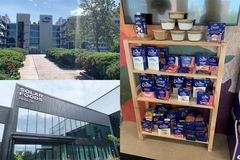
Milk, northern oats, and a microorganism fed with carbon dioxide and hydrogen may appear to have little in common. In Finland, however, they illustrate how the country is drawing on established agriculture, advanced processing, and emerging biotechnology to develop higher-value food ingredients.
During a recent reporting trip to Helsinki, Finland, Food Ingredients First spoke with experts from Valio, Raisio Food Solutions, and Solar Foods to explore the science, commercial thinking, and the collaborative culture driving the country’s ingredient innovation.
Together, the companies reveal a sector that is not seeking to compete with larger agricultural economies through raw material volume. Instead, Finland is using science, traceability, collaboration, and specialized functionality to turn familiar ingredients — and some decidedly unfamiliar ones — into commercially relevant food and beverage solutions.

Innovation born from constraints
Reetta Andolin, chief innovation officer at Raisio, explains how Finland combines strong nutrition and food science with expertise in northern crops, particularly oats, grains, and fibers.
“[The country] offers an unusually collaborative innovation environment, where companies can work closely with universities, research consortia, scientific partners, start-ups, and public sector innovation organizations,” she says. “Finland’s raw material base is another advantage. Its northern growing conditions produce oats with strong grain properties and milling performance, while short, transparent supply chains enable close cooperation with farmers and a high degree of traceability.”
Valio points to a similar culture of cooperation. The dairy company leads the Business Finland-backed Food 2.0 ecosystem, which brings together more than 200 companies, start-ups, universities, and other organizations to develop a more sustainable food system.
Sinikka Saikkonen, senior business development manager at Valio, highlights cooperation between industry, government, and educational bodies. “We have to combine our forces to achieve something really impactful,” she says.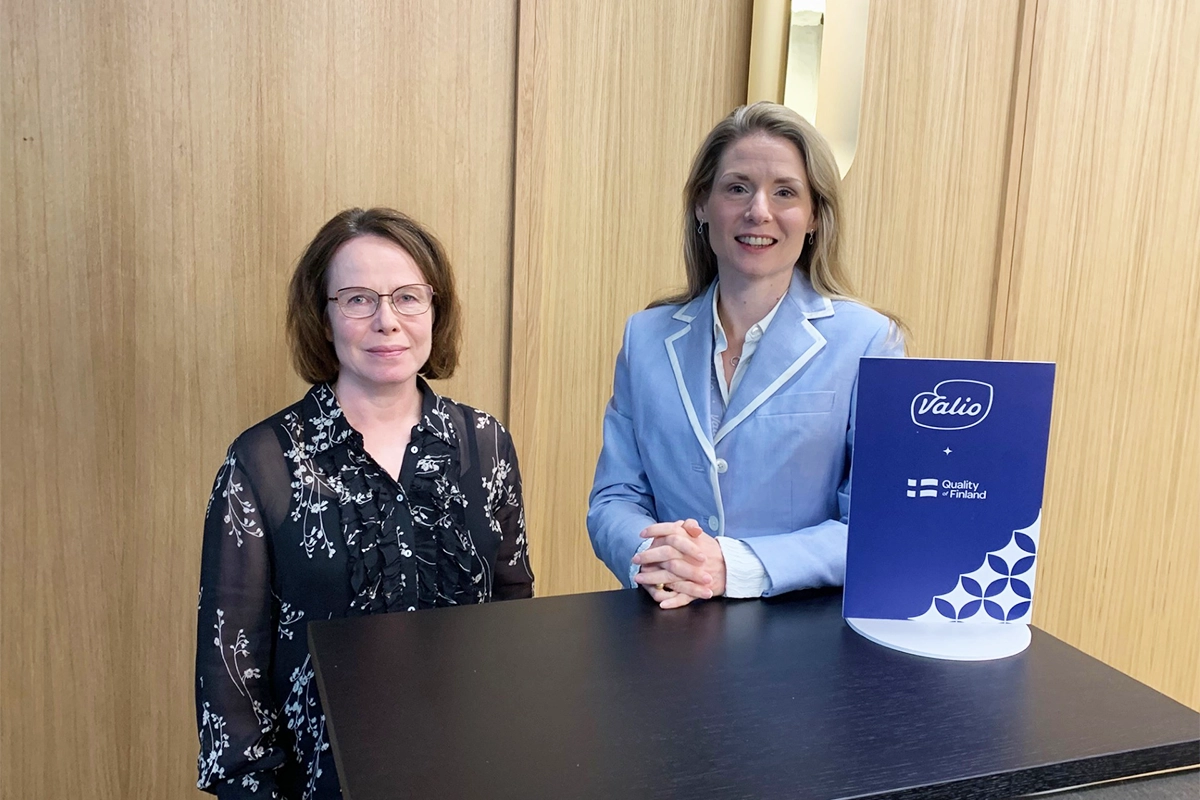 Valio is extending dairy innovation into recovery, metabolic health, and hybrid protein formulations (pictured here: Sinikka Saikkonen (left) and Susanna Lönnblad).
That cooperation responds partly to necessity. Saikkonen argues that Finland cannot rival Europe’s larger agricultural countries on output, so it must compete through innovation. “Not the quantity, but the quality,” she summarizes.
For Solar Foods, Finland also offers comparatively inexpensive Nordic electricity, a crucial consideration when hydrogen is one of a production process’ primary inputs. Dr. Juha-Pekka Pitkänen, chief scientific officer and co-founder of the company, sees a broader cultural advantage in Finland’s technology-oriented outlook and consumers’ willingness to explore unfamiliar concepts.
Familiar ingredients, new outcomes
At Valio, innovation begins with milk but increasingly targets needs that sit beyond conventional dairy. One example is recovery nutrition, which the company expects to expand from sports products into mainstream F&B for people dealing with everyday stress.
Susanna Lönnblad, business development manager at Valio, points to recurring recovery moments created by insufficient sleep and busy schedules. Recovery, she says, is no longer relevant only after sports, but increasingly due to the pressures of everyday life.
Saikkonen says this demand is pushing product development beyond straightforward protein fortification. “Protein alone is not enough anymore. Consumers want more per bite or more per sip,” she tells us.
Valio’s recovery drink concept combines milk protein with carbohydrates derived from hydrolyzed lactose. The process supplies glucose and galactose, which are intended to replenish energy stores in muscle and liver, respectively. The lactose-free formulation also targets digestive comfort.
In a pilot study discussed during the interview, Valio compared its concept with a commercial recovery product using conventional carbohydrate sources. The company reported no significant differences in post-exercise strength and endurance recovery. The result, it argues, supports an alternative formulation route that combines whey and casein with carbohydrates naturally derived from milk.
The concept extends Valio’s work on lactose-free milk protein concentrates, where taste, texture, and processability have been central to development.
“In terms of the wellness consumers, they want to buy outcomes, not products,” Lönnblad says. “The products need to address their specific wellness goals and needs.” These outcomes could include recovery, healthy aging, weight management, metabolic health, or digestive well-being.
Valio also expects more hybrid formulations combining dairy and plant proteins, particularly as flexitarian consumers seek a balance of nutrition, sustainability, and sensory quality. Dairy can help address some of the off-notes and texture limitations that become more pronounced at high plant protein levels.
“It’s not either-or — you can combine them, too,” Saikkonen says. “If you combine, it’s easier to get the taste better if you use hybrids.”
Raisio is applying comparable thinking to oats. Andolin says one of the central challenges is moving the fiber conversation beyond simply encouraging consumers to eat more of it.
“Different fibers behave differently in the body and in food,” she explains. “We are investigating which fibers can most effectively support satiety, hunger management, gut well-being, and metabolic health, as well as how they are digested and tolerated.”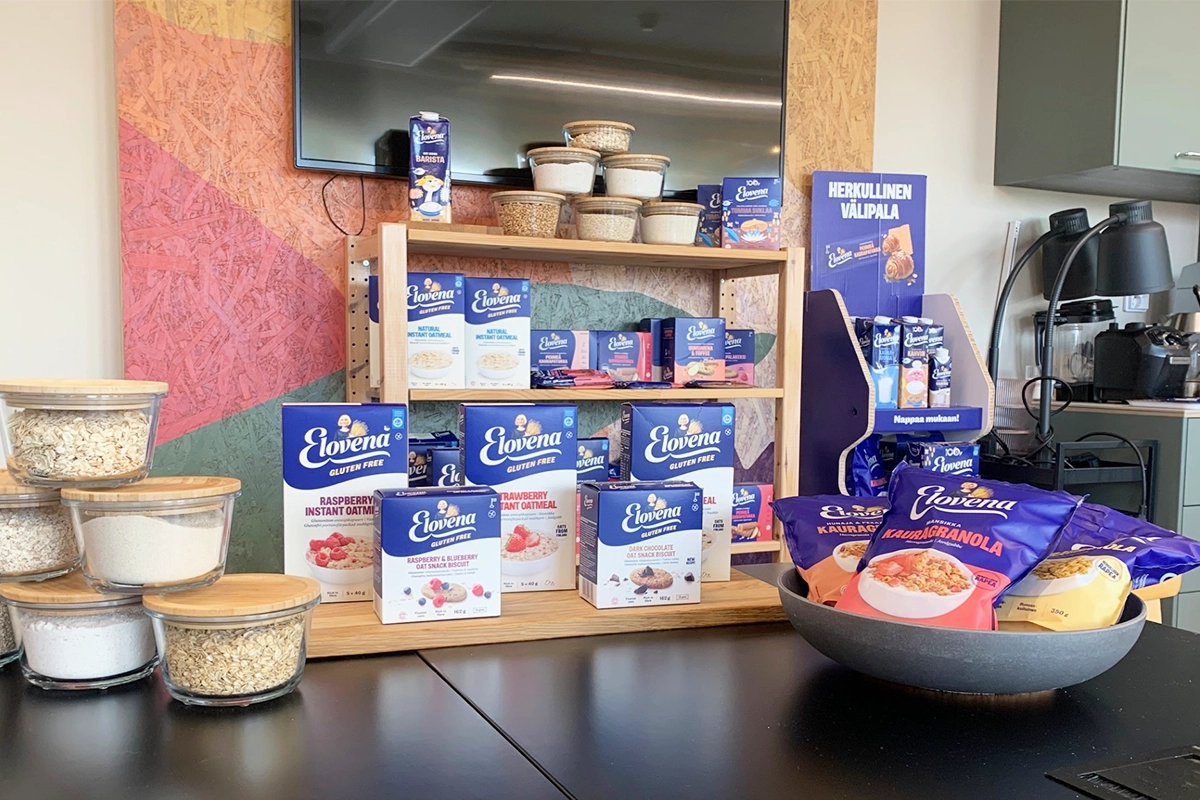 Raisio is transforming Finnish oats into higher-value fiber, beta-glucan, and protein ingredients.
FiprOat illustrates how Raisio aims to move oats further up the value chain. Fine milling and air classification produce bran concentrates with more fiber, beta-glucan, and protein than conventional oats, without chemical extraction. Raisio is also investigating oat fractions and processing side streams for specific health and application benefits, building on its recently announced grain side stream project for functional fiber ingredients.
The company’s gluten-free operations begin with contract farmers close to its Nokia mill. Oats are classified at intake, taken through several purification stages, analyzed at defined checkpoints, and quarantined until finished batches meet purity requirements. The system follows Raisio’s earlier investment in production lines for gluten-free oats and oat fiber concentrates.
For Andolin, nutritional promise is only one part of deciding whether an ingredient should advance.
“Texture, solubility, sensory quality, nutritional density, and ease of processing are therefore as important as nutritional potential. Consumers should not have to give up taste, convenience, or enjoyment to make a healthier choice.”
Animal-free protein without plants
Solar Foods represents the most radical end of Finland’s ingredient landscape. It cultivates a microorganism that uses CO2 as its carbon source and hydrogen for energy. Renewable electricity powers electrolysis that produces the hydrogen, allowing the system to operate without the sugar feedstocks used in many other fermentation processes.
“Basically, we produce [our protein] without any plants,” Pitkänen says.
This means Solein production does not depend on photosynthesis or conventional agricultural land, although it remains dependent on energy infrastructure and suitable carbon dioxide sources.
Pitkänen compares Solein with other single-cell proteins, including mycoprotein, microalgae, and nutritional yeast. Solein contains about 75–80% protein, including all essential amino acids, according to the company.
Solar Foods’ Factory 01 has an annual design capacity of approximately 160 metric tons. The company aims to increase it to 230 metric tons during 2026. Pitkänen says this demonstration scale is too small to be economically viable independently, placing the threshold for a full commercial facility at roughly 6,000 metric tons annually. Solar Foods plans to develop Factory 02 in phases, targeting an annual capacity of approximately 6,400 metric tons after the first two phases.
The company is initially targeting health and performance nutrition, including powders, drinks, and bars, where higher price points can support early commercialization. However, some of Solein’s most notable properties have emerged in everyday foods.
Pitkänen says it can provide creaminess and dairy-like melting behavior in non-dairy ice cream, improve the moldability of fresh pasta dough while replacing egg yolk, and reduce egg requirements in mayonnaise. Its yellow color, flavor interactions, and performance in highly acidic systems mean it is not suitable for every formulation.
It is not a plug-and-play ingredient. “We have to always find the correct recipe where it works,” Pitkänen cautions. Coffee, caramel, and mushroom flavors have paired particularly well with Solein, while pale vanilla products and some highly acidic sports applications present greater challenges.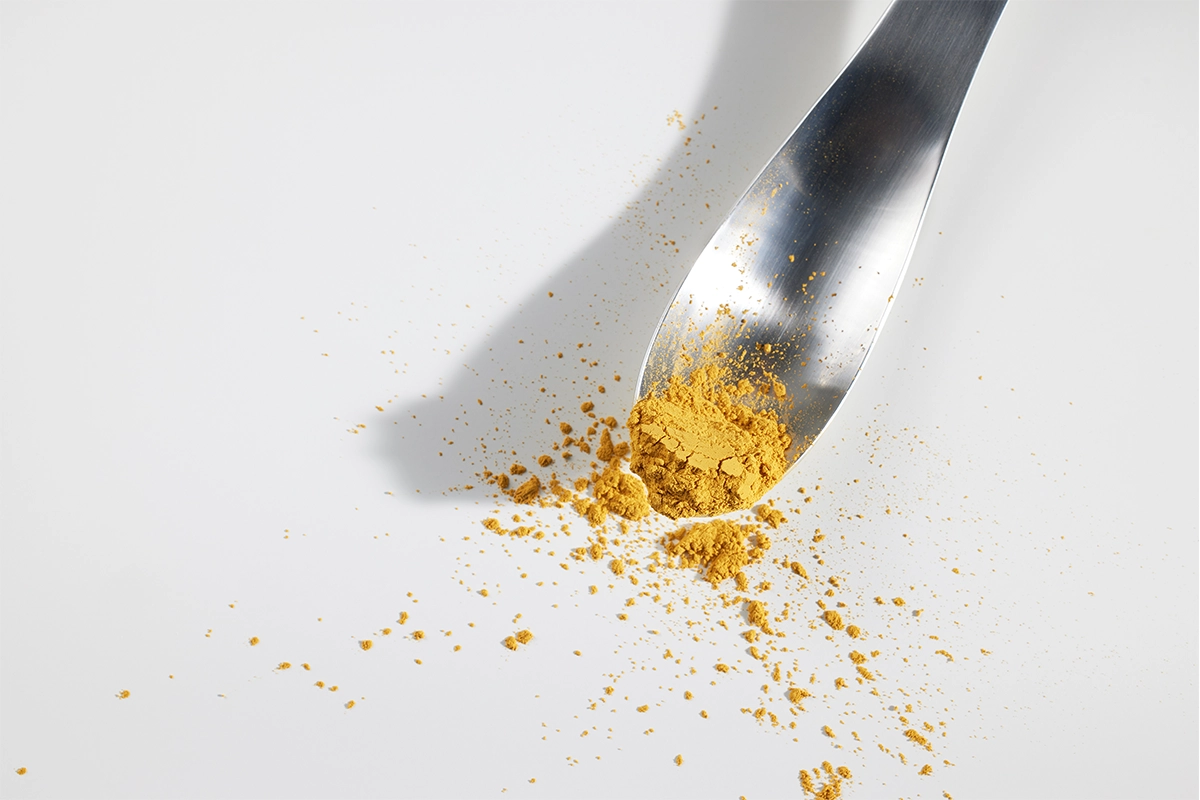 Solar Foods is scaling Solein, a microbial protein produced using carbon dioxide, hydrogen, and renewable electricity.
Regulation meets food culture
Commercialization also depends on navigating very different regulatory systems. Solein received Singapore’s novel food authorization in 2022, and Solar Foods can sell in the US following an independent conclusion of generally recognized as safe (or self-GRAS) status.
Pitkänen emphasizes that this should not be confused with US FDA approval. Solar Foods has separately submitted a GRAS notification seeking an FDA “no questions” letter. Its EU novel food dossier was submitted in October 2021, and, at the time of the interview, an opinion from the European Food Safety Authority was expected shortly. A positive scientific opinion would still need to move through the European Commission process before authorization.
The regulatory wait highlights a larger mismatch between food innovation and financing. Pitkänen notes that food culture changes slowly, and food companies can be cautious about adopting radical technologies. Venture-backed businesses, meanwhile, must demonstrate progress on much shorter timelines.
Established companies face their own scale and adoption tests. Raisio says specialized crop fractions and processing technologies must reach prices and volumes that work for international manufacturers. Ingredients must also behave consistently across recipes, production systems, and markets, while supporting clear and compliant communications.
In the end, performance in the finished product is what matters. Valio sees opportunities for hybrid dairy and plant proteins that balance nutrition, sustainability, taste, and texture. Raisio is matching individual oat ingredients with the applications in which they deliver the strongest technical and nutritional performance. Solar Foods must make an unfamiliar production story relevant without allowing the technology to overshadow eating quality.
Despite Solein’s environmental proposition, Pitkänen does not expect sustainability alone to secure consumer adoption. He sees greater immediate value for manufacturers seeking to reduce their overall carbon footprints, while consumers are more likely to judge the product on familiar factors, such as taste, texture, nutrition, and price.
Pitkänen offers a clear summary of the consumer challenge: “If it’s not good enough, they will not buy the second one.”
Finland’s collaborative research environment may help its companies earn that first trial. Global success, however, will depend on formulation performance, regulatory acceptance, competitive economics, and earning those repeat purchases.


Upcoming webinars

2027 Food Safety Risks for Quality & Compliance Leaders
FoodChain ID

Formulating for function: Developing benefit-led beverages with natural colours, botanicals, and flavours
Givaudan Sense Colour
Let's reveal the grain potential: Innovate
Meurens Natural