



Fi Europe 2026 live: Ingredion rewrites the recipe for clean labels, more protein and fiber
Key takeaways
- Ingredion showcases clean label innovations, demonstrating how manufacturers can improve nutrition and texture while managing costs.
- Whole-recipe reformulation helps manufacturers manage protein, fiber, and sugar reduction challenges.
- GLP-1 trends and rising interest in fiber are reshaping food innovation, driving demand for food-based satiety solutions.

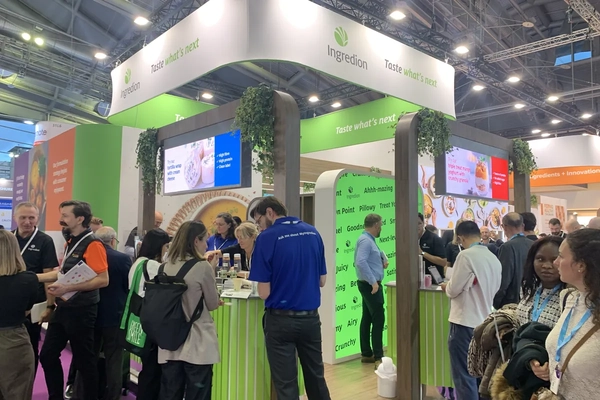
A high-protein plant-based yogurt, a carrageenan-free matcha pudding, and crispy chicken with reduced greasiness are among the concepts Ingredion is showcasing at Fi Europe 2026 in Frankfurt, Germany (Nov 17–19). These innovations highlight a common challenge for F&B manufacturers — delivering cleaner labels, better nutrition, and appealing textures without increasing costs.
Dan Haley, president of Texture Value Enhancement at Ingredion UK, says that scrutiny of ultra-processed foods (UPFs), growing demand for protein and fiber, and the emergence of GLP-1 consumers are adding new layers of complexity to food formulation.
“What we’re seeing, particularly in Western European markets, is growing pressure on our customers to reformulate existing products or develop new ones that combine clean label ingredients and attributes with additional benefits,” he tells Food Ingredients First on the show floor.
“Alongside delivering a great eating experience in terms of flavor and texture, manufacturers increasingly need to offer higher protein, higher fiber, and other nutritional benefits.”
As GLP-1 use expands in Europe as in the US, he expects this trend to accelerate. Consumers will increasingly look for the same nutritional benefits, potentially in smaller portion sizes, he adds.
At the event, we also spoke with FrieslandCampina Ingredients, which described the impact of GLP-1 medications on the food industry as a revolution rather than a passing trend.
Reformulating the whole recipe
Affordability is emerging as another major consideration for companies, particularly as they look to incorporate ingredients that deliver higher protein and fiber content.
Haley argues that replacing ingredients individually can make nutritionally improved products increase costs. “If you are just looking at ingredient by ingredient, it’s almost impossible to do that at the same cost in use,” he says.
 Dan Haley, president of Texture Value Enhancement at Ingredion UK.“That’s where formulation expertise becomes critical — understanding what else can be adjusted in a recipe to accommodate new ingredients, deliver nutritional benefits, and still create a delicious product.”
In cakes, for example, reducing egg content could help offset the costs of nutritional improvements while preserving the characteristics consumers expect from an egg-containing product, he explains.
These principles are reflected in Ingredion’s Fi Europe 2026 showcase. Its plant-based yogurt combines pea protein with a smooth, creamy texture and a clean label, sugar-reduced fruit preparation. Meanwhile, a matcha pudding uses what Haley describes as “a synergistic combination” of ingredients to replace carrageenan.
The drive toward simpler formulations without compromising sensory quality was also evident at the Fi Europe 2026 Innovation Awards, where a winning pea protein technology showcased how improving taste during processing can reduce the need for additional flavor-masking ingredients.
How sugar reduction fits in the reformulation toolbox
As the industry explores multi-ingredient sweetening systems, replacing sugar’s functionality and mouthfeel has become a central challenge in reduced-sugar reformulation.
Haley points out that combining sugar reduction with positive nutritional attributes and clean labels is an important part of the reformulation toolbox.
“When it comes to naturality and clean labels, stevia remains a leading solution for sugar reduction. It developed a poor reputation early on because of its impact on taste, but significant progress has been made since then,” he emphasizes.
“Working with the right partner and expertise to manage flavor and rebuild the texture lost when sugar is removed will be essential to developing products that are no longer perceived as ultra-processed.”
Protein and fiber change the texture equation
As brands increasingly tap rising protein demands, Haley says innovation is moving beyond nutritional quantity toward improvements in taste, texture, and solubility. For high-protein nutrition bars, Ingredion is investigating how consumer preferences vary between various textures.
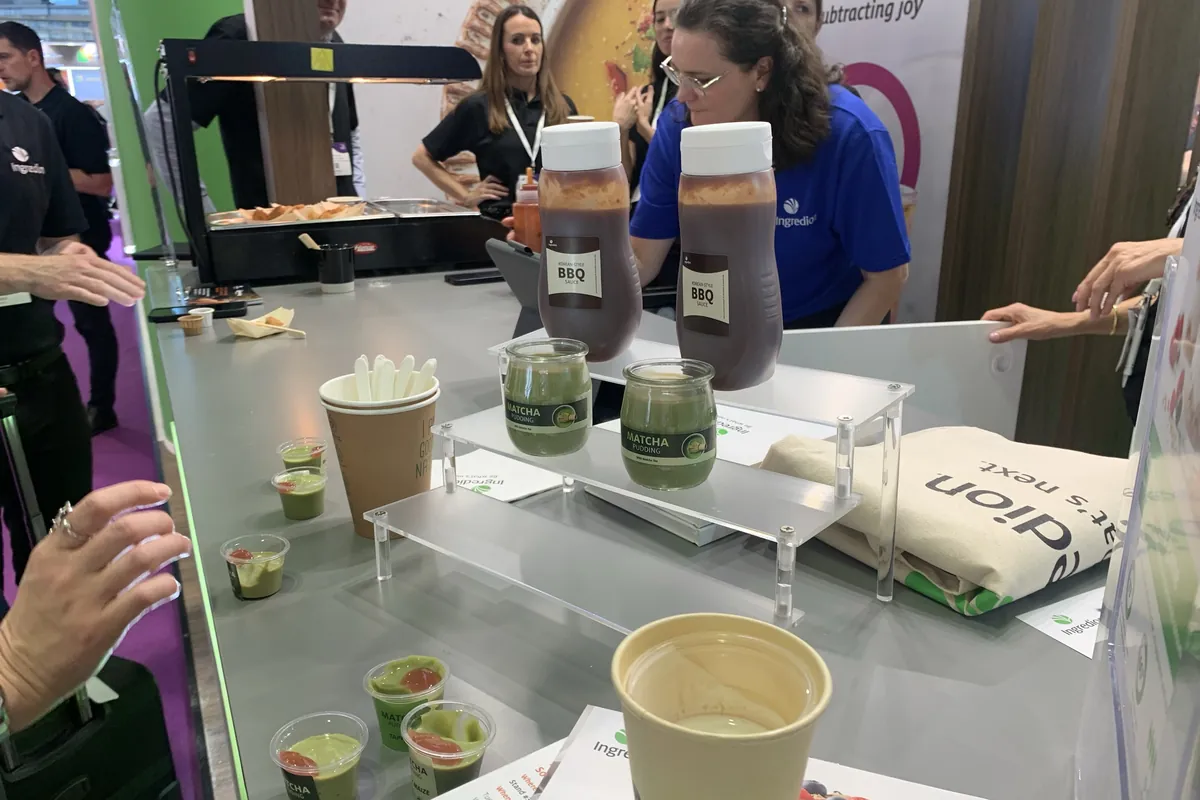 Ingredion is showcasing texture innovation with clean label matcha pudding and gluten-free chicken with Korean BBQ sauce.“Certain consumer groups prefer something crunchy and firm, while others want something chewy, soft, or moist. It’s about designing products to meet those preferences and using our texture expertise alongside proteins to deliver the desired eating experience.”
“It’s not easy, but it’s a new frontier in food ingredient innovation,” Haley adds.
At the trade show, Ingredion is showcasing a crispy chicken concept using a combination of clean label ingredients to deliver a crunchy coating without excessive greasiness.
Fiber gains ground as satiety innovation evolves
Looking toward next year, Haley expects fiber innovation to accelerate, with consumers becoming more interested in different fiber types and developing a better understanding of prebiotics and probiotics.
The growing attention on UPFs will also reinforce the importance of clean label innovations, he notes.
“Another emerging area is supporting consumers who want to manage their health and weight without using GLP-1 medications, or those who are coming off them.”
“How can we help these consumers maintain their goals through food? How can we design satiety into food itself, rather than relying on injections or tablets?”