




Cargill targets sugar reduction sweet spots with bakery and beverage innovations

Key takeaways
- Cargill will launch SweetMirror at Fi Europe 2026 to simplify sugar replacement in bakery while preserving browning, texture, and sweetness.
- Consumer demand for sugar moderation is driving opportunities for reduced-sugar products that retain familiar taste and indulgence.
- Cargill’s Craftiva syrups combine cane sugar and stevia to reduce sugar content while maintaining flavor and sweetness across hot and cold beverages.
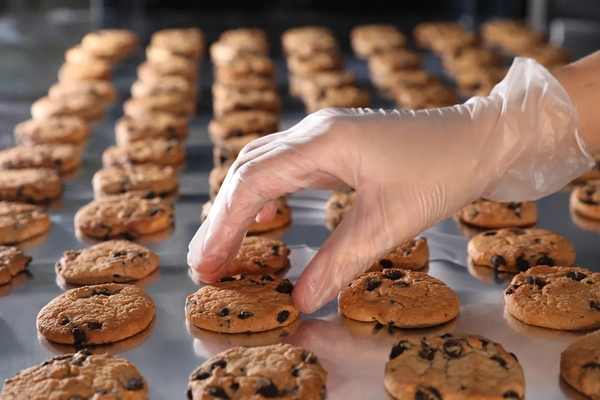
Cargill is targeting opportunities between full-sugar and zero-sugar products amid the F&B industry’s efforts to reduce sugar while preserving familiar taste and functionality. The company will launch its SweetMirror sweetening system at the upcoming Fi Europe 2026 in Frankfurt, Germany (Nov 17–19) to showcase how blended sweeteners can help manufacturers address bakery reformulation challenges.
The “1:1 replacement for sugar” combines erythritol, maltitol, and Cargill’s EverSweet stevia sweetener. It aims to simplify reformulation while supporting bakery performance, including browning.
The launch comes alongside the company’s recently released Craftiva reduced-sugar brand of flavored syrups and sweetener packets for beverages.
Food Ingredients First speaks with Jordan Timm, consumer brands R&D director, and Kristine van den Steen, sweetness product advisor at Cargill, about how manufacturers can overcome sugar replacement hurdles while delivering the taste, texture, and functionality consumers expect from bakery and beverages.
Replicating sugar’s functionality
Cargill’s SweetMirror helps manufacturers simplify sugar replacement in bakery products.
“SweetMirror gives manufacturers a straightforward 1:1 starting point for replacing sugar across applications. Baking is the most technically demanding use because sugar contributes more than sweetness, including browning, texture, moisture, and mouthfeel,” says Van den Steen.
 Cargill’s SweetMirror blends polyols, fiber, and stevia in a 1:1 sugar replacement system to support sweetness and browning in bakery applications.“SweetMirror is designed to deliver familiar sweetness and excellent browning performance in baked goods, while helping developers avoid extensive recipe adjustments.”
However, replacing sugar at a 1:1 ratio does not necessarily guarantee identical functionality across every formulation.
“Performance in other functional areas depends on the recipe, product, and processing conditions, so each application needs to be assessed against its sensory and production requirements,” she explains.
SweetMirror combines a fiber component, such as dextrin, resistant dextrin, or soluble corn or wheat fiber, with maltitol, erythritol, and EverSweet stevia in a ready-to-use system.
“The formula has no aftertaste or cooling effect,” Van den Steen notes.
However, she emphasizes that sweetness perception and functional performance can vary with the recipe and application and should be evaluated in the finished product.
Balancing health and indulgence
Consumers’ growing interest in following healthier lifestyles is creating opportunities for bakery manufacturers to improve nutritional profiles. Van den Steen cites an Innova Market Insights survey from this year, which found that 65% of European consumers said they were actively trying to reduce sugar.
“At the same time, bakery remains a familiar part of everyday diets, and consumers still expect familiar taste and a sense of indulgence,” adds Van den Steen.
She says this creates a “demanding brief for manufacturers” — improving a product’s nutritional profile while keeping its eating experience familiar.
 Jordan Timm: Consumers are looking for a middle ground: the flavors they love, with a little less sugar.She also points toward Cargill’s Future of Food research, which describes bakery as a “familiar, habitual category” where better-for-you reformulation can face lower adoption barriers when the eating experience remains recognizable.
Van den Steen also references broader consumer research finding that 71% of consumers consider texture a key factor in food enjoyment, although the figure is not specific to reduced-sugar bakery.
Despite growing demand for alternative sweeteners, she stresses that consumer acceptance depends on the finished product — “whether it delivers the taste, texture, and ingredient story consumers expect.”
Finding the “middle ground” in beverages
Beyond bakery, Timm underscores the sugar reduction focus in beverage innovation.
“We’ve been tracking a shift toward more choice in beverages for several years. The growth of lower-sugar options, from better-for-you sodas to reduced-sugar coffee drinks, shows consumers are looking for a middle ground — the flavors they love, with a little less sugar,” she tells us.
The International Food Information Council’s 2025 survey found that 61% of Americans said they are trying to limit sugar consumption, compared with 14% seeking to avoid it entirely.
“In other words, more than four times as many people are trying to moderate their sugar intake as eliminate it,” Timm notes.
Cargill’s 2026 Future of Sweeteners research also found that one in four Gen Z and millennial consumers said they prefer reduced-sugar products.
“Reduced sugar is a deliberate choice in its own right,” Timm explains.
“Craftiva brings that choice to flavored syrups, drawing on Cargill’s long experience in sweeteners and flavor, with 7 grams of sugar per serving compared with about 20 grams in the leading national-brand syrup.”
Fine-tuning beverage sweetness
Timm goes on to explain that reducing sugar in syrups requires more than replacing sweetness, as sugar also plays a key role in “flavor delivery and the overall sensory experience” consumers expect from a traditional syrup.
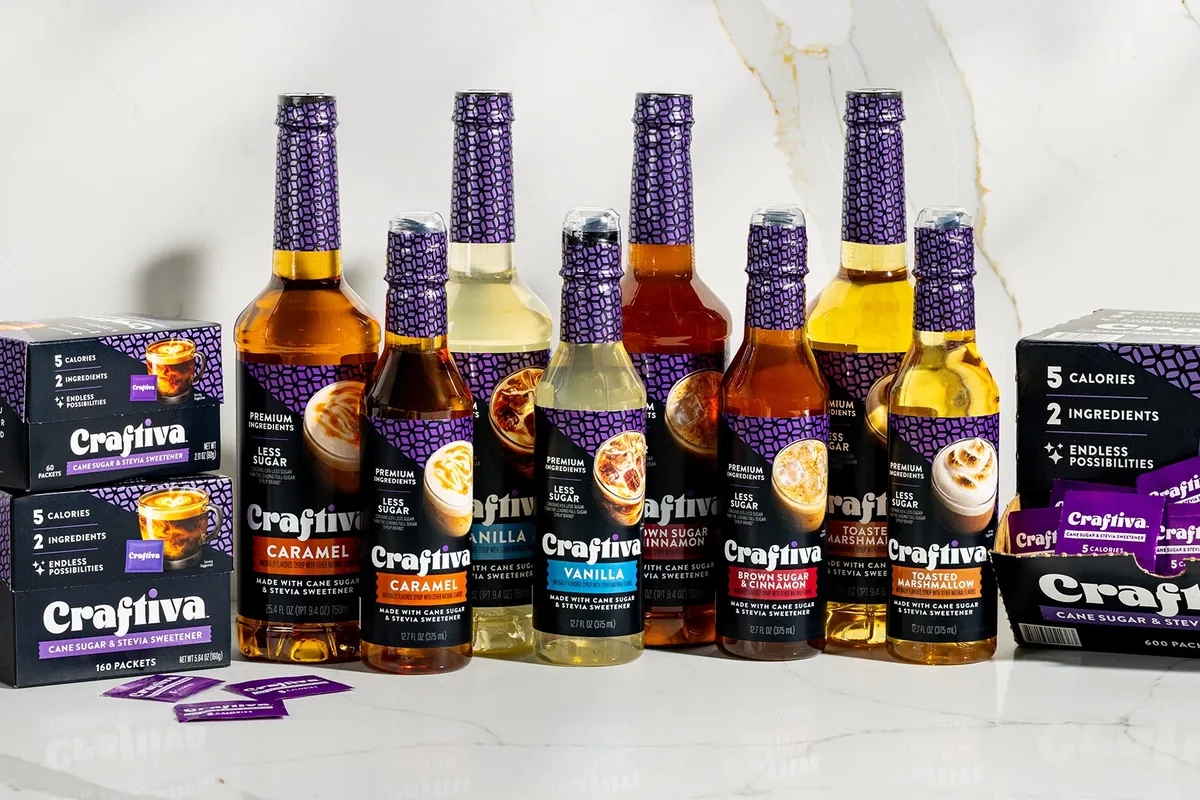 Cargill’s Craftiva reduced-sugar syrups and sweetener packets target demand for lower-sugar lattes, cold brews, and mocktails (Image credit: Cargill).Cargill evaluated different sweetener systems and flavor profiles through multiple rounds of formulation and consumer testing while developing Craftiva.
“We needed to rebuild that sugar-like sweetness profile and experience while still delivering meaningful sugar reduction.”
The company ultimately selected a combination of cane sugar and stevia sweetener to maintain familiar sweetness characteristics while substantially reducing sugar content.
“From there, each flavor was carefully optimized so that the sweetness, flavor, and finish work together and perform well across a variety of beverage applications.”
Timm further highlights Craftiva’s formulation focus on ensuring the syrups work under different temperature conditions, as they influence sweetness perception and flavor performance.
“The flavored syrups have been evaluated in both hot and cold beverage applications, including hot and iced coffee, lattes, tea, and dirty sodas, with an emphasis on maintaining a balanced sweetness profile and flavor experience.”
Beyond one-size-fits-all sugar reduction
While Craftiva retains some conventional sugar alongside stevia, SweetMirror uses a multifunctional sweetening system designed to replace sugar in bakery applications.
Cargill’s sweetener innovations highlight the need for category-specific sugar reduction strategies as advances in sweetness engineering increasingly explore alternative approaches, including sweet proteins, bioconversion, and taste modulation.