


The Protein Brewery secures EU approval for novel mycelium ingredient in health and wellness F&B


Key takeaways
- The Protein Brewery has secured EU Novel Food approval for Fermotein, its novel mycelium ingredient.
- Fermotein targets health and wellness applications, including protein powders, supplements, bars, dairy alternatives, and better-for-you foods.
- The company is scaling global commercialization, with sales already in the US, and a Singapore and EU rollout ahead.
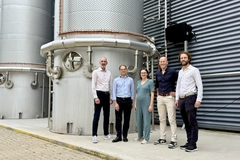 CEO Thijs Bosch (second from right) with The Protein Brewery’s management team.
The Protein Brewery has secured EU Novel Food approval for Fermotein — its wholefood mycelium ingredient — for use in health and wellness-focused F&B applications. The decision clears the Dutch company’s Rhizomucor pusillus fungal protein for placement on the EU market, as the first novel mycoprotein ingredient of its kind to receive regulatory authorization.
The European Commission has added Rhizomucor pusillus mycelium to the EU list of permitted novel foods. Once published in the Official Journal of the European Union, the regulation will take effect after 20 days, allowing The Protein Brewery to sell Fermotein in the EU.
The milestone is expected to open a new chapter for biomass fermentation and support the growth of food innovation across the EU, as regulatory momentum around novel foods in the region accelerates.
The company holds exclusive rights to the scientific studies and safety data supporting the ingredient for five years, alongside its patented production process, as part of the regulation.
The Protein Brewery’s CEO Thijs Bosch tells Food Ingredients First that the European Commission’s authorization — with all 27 Member States voting in favor — “shows that the EU Novel Food framework can recognize a novel mycelium ingredient on its scientific merits.”
For F&B manufacturers, it signals that mycelium is “no longer an emergent or marginal category,” and has officially become a recognized category of novel ingredient for health and food.
“Other developers working on biomass fermentation now have a precedent to follow, with a clearer line of sight into the European Food Safety Authority (EFSA) assessment criteria and the evidence package the system requires.”
Lea Seyfarth, policy manager at nonprofit think tank the Good Food Institute (GFI) Europe, welcomed the EU’s approval of the mycelium innovation.
“It’s fantastic to see the first approval of a mycoprotein ingredient under the EU’s novel food process, demonstrating that the regulatory system can enable new products to come to market in a way that meets the bloc’s robust safety standards.”
Mycelium protein taps EU health and wellness demand
The Protein Brewery develops Fermotein using biomass fermentation of Rhizomucor pusillus — a non-fruiting fungal species related to the strains used in traditional Asian fermentations such as tempeh.
Companies can use Fermotein in protein powders, supplements, bars, dairy alternatives, and better-for-you foods and drinks. This supports supplements, foods, and drink manufacturers in formulating nutrient-dense versions of products in the EU, where nearly seven in 10 consumers are paying attention to protein in their diet, according to Innova Market Insights research.
“Fermotein is a strong base for all-in-one nutrition shakes; it brings 50% complete protein with all essential amino acids, 30% fiber, and unique fungal bioactives in a single ingredient,” says Bosch.
He adds that the initial manufacturer traction is coming from those targeting active nutrition concepts, such as Ready-to-Mix formulations and supplements for brands focused on sports nutrition and healthy aging.
“We are already working with several innovative EU companies in this space, all targeting whole-food solutions. From there, we expect the category to broaden into nutritional bars, dairy alternatives, and better-for-you foods and drinks as formulators integrate Fermotein into more complex matrices.”
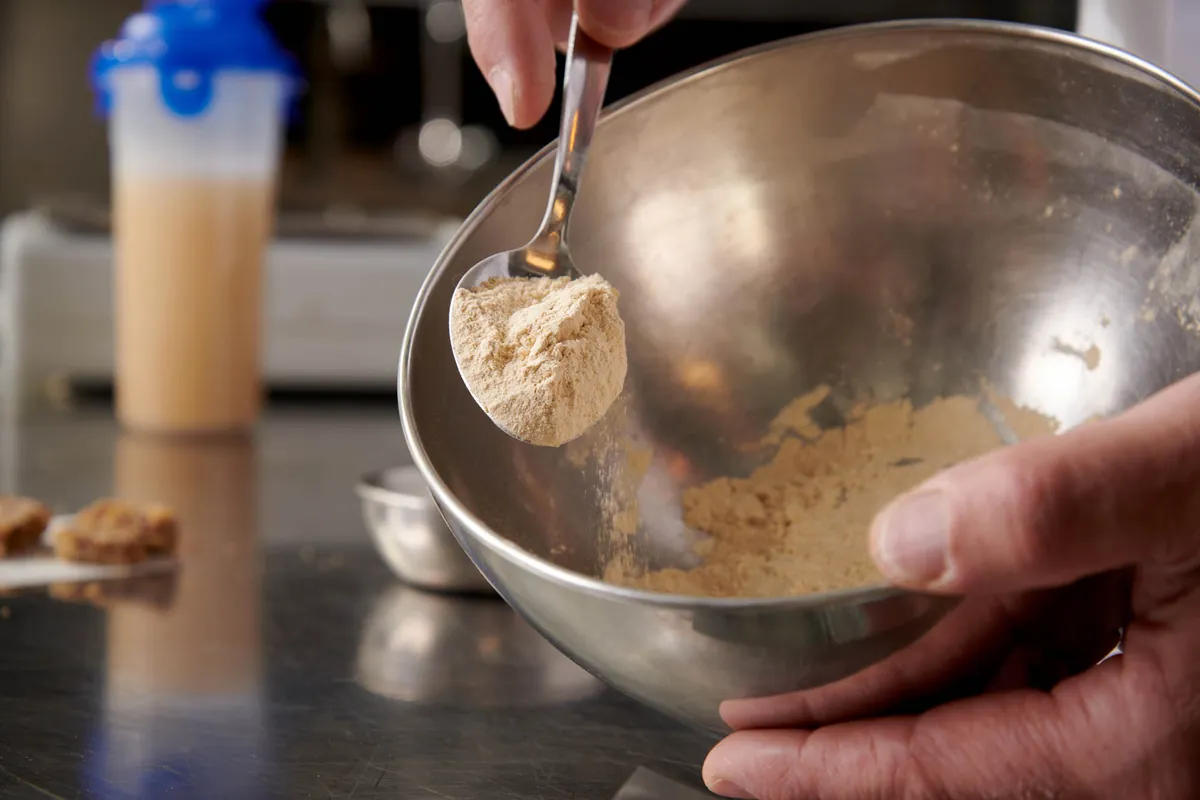 Fermotein is made from Rhizomucor pusillus mycelium using biomass fermentation and contains around 50% complete protein (Image credit: The Protein Brewery).Regulatory delays and need for faster EU novel food reviews
The Protein Brewery, based in Breda, Netherlands, first submitted its dossier to the European Commission in May 2020, followed by working with EFSA over the next few years and, in the final stage, with the European Commission, says the company.
EFSA published a positive scientific opinion on December 1, 2025, while the Standing Committee on Plants, Animals, Food and Feed gave a positive vote on May 13, 2026.
Bosch tells us the company faced scientific and regulatory challenges while on the path to Fermotein’s regulatory approval, including requests for additional, large, and costly studies — “two years and again four years after the dossier was submitted.”
The first request came during the COVID-19 period, which made it more difficult to find and work with a suitable lab,” he says.
“For the second request, we were the first company to do this type of study, so the design itself had to be worked out from scratch. From a communication perspective, the limiting factor was that we could not have a direct scientific dialogue with the regulatory officers at EFSA.”
He adds that the company was in contact with them to understand why questions were raised, but points out that the EFSA currently has no mandate to discuss study designs scientifically. “It would be good if that could change with the upcoming Biotech Act.”
Seyfarth at GFI Europe says the long approval process highlights the need to ensure the regulatory framework “keeps pace with European food innovation.”
“The EU should prevent unnecessary future delays by boosting the EFSA’s capacity and enabling regulators to provide extended scientific advice and detailed guidance to applicants before submission.”
Patents and exclusivity strengthen Fermotein’s EU advantage
The Protein Brewery owns the patents and IP for its fungal strain and its specific production process, Bosch notes. It also holds several patents on whole-food mycelium powder, which he emphasizes enable the company to build a “leadership position in the whole-food nutrition segment.”
“The five-year exclusivity period in the EU relates specifically to the safety data and to our mycelium strain,” he adds.
This, combined with the IP and regulatory exclusivity, gives the company the time and certainty to invest in scaling production, strengthening the science base, and “establishing Fermotein as the reference ingredient in the mycelium category.”
 Thijs Bosch: Whole-food mycelium could help diversify ingredient sourcing as whey protein supply chains come under pressure.
The Protein Brewery scales Fermotein for global nutrition
The Protein Brewery raised €30 million (~US$35.3 million at the time) in investment last year to commercialize its fungi-based food ingredients in the US and EU.
Fermotein is already commercially available in Singapore and the US, with the EU now becoming a major growth market. Regulatory dossiers are also advancing in the UK, Canada, and Australia/New Zealand, with first authorization expected in the UK later this year.
Bosch describes the company’s focus as primarily on “scaling our production capacity and fulfilling the demand from the customers already in our pipeline.”
“We are making significant capex investments to expand our fermentation capacity, and we have expanded our team in parallel. We are already shipping significant volumes to the US, and we expect strong demand in the EU and the UK, particularly in the nutrition segment.”
The company also plans to review other potential regions such as South Korea and Japan, owing to the strong demand there for healthy aging and premium nutrition products, he tells us.
The company expects to supply 600 metric tons of the ingredient in 2027 from its Breda facility in the Netherlands and scale capacity to more than 2,000 metric tons by 2029.
 Early demand for the novel mycelium ingredient is coming from active nutrition, sports nutrition, and healthy aging brands.
Mycelium: A niche or mainstream future?
Bosch says that The Protein Brewery expects mycelium to become a mainstream whole-food solution in the future.
“It is one of the most sustainable methods to produce safe, highly nutritious food with no allergens that need to be labeled, and biomass fermentation is a very scalable process with a low environmental footprint.”
With current food supply chains, such as for whey proteins, under pressure, the company believes whole-food mycelium can be one of the solutions to “de-risk and diversify ingredient sourcing.”
“We hope to see more mycelium ingredient players enter the category and help grow it together,” Bosch concludes.