


Japanese study reveals major fiber shortfalls amid emerging reformulation opportunities


Key takeaways
- ?A Japanese study of nearly 5,000 adults found significant gaps in fiber and vitamin A intake, indicating most people are not meeting national dietary recommendations.
- The findings highlight opportunities for reformulation and fiber-enriched food innovation.
- Demand for natural, fiber-rich ingredients is rising in Japan, creating potential for fortified and nutrient-dense F&B products.

A new study analyzing the diets of nearly 5,000 Japanese adults reveals significant gaps in fiber and vitamin A intake — two nutrients closely linked to the risk of chronic disease and long-term health. Consuming around 200 g of fruit and 350 g of vegetables per day would “almost” meet the values in the dietary reference intakes of Japanese people for dietary fiber and vitamin A, excluding potassium.
Scientists at the National Institutes of Biomedical Innovation, Health, and Nutrition in Osaka analyzed data from 4927 Japanese adults aged 20 years and older who participated in the 2019 National Health and Nutrition Survey.
“The dietary intake and dietary patterns of Japanese people have changed significantly over the past 20 years. Thus, simulations are being conducted to determine the appropriate fruit and vegetable intake for the Japanese population to reduce health risks,” reads the study.
Fruit intake studied included fresh fruit, dried fruit, and fruit juice, but excluded jams. Vegetables included green–yellow vegetables, pale-colored vegetables, vegetable juices, and pickles, but excluded tubers, mushrooms, and seaweed.
Closing the fiber gap
Fruits and vegetables are classic sources of fiber. Fiber trends reported by Innova Market Insights show that consumers primarily look for fiber in F&B to address gut health, outpacing other ingredients.
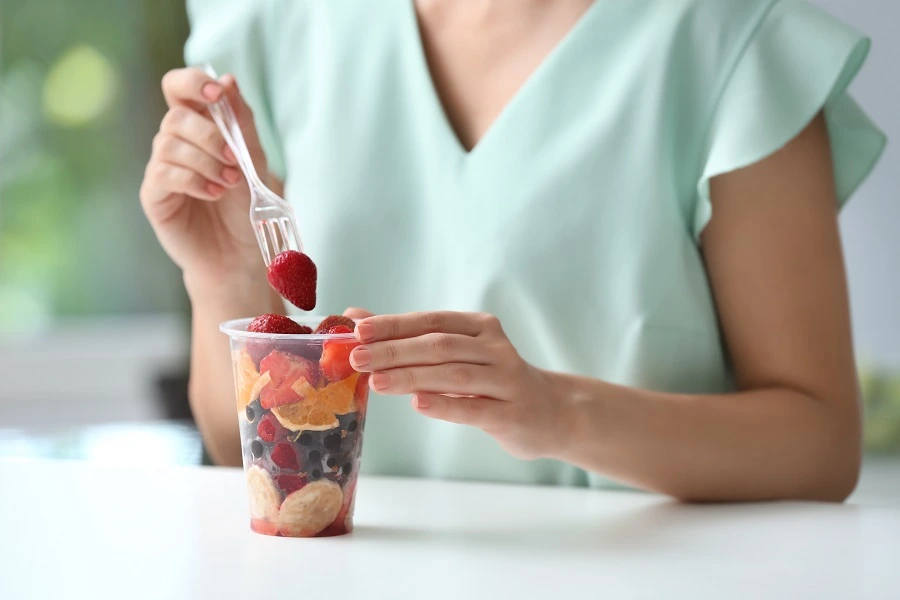 The researchers urge at least 100 g fruit and 70 g vegetables as a minimum uptake step.Baby Boomers (birth years 1946 to 1964) are likely to connect fiber with gut health, whereas Millennials (born between 1981 to 1996), lead searches for other gut health ingredients, notes the market researcher.
As per this study, published in Scientific Reports, the authors suggest that Japanese individuals increase their intake to at least 100 g of fruit and 70 g of vegetables to achieve the results of the simulation of 200 g of fruit and 350 g of vegetables.
“Because there is a gap between the actual intake and target amounts of fruits and vegetables in many countries, the factors leading to increased intake are being explored, and intervention strategies are being tested on the basis of these factors,” notes the study.
These include social norm messages to encourage the consumption of healthy foods when used in promotions like posters in the workplace. The study also emphasizes the role of social media in encouraging fruit and vegetable consumption.
Additionally, it highlights subsidy policies for fruits and vegetables that have been implemented and reported to be cost-effective.
Innovation opportunities in F&B
For ingredient suppliers and manufacturers, the study offers valuable insights into where reformulation and product innovation can have a significant impact.
Manufacturers can work on developing nutrient-dense ingredients, fiber-enriched formulations, and plant-based components that help consumers struggling to meet daily fruit and vegetable intake through whole foods alone.
 The study highlights innovation opportunities for fiber-enriched and nutrient-dense foods.Japanese consumers are already signaling demand for fiber and natural ingredients, indicating that fortified or vegetable or fruit-based fiber or vitamin products could resonate in the region. In everyday staples like bread, fiber is a highly sought-after attribute among consumers, according to Innova Market Insights’ research on food trends in Japan.
Shaping future research
Even as the study points to promising directions for the F&B industry, the authors acknowledge that certain methodological limitations should be taken into account.
It relies on current dietary patterns, despite declining vegetable intake, and uses a theoretical model that does not accurately reflect real-life shifts in other food choices.
“The Japanese diet has been reported to change over time, and vegetable intake among Japanese people is likely to continue declining in the future. Hence, our results should be interpreted with caution as this expected dietary change has not been considered,” notes the study.
“Despite these limitations, a simulation analysis of fruit and vegetable intake using the NHNS, the only continuous nationally representative dietary data of the Japanese population, may inform future health and nutritional policies in Japan,” note the authors.
Further research is needed to investigate policies and interventions that may promote increased fruit and vegetable intake among the Japanese population.