



Protein under pressure: Solutions for rising whey costs


Key takeaways
- Clear pea, rice, and yeast proteins are moving into applications once dominated by whey.
- Collagen-whey blends can lower costs, maintain all nine essential amino acids, and prevent protein bars from hardening.
- Enzymes can boost dairy yields while precision fermentation can help diversify protein supplies over the longer term.
 The Rousselot stand promoted the blending of whey and collagen at IFT FIRST 2026 in Chicago, US.
Whey demand is outpacing supply, pushing prices upward as consumer interest in protein continues to boom. As many as 80% of consumers said they “pay attention to protein” in their diet, according to a 2026 Innova Market Insights survey. Just over half said a “high in protein” claim was their most important consideration when choosing food and drinks as protein sources.
While suppliers such as FrieslandCampina Ingredients are adding processing capacity to narrow the supply gap, heightened demand is expected to keep whey markets tight.
But suppliers are finding new workarounds, either to stretch dairy further or to use alternative proteins, particularly in applications where manufacturers previously had few options.
“Whey protein is protein ‘numero uno,’ but it is becoming increasingly difficult to get. There are shortages, and the price has gone through the roof,” says Philip Coggins, director of F&B at Nura, a distributor and formulation partner for health-focused ingredients.
Against this backdrop, Coggins says he has seen increased demand for Nura’s pea, rice, and yeast protein, all of which are available in clear varieties.
“Formulators are actively looking for alternatives, and that is where these proteins have stepped in to fill the void. They are much less expensive and much more readily available,” he adds.
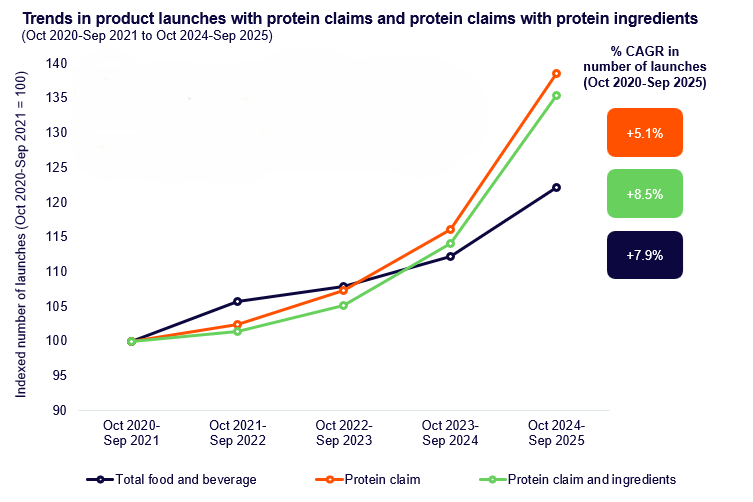 Product launches with protein claims and claims + protein ingredients exceed overall F&B launch activity in recent years (Data: Innova).Nura markets clear pea-and-rice blends, which bring the protein quality closer to a protein digestibility-corrected amino acid score (PDCAAS) of 1. The clear formats expand their use into sodas, lemonades, and other refreshment-style drinks.
Yeast protein presents another option. It can deliver a PDCAAS of 1, while its fermentation-based production reduces reliance on some of the inputs affecting conventional protein supply. However, Coggins notes that yeast still requires more explanation for consumers and that its flavor has not yet reached the neutrality of the pea-and-rice blend.
Yeast protein steps in
Angel Yeast presented its first iteration of clear yeast protein at IFT FIRST 2026 and says it is continuing to refine the offering. The new ingredient contains more than 80% protein and is intended for high-protein drinks, including carbonated and non-carbonated formats.
“We made it clear, neutral, and fully soluble to fit the ready-to-drink market,” says Steven Sheng, vice president for North America at Angel Yeast.
The additional processing makes the clear version more expensive than conventional yeast protein. But Sheng says that “it’s still welcome on the market, because few proteins work in transparent beverages.”
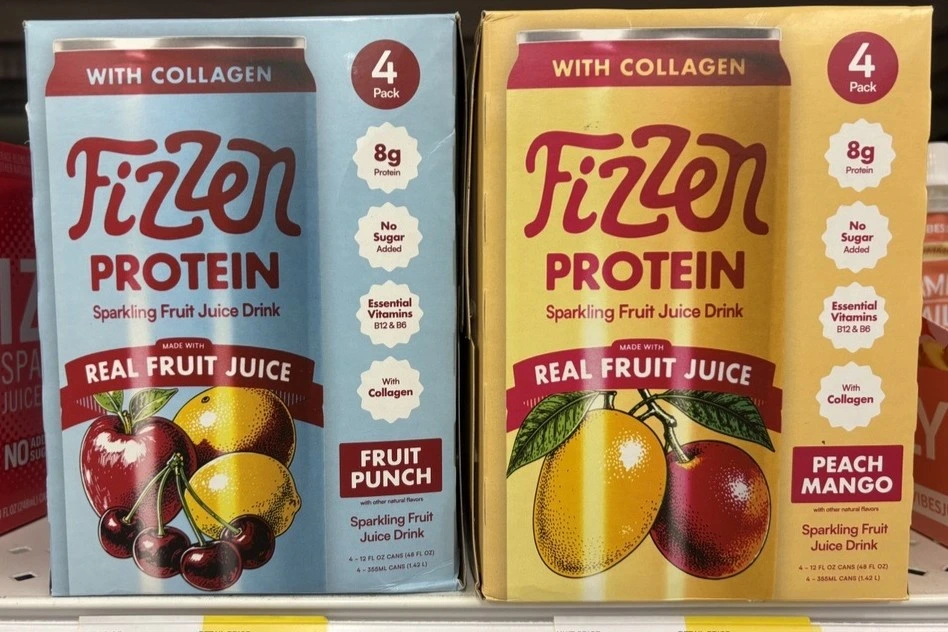 Fizzen sparkling protein drink in the US contains 8 g of protein, featuring whey, collagen, and real fruit juice.
Fizzen protein drink in the US contains 8 g of whey protein, collagen, and real fruit juice.
While some bitterness remains, Sheng says that formulators can mask off-notes and that Angel Yeast is working toward a more neutral, next-generation version.
Meanwhile, Biospringer by Lesaffre is positioning yeast protein as either a partial or direct replacement for whey. Its Springer Proteissimo 102 was featured in a high-protein bagel alongside three spreads in Chicago, US, demonstrating the nutritional and taste-enhancing functions of yeast ingredients.
“Yeast protein can be a viable solution to the issues the food industry is facing right now,” says Adria Gennuso-Fuchs, director of marketing at BioSpringer. “You can use yeast protein in combination with [whey] to reduce how much you need, or you can do a one-to-one replacement.”
Collagen’s complementary role
For manufacturers looking to reduce whey, adding collagen can offer additional benefits while maintaining a high protein content, even though collagen is not a complete protein in its own right.
At IFT FIRST 2026, collagen suppliers Rousselot and Gelita independently promoted collagen-whey blends as a way to reduce costs, improve the texture of bars throughout their shelf life, and support additional health positioning.
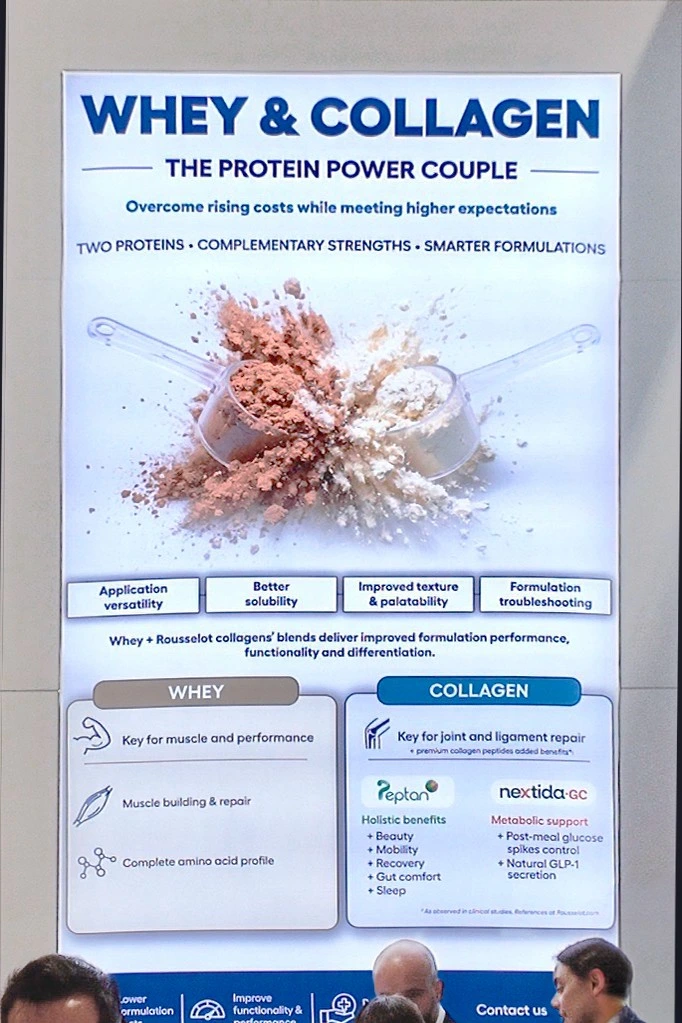 Rousselot refers to whey and collagen as “the protein power couple” for its synergistic effects.For Ginger Waller, technical services manager at Gelita, collagen and whey are “the dynamic duo.”
“There are advantages that collagen has that whey does not, and advantages that whey has that collagen does not.”
She points out that collagen is rich in glycine and arginine, which occur in relatively lower levels in whey. Collagen lacks tryptophan and is therefore not considered a complete protein on its own. Rousselot’s Porto notes that in a 50:50 collagen–whey formulation, the whey contributes enough tryptophan for the blend to provide all nine essential amino acids.
“If you partially replace whey with collagen in your product formulation, you can add the collagen benefits for skin health, hair, nails, and bones, while keeping the same benefits that whey delivers and reducing costs,” says Guilherme Porto, account manager at Rousselot.
Speaking to us at IFT FIRST 2026, he estimated that whey costs approximately three times as much as collagen. “If you replace half of your formulation with collagen, you can decrease the cost of that portion by three times. It offers huge savings.”
The combination also addresses a familiar problem in protein bars — hardening over time. “If you put only collagen in a bar, it would be too sticky. If you put only whey protein, it is probably going to be too hard,” he explains. “The mix of collagen and whey produces a texture that is not too sticky and not too hard,” explains Porto.
At the trade show, Gelita promoted its Optibar collagen peptides, designed to support high-protein formulations that optimize both texture and protein load.
Getting more from milk
Not every cost-saving strategy involves sourcing a different protein. Biotech company Curie Co offers a solution that can help dairy producers retain solids that would normally be lost to whey side streams.
Its Curabind enzyme can improve yields in dairy manufacturing. The enzyme forms new peptide bonds, which stabilize the protein matrix already present in dairy products, retaining more solids and extending shelf life.
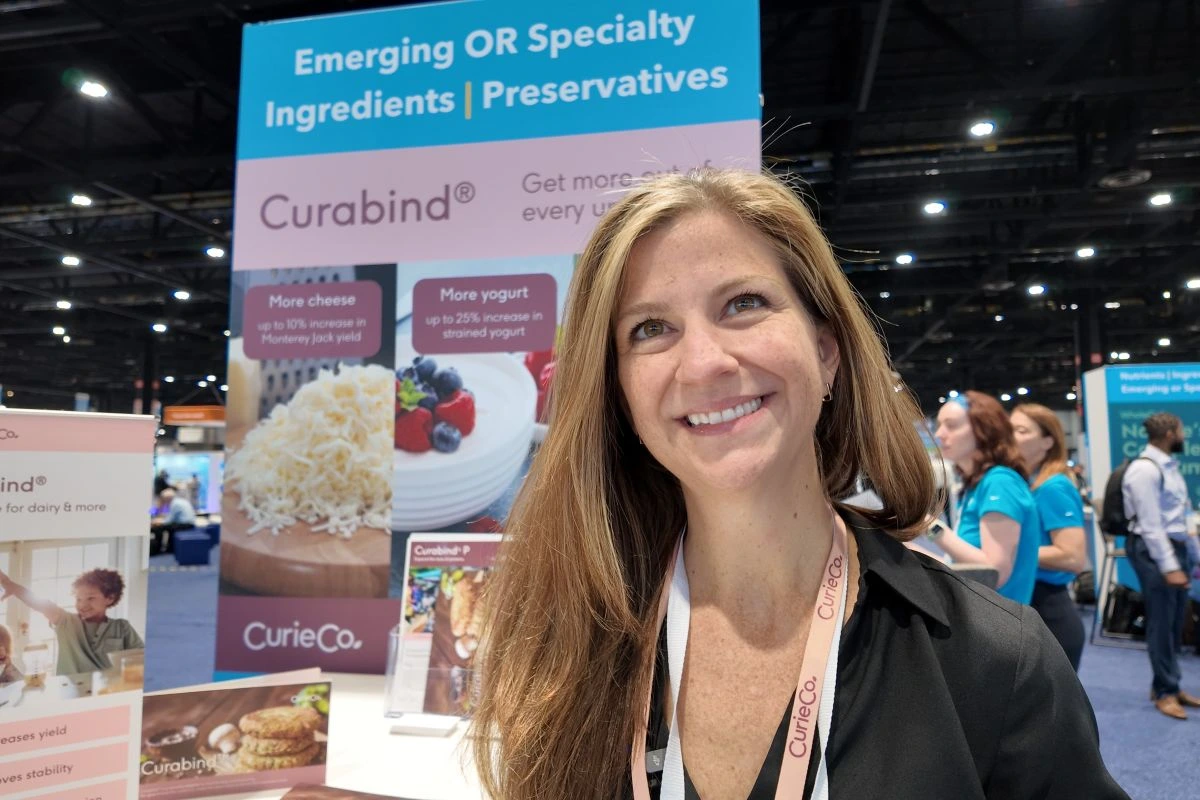 Erika Milczek, enzyme engineer and CEO of Curie Co.The company reports moisture-adjusted cheese yield increases of 4–11% across products, including mozzarella, Monterey Jack, ricotta, and cottage cheese. In strained yogurt, it has observed yield improvements of up to 25%, with no changes in viscosity, texture, or taste over a 90-day stability study.
“At the end of the day, you are getting more product out per unit of milk using very small amounts of our product,” says Erika Milczek, CEO of Curie Co.
The product also has benefits for texturing. For cottage cheese, the enzyme can also produce a firmer, more cohesive curd. In high-protein beverages, Milczek says Curabind can prevent protein settling without gums, hydrocolloids, or modified starches.
Dairy with precision fermentation
Precision fermentation offers a longer-term route to diversifying dairy protein supply, although its commercial development has not been linear. Many early retail products made with Perfect Day’s precision fermentation-derived whey, such as Brave Robot ice cream, have disappeared from shelves. Perfect Day exited its own consumer brands in 2023 to refocus on B2B ingredients.
At IFT FIRST 2024, Netherlands-based Vivici introduced its beta-lactoglobulin whey protein made through precision fermentation, positioning it for premium sports nutrition.
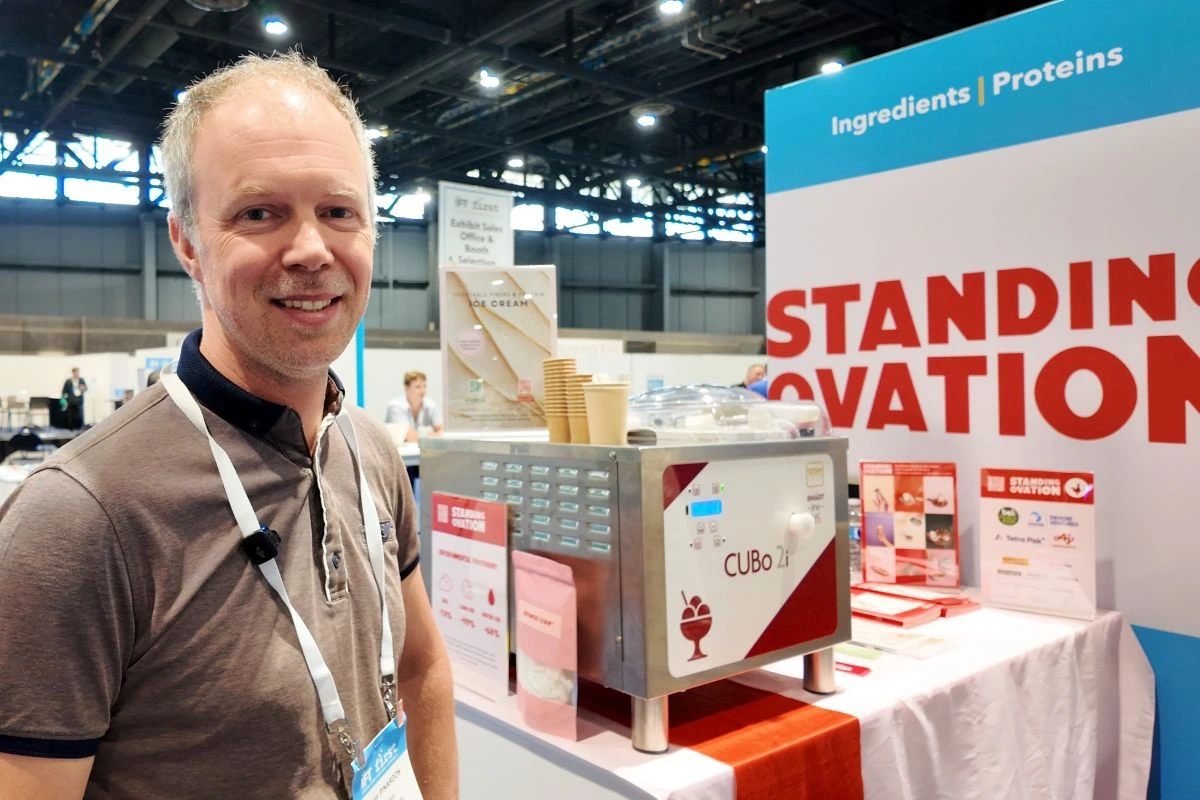 Xavier Pinardon, head of business development at Standing Ovation.Fast forward two years and Vivici landed €12.5 million (US$14.2 million) through the European Innovation Council Accelerator Program to scale its technology and capacity.
This year at IFT FIRST, France-based Standing Ovation showcased its Advanced Casein ingredient made through precision fermentation. The ingredient achieved self-affirmed GRAS status in the US earlier this year. Standing Ovation is seeking an FDA “no questions” letter by the end of 2026.
At the industry event, the company demonstrated the dairy-identical casein in a vegan gelato containing water, coconut oil, and plant-based fibers. The casein was included at 2–3% and eliminated the need for a separate emulsifier.
Standing Ovation’s process can provide a stable supply of casein, which has been a longstanding challenge for precision fermentation specialists due to the protein’s complexity. Through its partnership with Bel Group, the company has also demonstrated at an industrial scale how underutilized dairy side streams can serve as fermentation feedstocks for producing its high-value ingredient.
Advanced Casein is being developed for use in yogurt, cheese, coffee creamers, and whipped cream. Standing Ovation will initially target lower-volume applications that capitalize on the ingredient’s functional properties. As production increases, Xavier Pinardon, head of business development, says he envisions the ingredient supplying specialized categories like medical nutrition.