


Pilot to profit: How can Europe close its alternative protein scale-up gap?

Key takeaways
- European alternative protein innovators face high production costs, technical bottlenecks, and regulatory uncertainty when scaling from pilot to industrial production.
- Bühler, GEA, and NIZO highlight the importance of integrated processing, robust manufacturing, and shared facilities to reduce scale-up risks.
- Experts stress that profitability, investment, and consumer demand are essential to turning alternative protein innovation into commercial success.
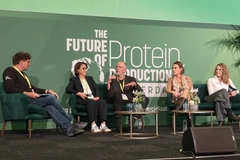 Left to right: Moderator Daniel Westcott, Food System Innovations; Khadidja Romari, CEO, Biotech Open Platform; Thomas Herget, professor, Technical University of Darmstadt; Robyn Eijlander, chief of staff, BFF, NIZO; Frederieke Reiners, VP, New Food business line, GEA.
Alternative protein innovation in Europe is proliferating, but manufacturers sometimes still struggle with moving from promising laboratory processes into reliable and cost-effective production. At Future of Protein Production (FPP) Amsterdam 2026, industry discussions centered around how process engineering, shared infrastructure, and commercial discipline can help innovators cross the scale-up gap.
According to the Good Food Institute Europe, European funders invested €1.3 billion (US$1.4 billion) in alternative-protein research between 2020 and 2025. However, the findings from a European Commission-funded study underscore the challenges facing innovators seeking to move beyond research and pilot production. High production costs, uneven technological readiness, and regulatory uncertainty are limiting biomass and precision fermentation in the EU.
“The lab demonstrates the science. The pilot validates the manufacturing concept. The factory must prove the business case,” Adham Rizk, sales and commercial manager for Industrial Biosolutions at Bühler Group, told Food Ingredients First at the event.
Bigger fermenters, different problems
Robyn Eijlander, chief of staff at the Biotechnology Fermentation Factory (BFF) at the Dutch Institute for Dairy Research (NIZO), explained that moving from the lab to pilot production means shifting the emphasis from speed to cost and robustness.
A successful trial is not sufficient evidence. Even a run at 10,000 liters does not establish that a process will perform reliably at a larger scale, she said.
“You need to have that repeatability. You need to have a robust process that actually works,” Eijlander told us.
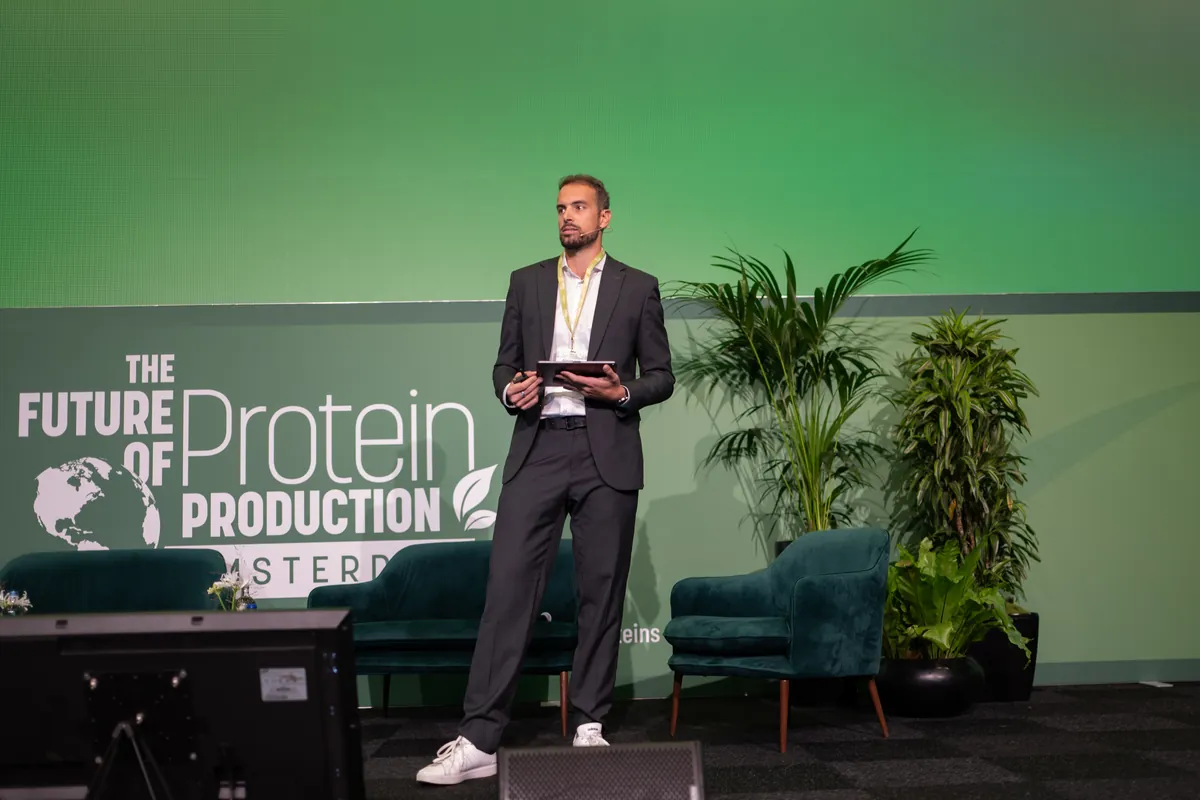 Adham Rizk: The pilot stage should test how the product can actually be manufactured at scale, not how to produce the perfect pilot batch.
For fermentation companies, one of the biggest issues is the assumption that a process can “simply be made bigger,” Rizk said.
With scale, conditions inside the fermenter change. “Mixing, oxygen supply, and heat transfer all behave differently, and maintaining the same conditions requires more energy as scale increases.”
GEA cited a customer example of this scenario. Frederieke Reiners, vice president of its New Food business line, recalled a customer trial in a 500-liter fermenter that revealed high heat generation.
“You must know those kinds of things early on because it could mean that you have to go a step back to the lab to modify your strains before you are even able to scale,” she explained.
Reiners said that discovering a fundamental limitation early can save years of development, and that a test center’s most valuable answer may sometimes be “no.”
The overlooked cost of downstream processing
According to Rizk at Bühler, separation, purification, concentration, and drying can represent a substantial share of initial investment and production costs.
“A high yield in the fermenter means little if the broth is hard to separate, the biomass behaves differently in wet grinding, or the dried product loses its texture or functionality.”
At industrial scale, changes in energy input, temperature, and residence time can affect viscosity, particle size, texture, and batch consistency, he explained.
“The microorganism does not know where upstream ends and downstream begins. Neither should the development plan.”
He recommended defining the finished ingredient specification before scale-up and measuring performance by the “cost per kg of ingredient that meets that specification,” rather than output volume alone.
GEA similarly tests connected operations — from media preparation and fermentation to filtration, separation, and spray drying — to identify bottlenecks before plant design is finalized, Gerben Kiers, solutions sales manager at GEA, told us.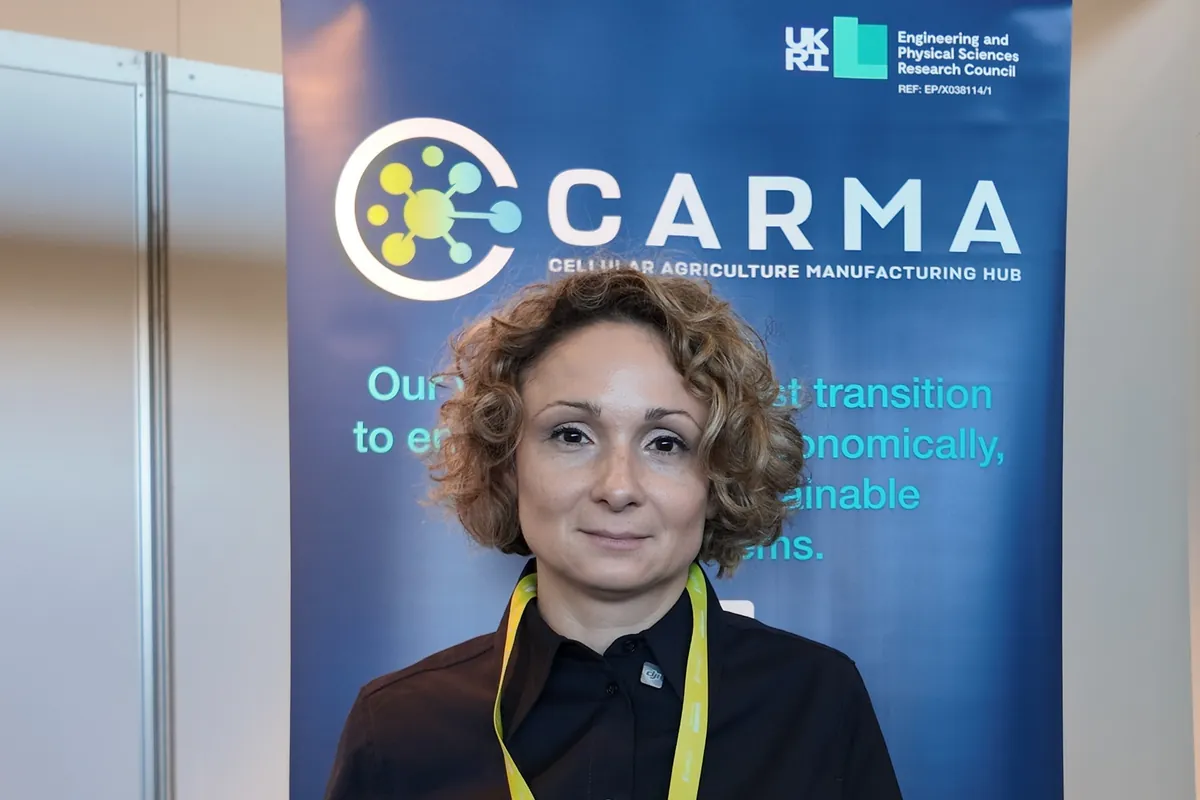 Jasmina Stevanov explored the consumer side of scale-up, highlighting how familiarity and perceived naturalness shape cultivated meat acceptance.
Kiers added that preliminary mass balances and operating parameters can help establish whether a production line will perform for hours or weeks under food-grade conditions, rather than only during a brief trial.
Bühler also identified continuous operation, intensified fermentation, and potentially retrofitting suitable existing brewery capacity as options worth evaluating.
Sharing infrastructure and expertise
The costs of testing processes beyond laboratory scale have fueled interest in open-access facilities. At the conference panel “Scaling Up: Should We Rethink Collaboration?”, moderated by Daniel Westcott of Food System Innovations, participants argued that start-ups need access to more than machinery.
Khadidja Romari, CEO of France’s Biotech Open Platform, told FPP attendees that developers need specialists who can identify industrial bottlenecks early, including in downstream processing.
Thomas Herget, professor at the Technical University of Darmstadt, Germany, who is involved in German novel-protein initiatives, said shared facilities can help companies save major capital expenditure. However, access to equipment must be accompanied by investors, engineering partners, business expertise, and regulatory support.
Kiers cites the BFF site based at NIZO’s campus in Ede, the Netherlands, as an example of collaboration. The site is being developed as an open-access fermentation facility with GEA equipment, including a 10,000-liter reactor. “That’s the next step for these start-up companies to really prove their process under industrial circumstances.”
However, NIZO’s Eijlander explained that funding construction is only half the task.
“Building something is one thing, but keeping it alive, maintained, and up to date with new technologies also costs money. So we all have a role to play in making this accessible and affordable to the companies that need it.”
Developers will still need access to capacity for the next step — actual commercial production, she added.
Can companies collaborate without losing their IP?
Shared facilities can also bring intellectual-property concerns.
“What value does IP have if you can’t make it to market?” Eijlander asked during the collaboration panel.
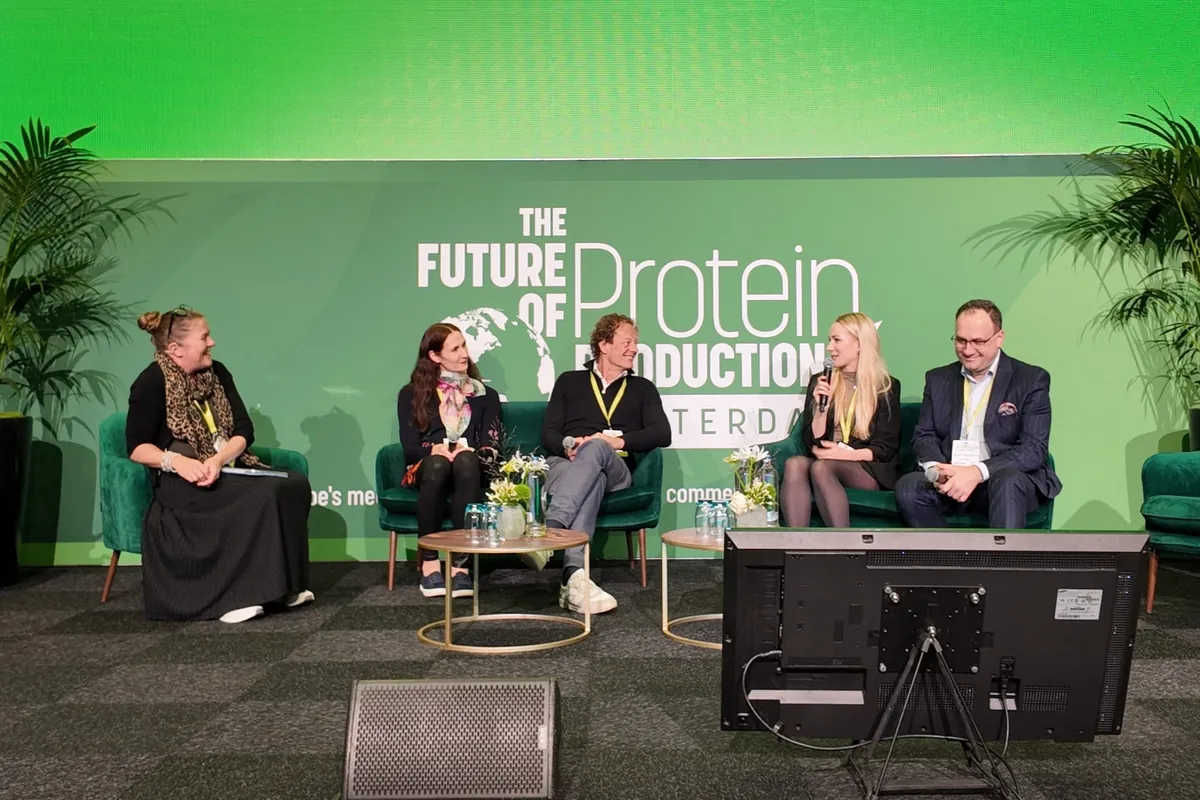 Left to right: Moderator Emma Osborne, CEO, Citizen Kind; Emilia Nordlund, portfolio lead, Food-Tech & Biotech for Food, VTT; Ferry Kamp, founding partner, Spectrum Scaling; Pia Meinlschmidt, head of product management, Planteneers; Adam Adamek, CEO, Impact Brussels.She underscored that some IP needs protection, but partners must be willing to exchange enough technical knowledge to solve problems, building collaboration on trust.
As an example, she cited yeast-ingredient producer Revyve’s work with AB InBev and NIZO, combining side streams, processing know-how, and proprietary technology while retaining distinct commercial interests.
Herget suggested nondisclosure agreements as a practical way to share technical information. “It protects your IP, your intellectual knowledge, or your trade secret.”
Investors need evidence and customers
Eijlander at NIZO emphasized that the expertise required to invent a technology may differ from that needed to establish a manufacturing business.
During “Is the Protein Transition Still on Track?”, moderated by Emma Osborne, CEO of Citizen Kind, Emilia Nordlund, portfolio lead, Food-Tech & Biotech for Food at VTT, said the industry needs to get its first biotechnology factories operating.
She described investment as “selective,” and emphasized that companies must demonstrate a route toward profitability. Government-backed loan instruments could ease access to capital, but “the government should pay the bill, she said. “This is a business case in the end.”
Ferry Kamp, founding partner of Spectrum Scaling, challenged the sector to measure progress through actual consumption rather than start-up numbers or product launches.
“We need consumer pull and not technology push.”
Pia Meinlschmidt, head of product management at Planteneers, similarly highlighted taste, affordability, and product quality as key issues.
Several panelists suggested familiar hybrid products could help alternatives enter everyday diets.
Nordlund also urged developers to find value in non-protein crop fractions and other side streams, rather than relying on costly purification of the protein alone.
Beyond the factory gate
For alt-proteins like cultivated meat, consumer perception creates a further hurdle. Jasmina Stevanov, lecturer in consumer psychology at the University of Bristol Business School, UK, and researcher with the Cellular Agriculture Manufacturing Hub, says willingness-to-try surveys miss the complexity of how people categorize novel foods.
In an exploratory study of 22 participants, “eight placed precision fermentation and engineered novel alternative protein as the closest categories to cultivated meat,” she told Food Ingredients First.
The small sample is not representative, but Stevanov says the findings illustrate why familiarity, cultural identity, and perceived naturalness matter alongside sustainability. Consumers can support a technology’s environmental aims while remaining uneasy about the food itself, she argued.
“We need to move away from dichotomous categorization, accept or reject, willingness to pay or not,” she said, calling for more attention to the social and psychological factors shaping attitudes before products reach consumers.
Regulatory pathways also remain a concern. Eijlander says lengthy novel-food approvals can restrict access to markets even when manufacturers can produce safe, functional ingredients.
GEA’s Reiners frames investment in biotechnology as a question of Europe’s industrial resilience, pointing to manufacturing support in Asia and dependence on imported ingredients.
“Strategies and roadmaps don’t deliver proteins. We need to actually act now because we need to act before a crisis, not when the crisis is there.”