


Beyond “lab-grown”: Trust and terminology shape cultivated meat acceptance


Key takeaways
- A Tufts University (US) study finds consumers in the US and Germany are more likely to purchase cultivated meat when it is labeled “cultured” or “cultivated” rather than “lab-grown.”
- Food neophobia is highlighted as a major barrier, with highly skeptical consumers tending to reject cultivated meat regardless of labels.
- The findings suggest cultivated meat companies need to pair careful naming with trust-building and consumer education to improve acceptance.

Consumers in the US and Germany are more likely to choose and pay more for cellular agriculture meat (CAM) when it is labeled “cultured” or “cultivated” rather than “lab-grown,” according to a new study. For cultivated meat companies, the findings mean branding and consumer trust are likely to be as important to business success as the technology itself.
The study also identifies food neophobia (reluctance to try new foods) as a major barrier to CAM acceptance, with highly neophobic consumers tending to reject the product regardless of the terminology used.
Since many consumers are still unfamiliar with cultivated meat, the authors argue that people rely heavily on labels and wording to judge whether the product seems natural, risky, artificial, or trustworthy.

The study’s first author, Katherine Fuller, who conducted the research while at the Tufts University Center for Cellular Agriculture, Massachusetts, US, explains that terms like “cultured,” “cultivated,” and “cellular” appeal more to consumers as they may place “less emphasis on the laboratory environment and more on the production process itself.”
“Although the exact mechanisms require further study, our results suggest that consumers respond differently to terminology and that certain labels may reduce negative perceptions associated with the technology. Importantly, this pattern was remarkably consistent across two distinct national contexts (US and Germany),” she tells Food Ingredients First.
 Safety, naturalness, ethics, and trust concerns cannot be resolved through naming alone, says Fuller.
Challenges with cultivated meat labels
The researchers conducted an online survey on 1,662 consumers in the US and Germany between October and November 2022, coinciding with the first US approval of CAM. The survey was pretested through 50 in-person semi-structured interviews, and the team screened participants to include those who consume conventional or plant-based meats.
The study, published in Food Quality & Preference, found that naturalness-oriented terminology increased consumers’ willingness to pay by up to US$1.97 in the US and €0.78 (US$0.88) in Germany compared with “lab-grown.”
This finding may be explained by prior research that suggests that “lab-grown” may evoke images of “artificiality, excessive technological intervention, or unfamiliar production processes,” Fuller notes.
The cross-national comparison in the study is important because the US and Germany represent different regulatory and market contexts, note the authors. While the US has granted regulatory approvals enabling commercial sales, Germany operates under the EU framework, where CAM is not yet authorized.
Fuller describes the consistency of the naming effects across the US and Germany as one of the most notable findings from the study.
“Given cultural differences in food attitudes and technology acceptance, we expected some notable differences. Instead, we observed a similar ranking of terminology in both countries, suggesting that the language used to describe cultivated meat may influence consumer evaluations in a broadly comparable way across markets.”
Food neophobia as a cultivated meat barrier
For consumers with food neophobia, better naming does not solve the acceptance problem because their resistance is more categorical.
Fuller emphasizes that language effects operate primarily among consumers who are “already at least somewhat open to trying novel foods,” says Fuller.
She frames food neophobia and trust as two important moderating factors in the study.
“Consumers who were more hesitant about novel foods generally exhibited lower acceptance of cultivated meat regardless of terminology. Similarly, trust influenced how consumers interpreted product information.”
“These findings suggest that naming effects do not operate in isolation but rather interact with broader attitudes toward food innovation.”
Fuller explains that terminology shifts perceptions most effectively among consumers with a “higher trust in food system actors and lower food neophobia,” while for highly skeptical consumers, these structural attitudes dominate and largely override framing effects.
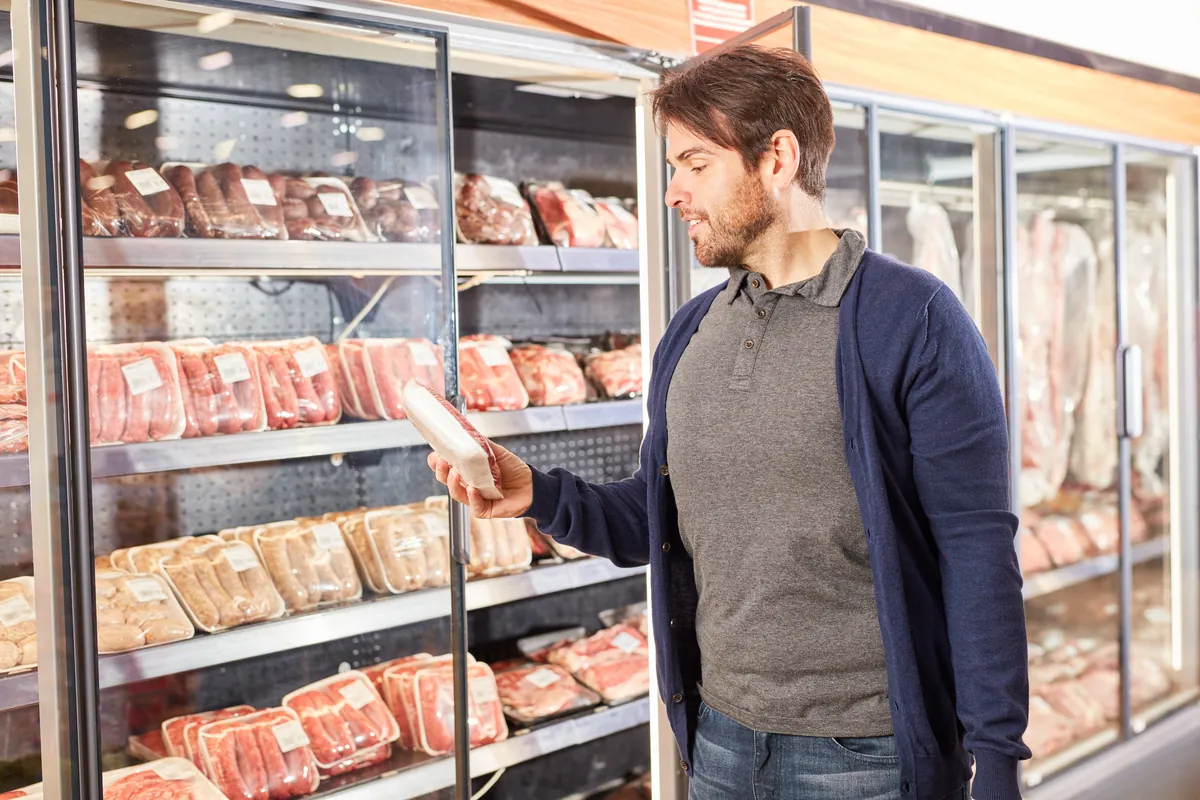 Consumers rely more on labels when judging unfamiliar food technologies.
Can better labels boost cultivated meat acceptance?
The study’s findings suggest that terminology can improve perceptions, “but only to a certain extent,” says Fuller.
Consumers who are highly skeptical of new food technologies may have concerns related to safety, naturalness, ethics, or trust that cannot be resolved through naming alone, she explains.
“Communication strategies are important, but they should be accompanied by transparent information and opportunities for consumers to learn about the technology.”
To understand consumer acceptance of cultivated meat, Fuller suggests future research to examine how terminology interacts with additional factors such as “product experience, familiarity, information provision, and real purchasing behavior.”
“As cultivated meat products enter commercial markets, it will also be important to evaluate whether the effects observed in stated preference studies persist when consumers make actual purchase decisions,” she concludes.
Amid investment and pricing shortfalls and efforts to increase cultivated meat acceptance, companies are exploring farm-based and small-scale production models to build consumer trust and improve commercial viability.
Meanwhile, countries like Singapore continue to offer regulatory clearance to cultivated meat pioneers.



Upcoming webinars

Oat-Standing Ingredients - Showcasing Irish Grain Through Innovation
Tirlán Ingredients

2027 Food Safety Risks for Quality & Compliance Leaders
FoodChain ID

Formulating for function: Developing benefit-led beverages with natural colours, botanicals, and flavours
Givaudan Sense Colour