



Danone-backed biotech platform opens for food ingredient scale-up


Key takeaways
- Danone-backed platform opens in France with €20 million (US$22.7 million) invested in industrial-scale biotechnology and fermentation capabilities.
- The facility targets food ingredient scale-up, helping companies move proteins, enzymes, and other fermentation-derived ingredients from laboratory development toward commercial production.
- The platform reflects growing industry investment in fermentation, while cost, functionality, regulatory approval, and production yields remain key commercialization challenges.
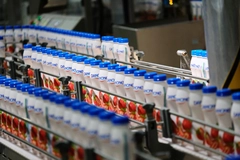
Danone and its partners have inaugurated a €20 million (US$22.7 million) industrial biotechnology platform in Clermont-Ferrand, France, designed to help move fermentation-based innovations from the laboratory toward commercial-scale production.
The Biotech Open Platform can handle fermentation volumes of up to 15 m³ and scale processes from as little as 10 grams to one metric ton of ingredients. Its capabilities include fermentation, purification, and bioprocess development, with facilities built to meet food-production standards.
For the food ingredients sector, the platform is particularly relevant to the development of proteins, enzymes, and other fermentation-derived ingredients.
Danone established the platform with Michelin, DMC Biotechnologies, Crédit Agricole Centre France, Clermont Auvergne Innovation, and Greentech in 2024, with the aim of addressing one of the major barriers facing industrial biotechnology: moving promising processes beyond pilot and laboratory stages.

Food Ingredients First previously reported on the platform’s development, with Danone describing scale-up as a critical hurdle for precision fermentation and other biotechnology applications. At the time, DMC Biotechnologies highlighted the need for greater fermentation capacity to demonstrate that new ingredients can be produced reliably at commercially relevant volumes.
CEO of Danone, Antoine de Saint-Affrique, says: “For more than a century, Danone has drawn on the science of fermentation to bring health through food to as many people as possible. With Biotech Open Platform, we are strengthening a critical link in Europe’s biotechnology ecosystem by accelerating the industrial scale-up of laboratory innovations. Biotech Open Platform demonstrates the value of shared infrastructure and long-term partnerships in enhancing European competitiveness.”
Bridging the scale-up gap
The challenge remains highly relevant as fermentation moves into a wider range of food ingredient applications. Recent industry developments have included fermentation-derived vanillin, dairy-culture technologies, precision-fermented proteins, and new equipment designed to help manufacturers move from pilot production to industrial volumes.
At Vitafoods Europe earlier this year, ingredient suppliers also highlighted fermentation as a route to improving functionality, consistency, and scalability across proteins, enzymes, probiotics, and other specialty ingredients. However, suppliers noted that maintaining performance through processing and shelf life remains a significant challenge when bringing biotech-derived ingredients into finished food and beverage products.
From fermentation to commercial production
The new French platform is intended to address part of that scale up gap by allowing companies to produce sufficient quantities for application testing and validation before committing to full commercial production. It will be open to start-ups, established companies, and research organizations rather than being limited to its founding partners.
CEO of Biotech Open Platform, Khadidja Romari, says: “Biotech Open Platform was created to address a very concrete challenge in biotechnology: how to move from a promising process at laboratory scale to a robust process that can work at industrial scale. The infrastructure is important, but equipment alone is not enough.”
“Scale up requires experience, technical know-how, and the ability to solve the issues that appear as the process moves from one scale to another. Confidentiality and protection of intellectual property are also essential for the companies we work with. Our role is to help them move faster and more securely toward industrialization.”
Beyond fermentation capacity
For Danone, the investment also builds on its long-standing interest in fermentation and alternative sources of proteins and other food ingredients. The company previously described the platform as a way to accelerate the development and commercialization of fermentation technologies while increasing access to new protein and ingredient sources.
The platform’s first-phase investment and 5,000-square-meter facility, therefore, represent more than additional fermentation capacity. They reflect a broader push within Europe’s food ingredients industry to create the infrastructure needed to turn biotechnology from laboratory research into commercially viable ingredient production.
The success of that transition, however, will ultimately depend on more than fermentation capacity. Cost, yield, regulatory approval, ingredient functionality, and the ability to integrate new ingredients into existing food manufacturing processes will remain key hurdles as companies attempt to bring precision fermentation and other biotech solutions into mainstream food production.



Upcoming webinars

Oat-Standing Ingredients - Showcasing Irish Grain Through Innovation
Tirlán Ingredients

2027 Food Safety Risks for Quality & Compliance Leaders
FoodChain ID

Formulating for function: Developing benefit-led beverages with natural colours, botanicals, and flavours
Givaudan Sense Colour