



Dry4Good expands natural ingredient production tenfold as clean label demand grows


Key takeaways
- Dry4Good secures €5 million (US$5.6 million) to increase production capacity tenfold, supporting growing demand for clean label fruit, vegetable, and botanical ingredients.
- The company’s ambient-temperature drying technology is designed to preserve the flavor, color, and nutritional qualities of fresh produce while helping manufacturers replace artificial additives.
- The expansion comes as food manufacturers face increasing regulatory and consumer pressure to simplify ingredient lists and reduce reliance on ultra-processed ingredients.
As food manufacturers look to simplify ingredient lists and reduce reliance on artificial additives, French food technology company Dry4Good has secured €5 million (US$5.6 million) to scale production of its naturally dried fruit, vegetable, and botanical ingredients.
The investment will increase the company’s annual production capacity tenfold, from 80 metric tons to 800 metric tons, through the addition of two new production lines at its facility in Cergy, France.
The expansion comes as F&B manufacturers face growing pressure to reduce reliance on artificial additives and simplify ingredient lists without compromising flavor, color, or nutritional quality.
Dry4Good says its proprietary ambient-temperature drying technology offers an alternative to conventional drying methods, which can degrade flavor compounds, pigments, and nutrients through high heat.
By preserving the sensory and nutritional characteristics of fresh fruits, vegetables, and aromatic plants, the company aims to help manufacturers reformulate products with more recognizable, additive-free ingredients that support clean label claims.
Scaling natural ingredients for clean label reformulation
Romaric Janssen, president and co-founder of Dry4Good, tells Food Ingredients First how one of the industry’s longstanding challenges has been finding dry ingredients that can truly reproduce the sensory experience of fresh products.
The company’s precision-drying process preserves the organoleptic and nutritional qualities of fresh produce in additive-free ingredients, which Dry4Good positions as an alternative to ultra-processing.
Dry4Good uses an ambient-temperature drying process that removes water while largely preserving the ingredient’s natural flavor, color, and nutritional profile, concentrating these qualities rather than degrading them.
“The result is a range of natural ingredients that retain the flavor, color, and nutritional qualities of fresh produce and are designed for applications including bakery, confectionery, chocolate, beverages, and prepared meals,” he says.
Regulatory pressure drives clean label reformulation
Janssen explains how several food manufacturers are already using Dry4Good’s ingredients to reformulate products as part of their clean label strategies, replacing artificial flavors and colors with fruit, vegetable, and herb powders while maintaining taste and appearance.
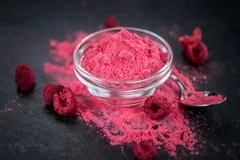
He points to several examples, including a chocolate manufacturer replacing ginger flavoring with real ginger powder, a bakery producer using raspberry powder to deliver color and flavor without added colors or flavorings, and a dough manufacturer incorporating spinach powder into an apple-flavored product.
The expansion comes as food manufacturers face increasing pressure to reformulate products in response to both evolving consumer expectations and tightening regulatory scrutiny. Across Europe and North America, regulators and consumers are placing greater emphasis on reducing artificial additives and ultra-processed foods, and boosting ingredient transparency, prompting brands to simplify formulations and adopt more recognizable ingredients.
Against this backdrop, demand for natural ingredient solutions is rising, driven by growing demand for clean label reformulation and ingredient simplification.
Next phase of growth
In five years, Dry4Good’s objective is to have reached capacity at its pilot plant and make it profitable, “while developing a new plant at a classic scale in our business, which would be around three to four times bigger than our pilot plant,” Janssen says.
“From a product perspective, the target is to be seen as a serious industrial company, allowing the food industry to reduce reliance on ultra-processed products.”
With production set to increase tenfold, the company will next focus on expanding its customer base and validating its technology across a broader range of commercial food applications.