


Spirulina blue gains ground in F&B despite stability, supply and regulatory challenges


Key takeaways
- The F&B industry’s use of blue spirulina is growing as a natural alternative to synthetic blue dyes, particularly in confectionery and frozen desserts.
- The ingredient’s wider use faces challenges due to sensitivity to heat and acid, prompting suppliers to invest in improved cultivation.
- Regulatory landscape for blue spirulina use varies by market, while supply concentration and competition from newer blue colorants could shape its future commercial growth.
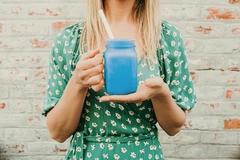
Blue spirulina-derived colors are increasingly positioned as promising alternatives to synthetic blue dyes, as F&B companies race to develop colors that meet consumer and regulatory demands for natural ingredients.
The marine ingredient is experiencing rising demand across confectionery and frozen desserts for its bright, intense blue color. However, technical challenges involving fading of its blue phycocyanin pigment under heat and light, and regulatory considerations over “natural” claims, remain.
In response, industry suppliers are turning toward varied strategies, including controlled indoor cultivation, diversified sourcing, proprietary extraction, and stabilization technologies, to achieve the required stability and supply security to widen their natural-blue palette.
Spirulina (Arthrospira platensis) extract, which is already approved by the US FDA for specific, limited food categories, received another positive push from the agency in February 2026. The FDA expanded the use of spirulina-based blue colors across wider F&B applications, including bakery and heat-processed categories.
Last year, when Walmart pledged to scrap synthetic dyes in its private label products, Innova Market Insights pinpointed spirulina as one of the most promising clean label alternatives to artificial FD&C Blue 1, alongside butterfly pea flower extract, gardenia blue, and Galdieria extract blue.
Food Ingredients First explores the growing use of spirulina in F&B color applications, as ingredient and regulatory experts examine supply chain considerations, compliance requirements, and the commercial outlook for expanding natural-blue color portfolios.
Spirulina powers blue innovation
The use of spirulina as a food color has increased over the past five years, reflecting the wider shift toward naturally-sourced colors, Phillip Cook, head of strategic marketing at Oterra, tells us.
 Freezing has no adverse effect on blue spirulina, allowing applications in ice cream, popsicles, and frozen treats.“Confectionery is the largest category, which is not surprising given spirulina’s strong performance in lower-water applications. This is followed by supplements and bakery.”
More than 10,000 products containing a blue color were launched globally in 2025, compared with around 6,000 in 2021, he adds, citing Innova data.
Dana Osborn, marketing manager at California Natural Color (CNC), attributes the growing spirulina demand to brands’ interest in natural alternatives that deliver “vibrant, eye-catching blue shades.”
“We are also seeing increased interest in nutritional drinks and powdered beverage formats where brands want a color impact that aligns with a more natural ingredient story,” she says.
Another category sparking interest in spirulina is frozen desserts, where “whimsical blue tones and dreamy flavors like blue raspberry, birthday cake, and bubblegum tempt consumers of all ages to indulge,” Jessica Kidwell, VP of CD&D Global Colors at ADM, tells Food Ingredients First.
Tackling spirulina color loss
Despite its eye-catching colors, blue spirulina is heat- and acid-sensitive, and certain formulation conditions can cause color degradation, Kidwell notes.
“Beverages, unless they are dairy- or dairy alternative-based, typically have a low pH that would degrade blue spirulina. Additionally, heat treatment can cause color fading, as well as sedimentation or flocculation, when the protein in the pigment is denatured.”
 Jessica Kidwell: In beverages, heat can denature the spirulina pigment’s protein, causing fading, sedimentation or flocculation.Confectionery like gummies contains acid, so there could be a “speckled or mottled appearance” from fallout that occurs during the solidification of the starch or gelatin, she explains.
According to Christina Niehoff, product manager at GNT, blue spirulina is most vulnerable in low-pH, high-heat, and high-water-activity applications, where acid and temperatures above 70°C can cause fading.
She suggests minimizing heat exposure and incorporating the color “as late as possible in the production process” to significantly improve color retention.
Blue spirulina is also vulnerable to contamination from heavy metals, says Julia Streuli, co-founder of Ful Foods, a Dutch food tech company specializing in spirulina-based products.
“The extraction process itself can introduce irregularities in color potency, so even good raw material doesn’t guarantee a consistent end product.”
Osborn at CNC adds that, in bakery products, direct exposure to high heat can be challenging.
“Freezing is generally more manageable than heating, so frozen desserts, or smoothie-type applications can be good candidates, depending on pH/formulation,” she says.
Securing spirulina supply
Streuli at Ful Foods tells Food Ingredients First there are just a few producers who can meet the quality standards required for blue spirulina at the price and scale multinationals require.
 Christina Niehoff: Brands may expect spirulina to perform like synthetic colors, but careful formulation is essential.“Geopolitical exposure makes it harder, since most spirulina sourcing runs through China, which has faced steep tariffs. As a result, many procurement teams are now mandated to de-risk their supply chains by sourcing from Europe or the US instead. But that shift only works if pricing, volume, and quality requirements are still met,” she says.
Cook at Oterra explains that open-pond production is exposed to seasonal variation, “which can affect availability, pigment concentration, and consistency.” He points to the protected and consistent growing environment in controlled indoor cultivation for supporting a year-round supply of the blue pigment.
For Niehoff, spirulina’s sourcing risks center on securing high-quality raw materials with consistent color strength at a competitive cost. She says GNT sources its spirulina biomass from Asia, where “abundant sunlight and strict government regulations” support cultivation.
Spirulina: Global regulatory differences
Regulatory consultancy FoodChain ID’s head of scientific affairs, Jérôme Le Bloch, tells us that from a regulatory perspective, spirulina extract benefits from a generally positive image.
“However, its use remains subject to specific regulatory requirements that differ significantly between countries. Manufacturers cannot assume that an authorization or classification in one market automatically applies elsewhere.”
“In the US, spirulina extracts need to be authorized as a color additive, but are listed in the 21 CFR (§73.530), which means that spirulina extracts are exempted from batch certification. This is related to spirulina water extracts, containing phycocyanin.”
 Jérôme Le Bloch: Brands using blue spirulina should use “natural” and “clean label” claims cautiously, as regulations vary across markets.In the EU, spirulina biomass is permitted as a food ingredient, but Le Bloch notes that spirulina extracts used for coloring remain subject to regulatory uncertainty, and are not officially authorized as food additives.
“Operators are using the legal uncertainties around spirulina extract and presenting it as a food with coloring properties.”
Le Bloch adds that companies must also ensure “natural” or “clean label” claims comply with jurisdiction-specific rules.
Osborn at CNC highlights the need for companies to separate color use from any functional claims. “At typical dosage levels, spirulina is selected for pigment performance rather than nutritionally-related claims, and strong positioning should focus on visual and clean label appeal.”
The natural blue color outlook
Streuli at Ful Foods describes spirulina as the “front-runner” for replacing synthetic blue. “What’s left is some minor regulatory but mostly execution: continuing to push UV stability, high-heat stability, and stability in high-water-activity, low-pH formats — the combination that still favors synthetics,” she says.
GNT’s Niehoff considers spirulina firmly established as a mainstream natural blue. “The US FDA’s efforts to phase out petroleum-based dyes are helping build up the momentum behind it, and continuing advances in formulation are making it easier for brands to use spirulina across a wider range of products.”
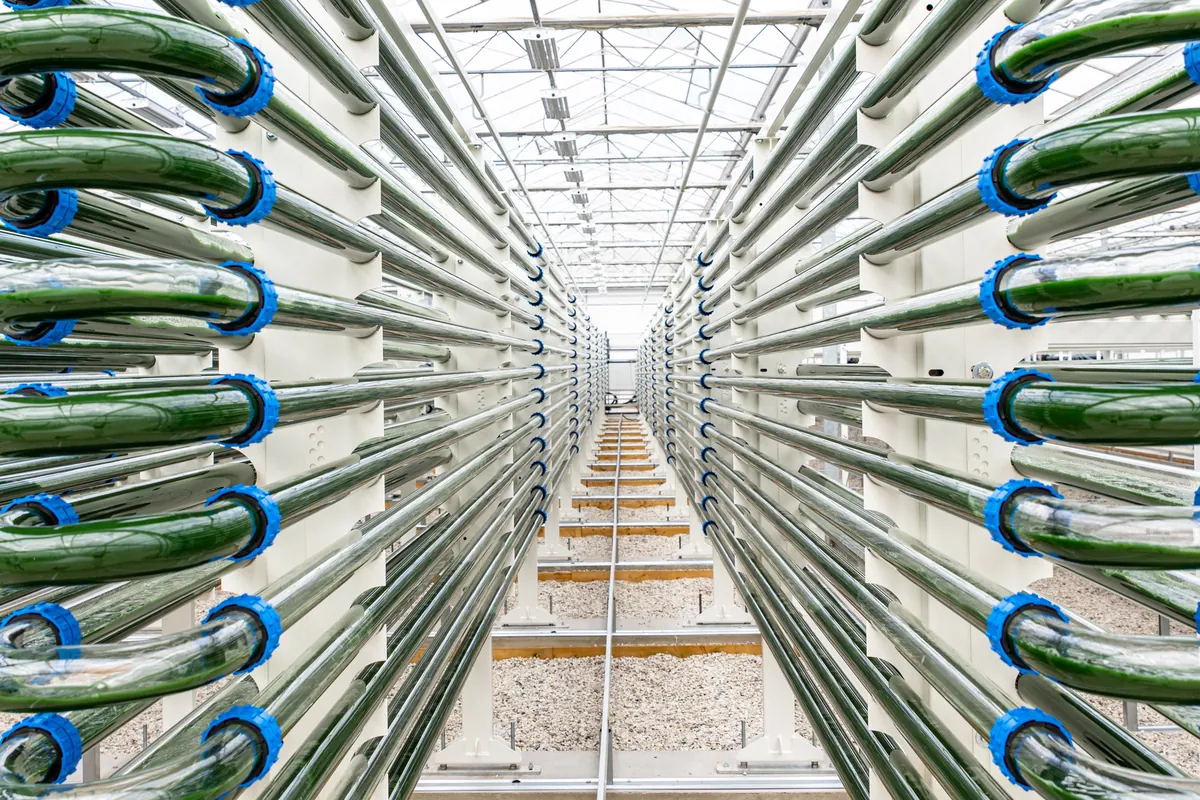 Ful Foods cultivates spirulina in closed photobioreactors for blue pigment extraction (Image credit: Ful Foods).Meanwhile, Cook at Oterra says rather than one universal replacement for synthetic color, mainstream conversion will depend on giving formulators a “portfolio of complementary solutions, supported by application and regulatory expertise.”
However, Le Bloch at FoodChain ID presents a more cautious outlook. He points to newly authorized phycocyanin colors, including alternatives derived from Galdieria sulphuraria, produced by Fermentalg with DDW for the US market, as competitors for spirulina suppliers.
The ingredient is FDA-authorized and has received a positive European Food Safety Authority opinion, with final EU authorization pending.
“It will enter the EU market at the end of 2026, and will probably challenge all spirulina suppliers, as this new blue colorant has no legal uncertainty compared to spirulina extracts,” he says.