


Unilever Foods growth slows in Q2 as McCormick combination advances

Key takeaways
- Unilever posted strong group growth in H1, but Foods was its slowest-growing business, with Q2 sales nearly flat.
- Emerging markets, Horlicks, and foodservice supported growth, while developed markets and US condiment competition weighed on performance.
- The McCormick combination is progressing, with Unilever expecting Foods growth to improve through innovation, pricing, and better developed-market execution.
Unilever delivered its strongest quarterly volume growth in more than a decade in Q2 2026. However, Foods remained the company’s slowest-growing business group, underscoring both the rationale for, and the execution challenge behind, its planned combination with McCormick.
At group level, first-half underlying sales growth reached 4.8%, driven by 4.2% volume growth and 0.6% pricing. Growth accelerated in Q2 to 5.8%, with volumes up 5.5%. First-half turnover rose 0.5% to €25.6 billion (US$29.1 billion), as operational gains and acquisitions offset adverse currency movements.
Foods, however, posted first-half underlying sales growth of 1.2%, entirely volume-led, with pricing flat. The business generated €6.3 billion (US$7.2 billion) in turnover, down 4% on a reported basis. Momentum weakened further in Q2: underlying sales grew 0.2%, volumes slipped 0.1%, and turnover declined 2.7% to €3.1 billion (US$3.5 billion).

“We have delivered a strong volume-led performance in the first half, with a significant step-up in the second quarter — the best volume quarter at Unilever in over a decade. Our Power Brands continued to outperform, with all Business Groups delivering volume-led growth. Emerging markets showed momentum — India, Indonesia, and Latin America all delivered strong growth — while North America again outperformed its market,” says Unilever CEO Fernando Fernandez.
Developed markets weigh on food performance
The UK-headquartered company says Foods growth was broad-based in emerging markets. However, softer conditions in developed markets and heightened competition in US condiments pulled the division below expectations in Q2.
Cooking aids were flat across both volume and price. Knorr achieved low-single-digit growth, as gains in emerging markets, particularly across Asia Pacific and Africa, were offset by category softness and declines in developed markets.
Condiments delivered low-single-digit, volume-led growth. Hellmann’s volumes rose at a low-single-digit rate, supported by continued momentum in Brazil, Asia Pacific, and Africa. In the US, however, Unilever acknowledges recent share losses in premium and avocado mayonnaise.
That pressure is especially significant ahead of the McCormick transaction. Hellmann’s and Knorr account for roughly 70% of Unilever Foods sales and will sit alongside McCormick brands, including French’s, Cholula, and Frank’s, in a combined, flavor-focused company expected to generate about US$20 billion in annual revenue.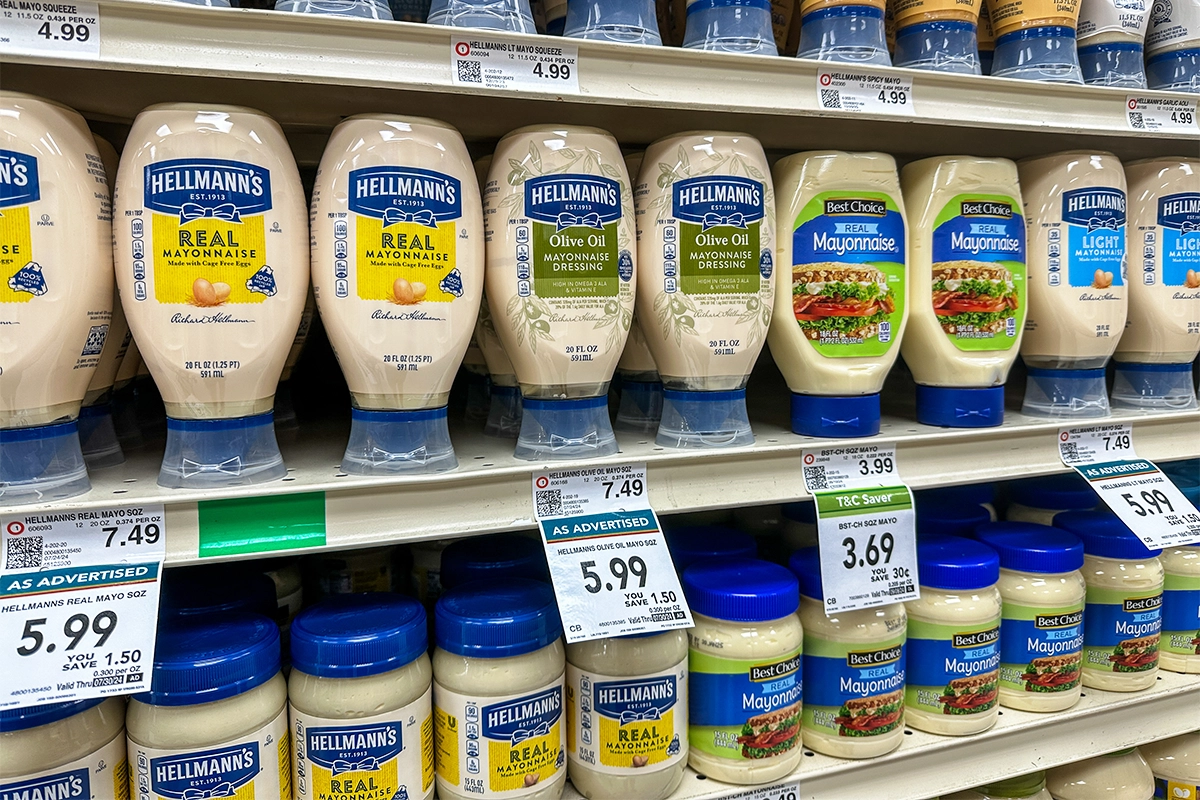 Unilever Foods’ Q2 growth slowed to 0.2%, amid softer developed markets and pressure in US condiments.
Foodservice delivers volume-led growth
Unilever Food Solutions, the company’s professional foodservice arm, grew at a low-single-digit rate, led by volume. China advanced at a low-single-digit pace, as the business expanded its reach and penetration amid a gradual improvement in away-from-home consumption. US foodservice sales grew mid-single digit, also driven by volume.
The results suggest that foodservice remains a comparatively resilient channel for the portfolio, even as retail condiments face competitive intensity. For the future combined business, this creates a broader platform spanning consumer brands, professional kitchens, spices, seasonings, sauces, and condiments.
India was another bright spot. Unilever’s Foods business there grew mid-single digit, led by double-digit growth from Horlicks, the malted nutrition beverage brand. Unilever’s food operations in India, Nepal, and Portugal are excluded from the McCormick deal, alongside Lifestyle Nutrition, Buavita, and Lipton Ready-to-Drink.
Functional nutrition provides adjacent growth
Outside the Foods division, Unilever’s Wellbeing portfolio delivered stronger F&B-adjacent momentum. Liquid I.V. grew at a high-single-digit rate in the first half and reached double-digit growth in Q2, while supplement brand Olly posted double-digit growth.
Unilever also completed its acquisition of Grüns, a fast-growing US greens supplement business, in June.
These assets illustrate the increasingly blurred line between consumer health, supplements, and functional beverages. They also remain strategically distinct from the food portfolio being combined with McCormick, reinforcing Unilever’s shift toward a home, personal care, beauty, and well-being model.
Margin holds, but inflation bites
Foods’ underlying operating margin was unchanged at 23.3%, despite underlying operating profit falling 4.3% to €1.5 billion (US$1.7 billion). Unilever says commodity cost inflation and increased investment in its value proposition compressed gross margin, although lower overheads helped offset the pressure. Brand and marketing spending remained well above the peer average.
Unilever expects Foods growth to accelerate in the second half, led by innovation and improved performance in developed markets. In condiments, it expects innovation and commodity-driven price increases to boost growth.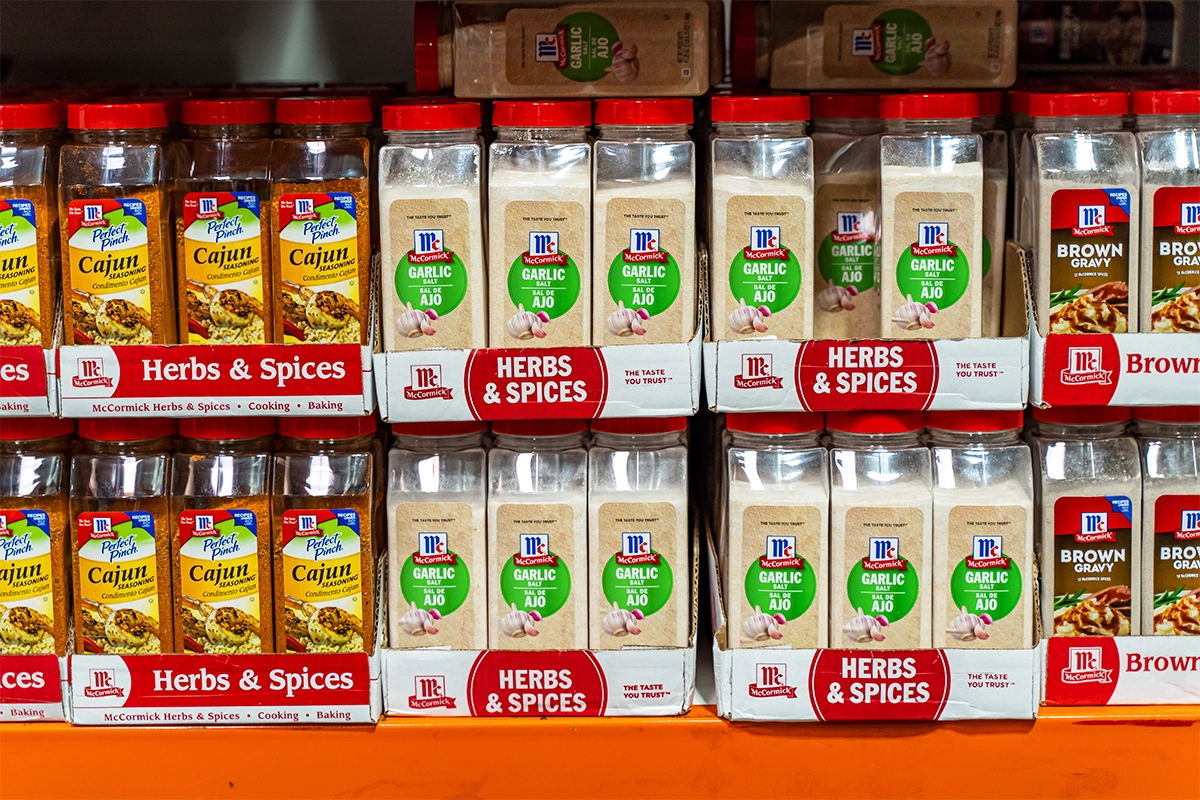 The planned McCormick combination will create a global flavor business with about US$20 billion in annual revenue.
Merger work moves into execution phase
Unilever says separation and integration planning with McCormick is progressing, with dedicated teams working on carve-out financials, tax, antitrust, synergies, and integration. McCormick has also announced the planned operating model, executive team, and a secondary London listing for the combined company.
The deal, announced in March, will give Unilever and its shareholders 65% of the combined company’s fully diluted equity, while Unilever will receive US$15.7 billion in cash, subject to adjustments. Completion is expected by mid-2027 at the latest, pending McCormick shareholder approval and regulatory approval.
“Our combination of Foods with McCormick is progressing well and will unlock significant value, making Unilever a focused pureplay HPC [Home and Personal Care] company, while giving Foods the platform to thrive as part of a global powerhouse in flavor,” says Fernandez.
“The macroeconomic environment remains uncertain, but our consistency, discipline, and strong first half performance give us confidence that we are well positioned to deliver our upgraded full year outlook.”
Unilever’s wider business has upgraded its 2026 outlook, targeting 4–6% underlying sales growth for the year, with about 3% volume growth. For Foods, the more immediate test will be whether second-half innovation and pricing can restore momentum before the business becomes part of a much larger global flavor group.