



Coffee’s price volatility challenge: IFF identifies key trends redefining the category

Key takeaways
- Coffee manufacturers face volatility, with Arabica prices rising around 70% year-on-year and Robusta prices doubling, driving demand for more cost-effective formulations.
- Innovation accelerates despite cost pressures, with strong growth in RTD coffee, flavored products, and premium sensory experiences, as brands seek new consumption occasions and younger consumers.
- Affordability and sustainability become non-negotiable, pushing brands to explore value-driven formats, responsible sourcing, and solutions that balance authentic coffee taste with long-term supply security.

The global coffee industry finds itself in an unusual position. Consumer demand remains strong, new consumption occasions are emerging, and premium coffee experiences continue to attract shoppers. Yet, at the same time, manufacturers are grappling with unprecedented volatility in raw material costs, climate-related supply disruptions, and mounting pressure to deliver value.
According to a new report from International Flavors & Fragrances (IFF), the next phase of coffee innovation will be shaped by how effectively brands can balance these competing forces. Rather than slowing growth, the challenges facing the sector appear to be accelerating innovation across flavors, formats, and sourcing strategies.

“The next five to ten years will be defined not by how high coffee prices go, but by how companies design portfolios that remain profitable under permanent volatility,” notes Eve Martinet, director of Global Innovation at IFF.
Coffee demand grows despite supply pressures
Few food and beverage categories face the same combination of demand growth and supply uncertainty as coffee.
Arabica prices have reached multi-decade highs, while robusta prices have surged due to weather-related disruptions, supply chain challenges, and growing demand. Climate volatility continues to threaten harvest yields, creating uncertainty for manufacturers and roasters alike.
Yet coffee consumption continues to expand globally. Younger consumers are driving new occasions beyond the traditional morning cup, while emerging markets and premiumization trends continue to support growth.
This dynamic is forcing manufacturers to rethink product development. Rather than relying solely on traditional formulations, brands are increasingly exploring ways to maintain authentic coffee experiences while managing costs and improving supply resilience.
Flavor becomes a growth engine
One of the most striking findings from the report is the extent to which flavor innovation is reshaping the category.
Consumers are increasingly seeking coffee experiences that go beyond familiar vanilla and caramel profiles. Fruit-inspired, floral, and dessert-style flavors are attracting attention, particularly among younger consumers.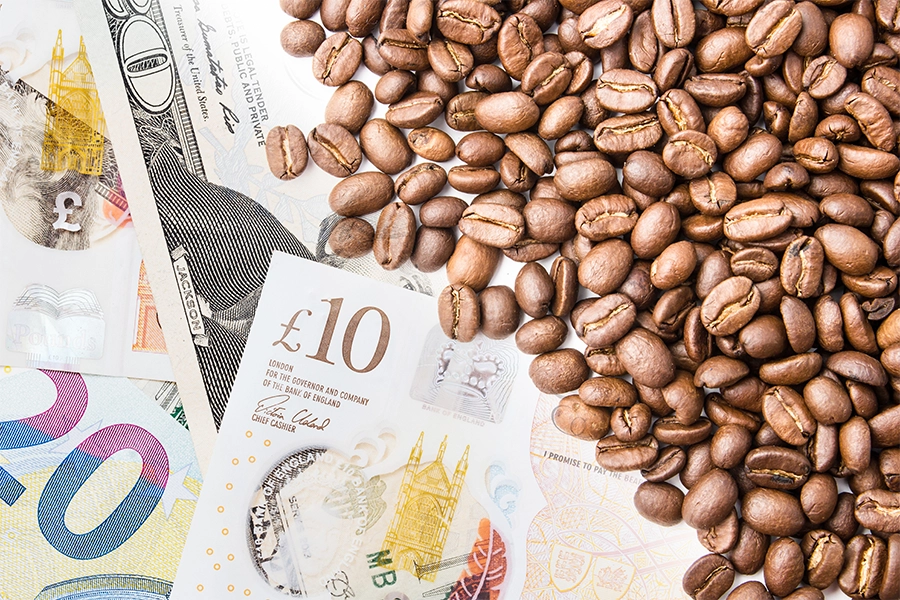 Coffee manufacturers are navigating unprecedented cost pressures, with Arabica prices rising to multi-decade highs and Robusta prices roughly doubling.
In North America, flavors such as pistachio, tiramisu, brown sugar, marshmallow, and pumpkin spice, are generating interest, while in Asia, tea-inspired, fruit, and floral profiles, including jasmine, osmanthus, and Longjing tea, are gaining traction.
The trend reflects a broader shift in coffee’s role within consumers’ lives. Increasingly, coffee is functioning as a treat, an afternoon indulgence, or a social beverage, rather than simply a morning caffeine fix.
For manufacturers, this creates opportunities to develop products that target new consumption occasions and broaden coffee’s appeal to younger demographics.
Ready-to-drink coffee enters a new phase
The ready-to-drink (RTD) segment continues to stand out as one of the industry’s strongest growth areas.
Convenience remains a key driver, but the category is also benefiting from changing lifestyles, increased outdoor consumption, and growing demand for premium on-the-go beverages.
IFF highlights RTD coffee as one of the fastest-growing segments globally, with continued expansion expected in both mature and emerging markets. In China, RTD coffee volumes are forecast to grow steadily through 2029, while the US market has already reached multi-billion-dollar sales levels.
As competition intensifies, manufacturers are differentiating through indulgent flavors, functional positioning, and premium sensory experiences.
Texture emerges as a premium differentiator
While flavor innovation receives much of the attention, texture is becoming an increasingly important element of premiumization.
Consumers are showing growing interest in descriptors, such as smooth, velvety, and silky, with mouthfeel emerging as a critical factor in product quality perceptions. Flavor innovation is creating new coffee consumption occasions, with 45% of Chinese consumers saying fruit and floral notes influence their RTD coffee purchasing decisions.
This trend mirrors developments seen across dairy alternatives, confectionery, and other beverage categories, where sensory experience increasingly influences purchasing decisions.
For coffee brands, delivering richer and more indulgent textures may offer a route to premium positioning, even as affordability concerns remain high.
Sustainability moves from promise to expectation
Sustainability continues to gain importance, particularly among younger consumers who are increasingly aware of climate change’s impact on coffee production.
The report suggests that consumers are looking beyond broad environmental claims and paying closer attention to sourcing practices and supply chain transparency.
In Europe, sustainability-related claims are now appearing on a majority of new coffee launches, reflecting growing consumer expectations and regulatory pressures.
For manufacturers, sustainability is no longer simply a brand-building exercise. It is becoming closely linked to supply security, risk management, and long-term business resilience.
The new coffee equation
The report ultimately suggests that the future of coffee will be shaped by brands capable of delivering five key attributes simultaneously: convenience, affordability, sustainability, authentic taste, and mood-enhancing experiences.
Achieving that balance will not be easy. However, the industry’s response to rising costs and climate pressures demonstrates that innovation is increasingly viewed not as an optional growth lever, but as a strategic necessity.
As volatility becomes a permanent feature of the coffee landscape, the winners may be those companies that can preserve the emotional and sensory appeal of coffee while adapting their formulations, sourcing strategies, and product portfolios to a changing market.