



Nestlé and Starbucks pursue cold coffee growth amid industry headwinds

Key takeaways
- Nestlé and Starbucks launch Starbucks Coffee Craft, a premium cold coffee concentrate made with high-quality Arabica beans.
- The coffee market faces rising costs and supply chain disruptions due to geopolitical tensions and climate change.
- The Global Coffee Alliance leverages Nestlé and Starbucks’ strengths to expand product offerings and reach more consumers globally.

Nestlé and Starbucks have jointly launched Starbucks Coffee Craft concentrate, a premium concentrated coffee made with high-quality Arabica beans that is said to deliver Starbucks’ signature taste. The coffee industry giants aim to reach more consumers and drive sales growth in the growing cold coffee market with this new product.
The launch comes at a time of flux for the coffee industry. Although the global coffee bean supply is currently strong, the Middle East conflict is making the commodity more expensive to transport and produce. Longer term, climate-related weather patterns are expected to push coffee prices higher across the supply chain.
This industry-wide uncertainty is encouraging companies to expand across product formats and channels to diversify their portfolios and mitigate market uncertainty. Industry consolidation has ramped up, notably Keurig Dr Pepper’s recent US$18 billion JDE Peet’s acquisition, which is expected to drive innovation across coffee formats.

Starbucks Coffee Craft
Starbucks Coffee Craft will launch first in the UK, Japan, and Korea throughout this year, then roll out more widely in Europe and Asia in 2027. The premium concentrate is made with Arabica coffee, providing a rich and authentic flavor, and debuts in two varieties: Rich Black and Signature Caramel.
“Whether using water, milk, or plant-based alternatives, consumers can now personalize their coffee experience — from iced Americanos to iced caramel macchiatos — with a simple pour and from the comfort of their homes,” says Ethel Touitou, Nestlé’s global category lead for Starbucks.
Nestlé and Starbucks see cold coffee as a high-growth segment, with some forecasts projecting it to exceed US$4 billion in value by 2030. With their deep coffee expertise, the companies are well-positioned to capture this momentum by delivering the personalization, indulgence, and convenience coffee drinkers demand. Nestlé and Starbucks introduce premium cold coffee concentrate amid growing consumer demand.
The Global Coffee Alliance
Starbucks Coffee Craft builds on the Global Coffee Alliance, started eight years ago by Starbucks and Nestlé, which combines Nestlé’s global reach, manufacturing capabilities, and coffee expertise with Starbucks’ brand strength.
“The launch of Starbucks Coffee Craft highlights the strength and impact of the Global Coffee Alliance, bringing the Starbucks experience to life beyond our coffeehouse. By partnering with Nestlé, we’re able to scale Starbucks coffee experiences into new formats and occasions, reaching more consumers around the world,” says Nik Dodi, VP for the Global Coffee Alliance at Starbucks.
Since its inception, the alliance has significantly expanded the availability of Starbucks-branded products across consumer-packaged goods and foodservice channels. Currently, Starbucks-branded premium products are available in nearly 80 markets worldwide, spanning retail, at-home, and foodservice channels.
Global coffee pressures
Food Ingredients First recently explored how global coffee prices have fallen sharply from the highs in early 2025, as Rabobank projected the first significant global production surplus in five years. However, the correction faces fresh complications with the Strait of Hormuz closure, which is pushing freight rates, insurance premiums, and fuel costs higher just as the supply picture improves.
Meanwhile, new analysis released today by GlobalData warns that climate disruption is now a long-term procurement and operations challenge — not just a farming issue — for coffee manufacturers, ready-to-drink brands, and café chains.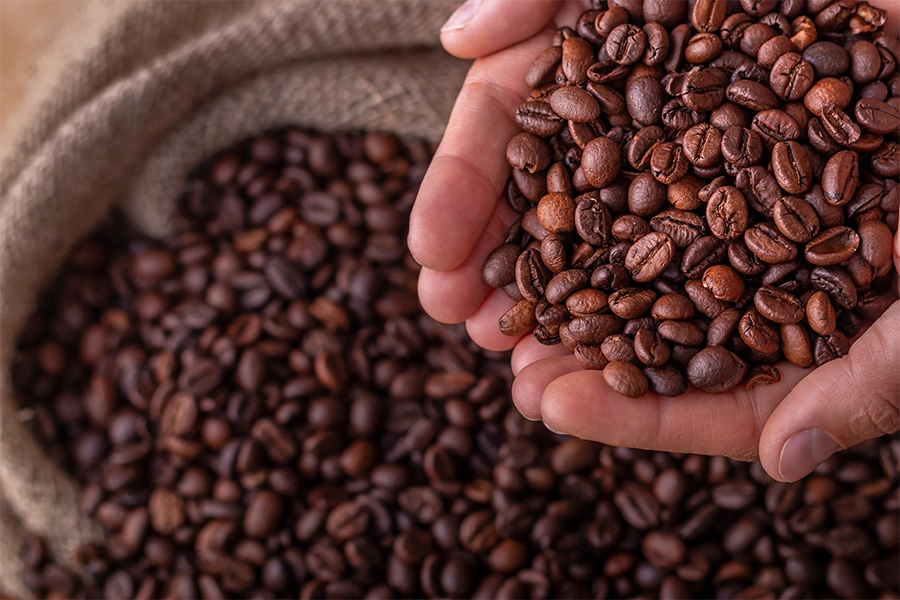 Industry pressures like rising costs and climate change challenge the coffee supply chain.
Across major coffee origins, more extreme weather events are reshaping what coffee can be grown and where it can be grown. The result, GlobalData says, is a more fragile supply chain: volatile harvests for farmers, uncertainty in raw material availability for manufacturers, and higher prices.
Industry projections suggest the threat is not temporary. Rabobank forecasts that around 20% of current worldwide Arabica-growing areas could become unsuitable for cultivation by 2050, meaning production may shift geographically and become increasingly concentrated in fewer viable zones.
“If suitable growing zones shrink, supply shocks become more likely — and the ripple effects on pricing and availability can be amplified,” explains Katamaneni Greeshma Kasturi, consumer analyst at GlobalData. “Quality is also at risk. In practical terms, climate change is affecting not just how much coffee is produced, but also how predictable and repeatable its flavor and performance are.”
“Consumers feel the impact most clearly through price. The FAO reported a nearly 40% price surge in 2024, driven largely by supply-side disruptions linked to unfavorable weather. However, consumers also pay in other ways, including reduced choice when certain origins or grades become harder to secure, fewer limited releases, discontinued premium lines, and occasional stock-outs.”
As companies like Nestlé and Starbucks navigate these uncertainties, expanding product choices, targeting higher-growth segments, and strengthening supply chain resilience will be key to maintaining profitability and meeting consumer demand in an increasingly challenging industry.