



Coffee prices caught between record harvests and Hormuz disruption

Key takeaways
- Brazil’s record 66.2 million bag harvest forecast and Rabobank’s projected 7–10 million bag global surplus are pushing arabica futures toward six-month lows.
- Nestlé and JDE Peet’s flag margin relief ahead as lower input costs flow through, but shipping disruption from the Strait of Hormuz crisis is complicating the outlook.
- The cocoa playbook — reformulation, alternatives, hand-to-mouth buying — is now being applied to coffee procurement strategy.
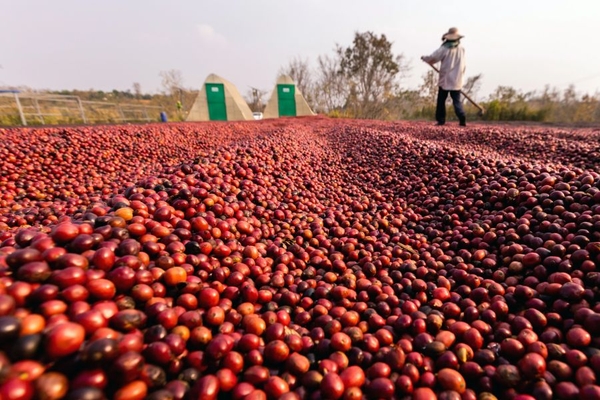
Global coffee prices have fallen sharply from the record highs above US$4.40/lb reached in early 2025, as Brazil’s national supply agency forecasts a record 66.2 million bag harvest and Rabobank projects the first significant global production surplus in five years. But the correction is now facing fresh complications with the closure of the Strait of Hormuz amid the Iran war, which is pushing freight rates, insurance premiums, and fuel costs higher just as the supply picture improves.
The world’s two largest coffee buyers have laid bare how severe the input cost pressure has been. JDE Peet’s, the biggest pure-play coffee company, absorbed €1.6 billion (US$1.73 billion) in cost inflation in 2025 and passed on 19.5% in pricing to consumers, while Nestlé reported that coffee and cocoa commodity costs drove its underlying trading operating profit margin down 130 basis points.

Both are now signaling that input costs could drop through 2026 — contingent on where commodity and logistics costs settle.
For food ingredient suppliers and manufacturers, the question is not simply whether prices will fall but how quickly the relief arrives and whether geopolitical disruption could delay it. Coffee procurement teams are applying lessons from the cocoa crisis, where manufacturers locked into futures contracts too early and missed out on further price declines. Roasters are instead buying hand to mouth (making only short-term purchases and avoiding long-term commitments) to ride prices down — but that strategy carries its own risks if the Hormuz closure persists.
Record surplus on the horizon
The International Coffee Organization’s composite indicator price averaged 296.89 US cents/lb in January 2026, down 2.6% from December 2025 and continuing a decline from peaks above US$4.40/lb in early 2025. By early February, the indicator had fallen to a six-month low of 262.1 US cents/lb. As of March 10, arabica futures are trading around US$293–295 cents/lb on ICE — well off their highs but bouncing from the February lows on shipping disruption concerns.
The biggest factor is Brazil’s upcoming harvest. CONAB, the country’s national supply agency, projects a record 66.2 million 60-kilogram bags for 2026 — a 17.1% jump over 2025 and enough to surpass the previous record of 63.1 million bags set in 2020. Arabica output alone is forecast at 44.1 million bags, up 23.3% year-on-year, supported by expanded planting areas, favorable weather, and a positive phase of coffee’s biennial production cycle.
The broader supply picture marks a sharp reversal. According to Rabobank, three consecutive years of production deficits from 2021/22 to 2023/24 created a cumulative shortfall of 14.6 million bags. That has given way to what the Dutch bank forecasts will be the first significant global surplus in five years — estimated at 7 to 10 million bags for 2026/27, with global output potentially reaching an unprecedented 180 million bags.
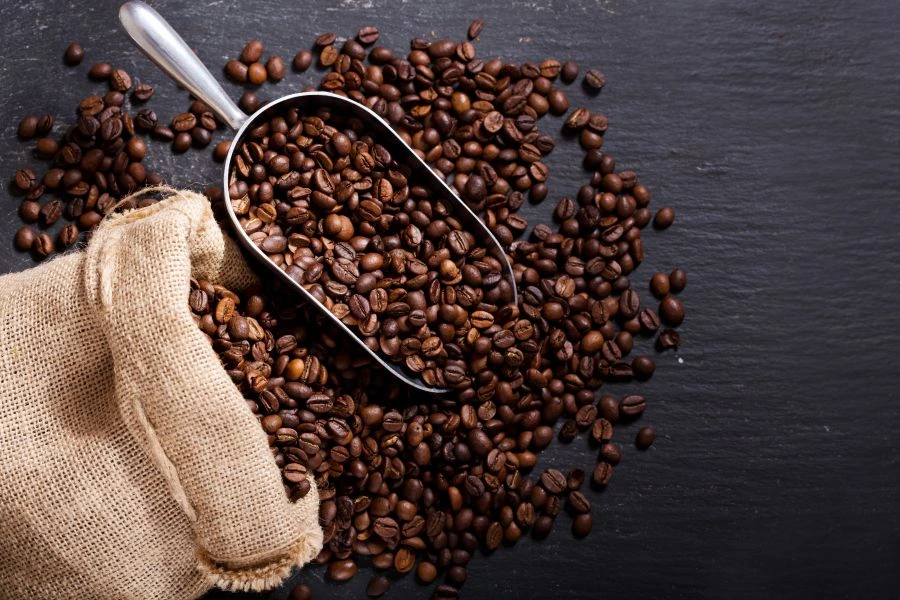 Global coffee prices have fallen sharply from 2025’s record highs, but the Strait of Hormuz crisis is complicating the outlook for manufacturers banking on cheaper inputs.Rabobank expects arabica futures to settle between US$2.50 and US$3.00/lb by late 2026, but does not expect a return to contango — where futures trade above spot prices — before December 2026, when larger volumes from Brazil’s new harvest begin arriving in destination markets.
Biggest coffee buyers signal a turning point
For food manufacturers, falling green coffee prices represent a potential turning point. JDE Peet’s reported full-year 2025 sales of €9.9 billion (US$10.7 billion), with organic growth of 15.3% almost entirely driven by pricing. Volume and mix declined 4.3%, a signal that consumers pushed back against successive price increases. The company described 2025’s green coffee inflation as “unprecedented.”
At Nestlé, coffee posted mid single-digit organic growth driven by pricing, but the company found that “elasticity effects” remained “limited” — meaning consumers kept buying despite higher prices. That relative stickiness in coffee demand, compared with the sharper volume drops seen in confectionery, is a significant signal for ingredient suppliers.
Nestlé’s management has flagged a shift in the cost outlook. CFO Anna Manz told analysts: “If commodity, coffee commodity prices stay where they are today, we’ll of course get a bit of a benefit in margin terms, as we move through 2026.” The company’s full-year guidance expects margins to “improve versus 2025, strengthening in the second half of the year.” But the relief won’t be immediate — forward purchasing contracts and long supply chains mean lower green coffee prices take months to materialize.
Hormuz crisis complicates the correction
The outbreak of war in the Middle East has added another variable. The Strait of Hormuz has been effectively closed since February 28, following US and Israeli military strikes on Iran. Major container lines, including Maersk, CMA CGM, and Hapag-Lloyd have suspended transits, while resumed Houthi attacks on Red Sea shipping have forced Suez Canal traffic to reroute around the Cape of Good Hope, adding 10–20 days to transit times.
The strait doesn’t carry significant coffee volumes directly, but the knock-on effects of the closure are real. Insurance premiums, bunker fuel costs, and container freight rates have all spiked. Crude oil prices surged above US$100/barrel for the first time since 2022 over the weekend before pulling back sharply on Monday.
For coffee specifically, arabica posted a three-week high on March 6. Brazil’s Trade Ministry reported that in February coffee exports fell 17.4% year-on-year to 142,000 metric tons — a decline driven partly by farmers withholding beans for the 2026 tax year, now compounded by shipping uncertainty.
Echoes of the cocoa crisis
There are parallels with other struggling commodities, particularly cocoa. Cocoa prices crashed more than 50% from their late-2024 peak, yet manufacturers including Nestlé and Pladis continued to reformulate products and invest in cocoa-free alternatives.
Hershey’s net income dropped 60% even as cocoa costs began easing — an example of how quickly logistics and hedging costs can erode margin gains from falling commodity prices.
Innova Market Insights notes that coffee consumer habits reflect strong loyalty driven by “emotional ties and daily habits,” and that brands are responding to the volatile pricing environment by adding value through functional ingredients, premium positioning, and NPD across formats like ready-to-drink and cold brew.
For an industry that spent much of 2024 and 2025 passing costs onto consumers, the challenge now is whether falling prices will translate into margin recovery, consumer price relief, or both.