
Chocolate alternative innovation accelerates as food innovators tackle cocoa disruption


Key takeaways
- Manufacturers are increasingly exploring cocoa-free ingredients to reduce exposure to volatile cocoa prices, supply disruptions, and regulatory pressures.
- Foreverland, “the first industrial-scale producer of organic cocoa-free chocolate,” raises €6 million (US$7 million) to scale its Choruba line.
- While companies like Barry Callebaut, Cargill, and Fuji Oil continue investing in conventional chocolate, they are also incorporating cocoa alternatives and extenders to stabilize supply and manage costs.

Italian foodtech company Foreverland has secured another €6 million (US$7 million) in funding to boost its organic cocoa-free alternative, which helps confectionery manufacturers reduce exposure to cocoa price volatility and supply disruption, and future-proof ingredients.
Foreverland’s latest raise comes amid a broader shift in the global chocolate sector, as manufacturers grapple with rising cocoa prices, climate-related supply risks, and increasing regulatory pressure. What was once a niche area of experimentation — cocoa-free or cocoa-reduced chocolate — is now emerging as a practical tool for reformulation and risk management.
A growing cohort of foodtech companies, start-ups, and big players is developing cocoa alternatives and extenders designed not to replace chocolate entirely, but to reduce dependence on a volatile raw material.
Rethinking cocoa dependency
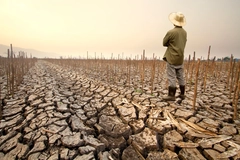
Cocoa prices have been unpredictable due to climate challenges, geopolitical tensions, and disease risks (like swollen shoot virus impacting crops) in several of the major cocoa-growing regions, particularly reducing yields in West Africa. As of early 2026, cocoa prices have pulled back sharply from the extreme highs seen in 2024–25, but they still remain volatile.
Meanwhile, regulatory pressures, such as the EU Deforestation Regulation, are tightening supply. This European law requires that products sold in or exported from the EU are deforestation-free, legally produced, and traceable to specific land. It has major impacts on cocoa.
Conventional chocolate is still dominant
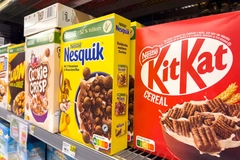
While conventional chocolate is still the core focus for many of the key players in confectionery, a boom in chocolate alternatives continues amid this challenging environment.
Foreverland’s latest offering is an extension to its Choruba line, marking the company’s entry into the organic space as the first industrial-scale producer of organic cocoa-free chocolate. It demonstrates how the chocolate industry is going through a structural shift in how it thinks about cocoa, and follows a series of cocoa-free innovations worldwide.
Funding accelerates Foreverland’s expansion
The latest funding round brings Foreverland’s total capital raised to €9.4 million (US$11 million). It will fast-track the company’s expansion across Europe, with a particular emphasis on strengthening partnerships with key confectionery players in Germany, France, and Italy, while bringing in experienced commercial leaders from leading global cocoa and chocolate companies.
In addition, Foreverland’s Italy-based production facility has recently achieved International Featured Standards (IFS) certification, demonstrating compliance with globally recognized quality and safety benchmarks and enabling consistent, large-scale supply for confectionery manufacturers.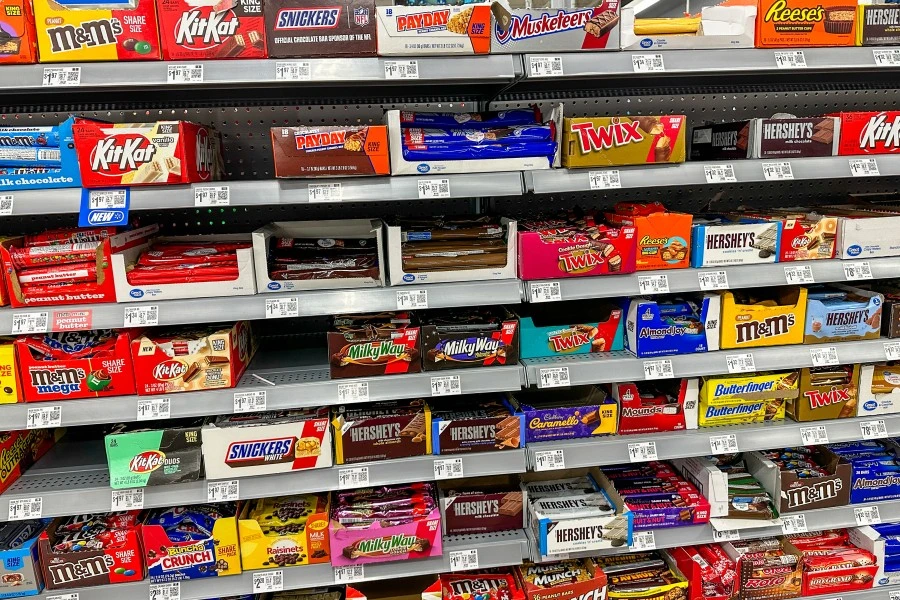 Conventional chocolate remains dominant, but big players in confectionery and cocoa are turning to alternative ingredients to mitigate the cocoa crisis.
At this facility, the company transforms locally sourced Mediterranean ingredients, such as carob, into cocoa-free chocolate alternatives tailored for industrial applications.
“This [funding] round validates our execution, not just as a food-tech innovator, but as a reliable industrial partner for confectionery manufacturers,” says Massimo Sabatini, co-founder and CEO of Foreverland.
“With IFS Food certification in place and demand accelerating, we’re scaling commercial growth across Europe, strengthening key partnerships, and bringing in senior talent from the cocoa and chocolate industry to support manufacturers at scale.”
The round includes further investment from existing investors Kost Capital and Maia Ventures, and backing from CDP Venture Capital.
Complementing conventional chocolate
Major manufacturers are still investing heavily in traditional chocolate portfolios, but as part of their risk management strategies, companies are changing formulations without impacting taste or quality. When cocoa prices spike, manufacturers either raise prices or reformulate. This has led to confectionery giants embracing cocoa-free solutions as a way of de-risking cocoa exposure and stabilizing their businesses and portfolios.
Barry Callebaut says ChoViva will supplement its offering, but conventional chocolate remains the core focus. The cocoa and chocolate giant has partnered with Planet A Foods to scale up, produce, and distribute ChoViva, a cocoa-free chocolate made from sunflower seeds.
Meanwhile, the company is also investing in conventional chocolate. It invested €250 million (US$297 million) in a multi-year upgrade plan for its Wieze factory in Belgium, the largest chocolate production facility in the world, in February.
In the same month, Barry Callebaut opened a global innovation center in Singapore, featuring the “world’s first” AI center of excellence for chocolate.
These investments came after Barry Callebaut reported a 9.9% group volume decline in Q1 fiscal 2025/26, with Global Chocolate down 6.8% and Global Cocoa falling 22%. 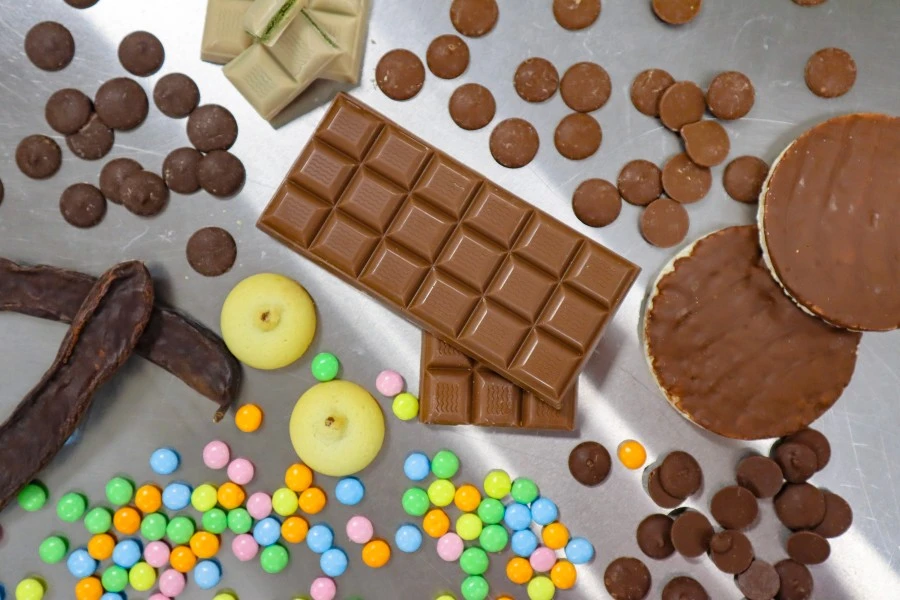 Foreverland’s range of chocolate and confectionery products.
Other examples of companies employing a dual chocolate strategy (investments in conventional chocolate and cocoa alternatives) include ingredient giant Cargill, which offers a comprehensive portfolio of cocoa butter alternatives, including equivalents, replacers, and substitutes. These are designed for high-gloss, snappy coatings and stable fillings, often without the need for tempering.
Fuji Oil has also expanded into cocoa-free functional equivalents with its cocoa butter alternatives and compound coatings that reduce cocoa content in finished products.
Health trends reinforce reformulation
The increasing consumer demand for healthier snacks is also reshaping how chocolate is made. Consumers are still very much interested in conventional chocolate, but they are reframing what they want. Key purchasing drivers are clean label and fewer ingredients, a rise in demand for plant-based and “natural” positioning, and the growing scrutiny of fat, calories, and processing.
Chocolate is inherently indulgent, but for a growing consumer segment that is driven by health, it now also needs to be positioned as a “better-for-you” product, without compromising on taste.
Cocoa-free chocolate is carving out its own space, quietly influencing how companies source, scale, and collaborate across the supply chain. Alternative cocoa innovation is steadily becoming part of the chocolate industry’s infrastructure, shaping both production and partnerships.
Beyond short-term trends, cocoa-free solutions are establishing themselves as a reliable option for manufacturers and ingredient suppliers, helping stabilize production, manage costs, and ensure consistent supply.


Upcoming webinars

Oat-Standing Ingredients - Showcasing Irish Grain Through Innovation
Tirlán Ingredients

2027 Food Safety Risks for Quality & Compliance Leaders
FoodChain ID

Formulating for function: Developing benefit-led beverages with natural colours, botanicals, and flavours
Givaudan Sense Colour