



AI-powered ingredient discovery gains ground as Ingredion and Shiru target novel prebiotics


Key takeaways
- Shiru’s AI platform aims to compress ingredient discovery by screening millions of natural proteins within months, with Ingredion providing formulation expertise and commercial scale.
- The partnership’s initial focus is next-gen prebiotics for microbiome health, with discovered ingredients gaining access to Ingredion’s 18,000+ customers across 120 countries.
- The deal signals a shift in AI’s role in the ingredient industry — from formulation optimization to the discovery of entirely new functional proteins from nature.

Ingredion and AI-enabled protein discovery company Shiru have announced a global R&D collaboration aimed at accelerating the discovery and commercialization of novel functional proteins for food, beverage, supplements, and specialized nutrition.
The partnership pairs Shiru’s Flourish platform — which maps more than 77 million natural protein sequences — with Ingredion’s formulation expertise, regulatory know-how, and customer network spanning 120 countries.
Its initial focus is prebiotic ingredients derived from natural sources to promote healthier microbiomes, an area where gut health has emerged as a top food and beverage trend for 2026, according to Innova Market Insights.
We speak to both companies to learn about how the joint venture could evolve F&B product development and discovery, and how AI is changing the industry’s ability to answer growing consumer demands.
Optimizing processes
AI is already playing a significant role in the ingredient industry, but largely as a formulation tool — optimizing sweetener blends, simulating sensory outcomes, and reducing development cycles. Ingredion has deployed AI-aided predictive modeling to develop sugar reduction solutions, and uses AI-driven formulation tools to accelerate product development in dairy.
“AI-driven discovery has the potential to fundamentally change how we approach formulation,” Eric Weisser, head of ventures, open innovation, and customer innovation at Ingredion, tells Food Ingredients First. “Instead of starting with a limited set of known ingredients, we can explore a much broader set of proteins and peptides with functional potential.”
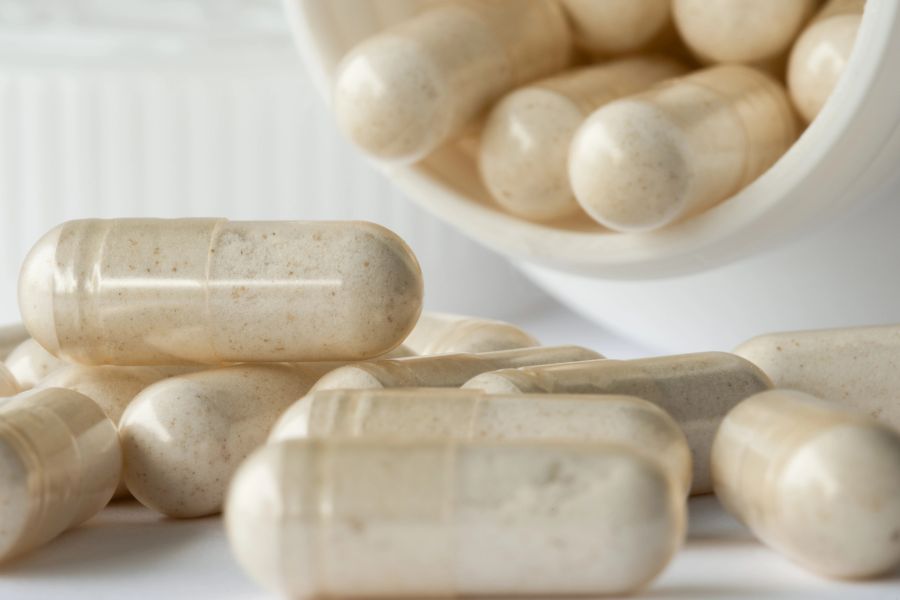 AI-driven protein discovery is opening new pathways for prebiotic ingredient development targeting gut microbiome health.Shiru’s platform searches an expansive protein library for compounds with specific functional properties — whether that’s improving texture, enabling sugar reduction, or unlocking entirely new functionality. Weisser says AI can help teams “explore and prioritize a broader range of possibilities earlier” so they make better-informed decisions about where to invest their time and resources.
“That ultimately means AI makes ingredient formulation more proactive,” he adds.
Innova Market Insights flagged AI as a standalone trend for 2025 with “AI — Bytes to Bites” at #10 on its annual list. By 2026, it’s no longer a discrete trend but embedded across the top drivers — from protein and gut health innovation to accelerating clean label reformulation.
Collapsing timelines
Traditional ingredient R&D operates on long timescales, and Shiru’s founder and CEO, Dr. Jasmin Hume, says AI can increase development speed dramatically. Processes that “once took a team of 50 scientists a decade and a healthy dose of serendipity” can now be done “strategically and efficiently in months,” she says.
The company’s Flourish platform uses computational biology to screen its database of natural proteins, predicting how easily a protein can be expressed, its solubility, and flagging potentially allergenic compounds early. Hume says that scalability is baked into the process from the start — Shiru’s models can prioritize compounds present in existing agricultural side streams where extraction may be preferred over precision fermentation, meaning candidates are “inherently suited for scale” before they reach the lab.
The company’s track record supports the approach. Its OleoPro structured fat alternative and uPro ingredient are already commercially available after being identified through the platform. Previous partnerships with CP Kelco in 2022 and Ajinomoto Health & Nutrition in 2024 on sweet proteins followed a similar model.
But discovery is only half the problem. “The real challenge after discovering a new ingredient is making sure it can deliver in real-world applications and work at scale,” Weisser says. “It needs to perform consistently, scale effectively, and meet cost, quality, and regulatory expectations.”
 Shiru’s Flourish platform screens more than 77 million natural protein sequences to identify functional ingredient candidates for food and beverage applications.To answer these challenges, the partnership will see Shiru handle identification and early screening, while Ingredion applies its formulation infrastructure to carry candidates through to commercialization across its base of more than 18,000 customers.
Targeting prebiotics
The partnership’s initial target area — prebiotics for gut microbiome health — is a booming industry segment. Innova Market Insights found that 59% of global consumers are choosing functional ingredients like probiotics and prebiotics to support physical and mental health. CPG companies are under growing pressure to reformulate with ingredients that are both clinically credible and manufacturable at scale.
“I’m incredibly excited about our work in natural ingredients that can improve human healthspan, including our work with Ingredion that focuses on next-generation prebiotics to promote healthier microbiomes,” says Hume. She adds that using AI to identify high-potential functional ingredients opens up “meaningful opportunities to improve the food system.”
Weisser highlights the demand for clean label products. “Shiru studies sustainable ingredient solutions that already occur in nature,” he says. “We’re eager to explore proteins and peptides that may support future clean label and microbiome-aligned formulations.” The goal, he adds, is expanding the range of options available to brands, so they can create products that are “label-friendly, cost-effective, and high-performing.”
That clean label angle intersects with another Innova 2026 trend — “Authentic Plant-based” at #5 — where 40% of global consumers identify “natural or minimally processed” as a key consideration when selecting protein options. As the backlash against ultra-processed foods intensifies, functional ingredients sourced from nature and discovered through AI could offer a way to add performance without adding complexity to the label.
Scaling ingredient discovery
The partnership reflects a broader pattern in the ingredient industry, with large-scale suppliers partnering with start-ups to access new technologies.
“By pairing Shiru’s high-throughput prediction and screening stack with our partners’ reach, we are creating a direct, high-speed path from discovery to market,” Hume says. Weisser describes Ingredion’s role as ensuring “promising ideas don’t get stuck in early development, creating a clearer path to the end customer.”
Looking ahead, Hume says Shiru is expanding beyond fat alternatives and texturizers into natural sweeteners, flavor modifiers, and natural preservatives. “We see it as the new standard — over the coming years, we’ll see AI-driven discovery replace traditional R&D to the benefit of consumers, businesses, and the planet,” she says.




Upcoming webinars

Oat-Standing Ingredients - Showcasing Irish Grain Through Innovation
Tirlán Ingredients

2027 Food Safety Risks for Quality & Compliance Leaders
FoodChain ID

Formulating for function: Developing benefit-led beverages with natural colours, botanicals, and flavours
Givaudan Sense Colour