
Cargill upgrades hydrocolloids site to cut emissions and improve efficiency

Key takeaways
- Cargill’s €25 million (US$29.5 million) upgrade at its Baupte, France, site introduces Mechanical Vapor Recompression to improve energy efficiency in hydrocolloid production.
- The site is expected to cut emissions by around 45% (13,700 tons CO2 per year), while maintaining production reliability and output.
- Cargill’s investment strengthens supply resilience and competitiveness for carrageenan and xanthan gum used across key F&B applications.
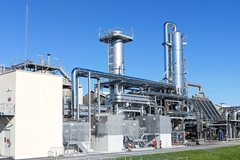 (Image credit: Cargill).
Rising energy costs, tightening environmental expectations, and ongoing supply chain pressures are forcing ingredient manufacturers to rethink how core products are made. Rather than large-scale transformation, many are turning to targeted process upgrades that deliver measurable gains in both efficiency and sustainability. A recent investment by Cargill at its Baupte facility in France illustrates this approach in practice.
The €25 million (US$29.5 million) upgrade is set to strengthen hydrocolloid production at the site, a key European hub for carrageenan and xanthan gum — ingredients widely used across dairy, beverages, desserts, sauces, and cocoa-based milk drinks to deliver texture, stability, and consistency.

At the core of the upgrade is the modernization of the site’s most energy-intensive operation through the adoption of Mechanical Vapor Recompression (MVR) technology. Commonly used in evaporation processes, MVR systems recycle vapor by compressing it to a higher temperature and pressure, allowing it to be reused as a heat source.
This upgrade significantly reduces the need for external energy inputs while maintaining throughput and product performance — an increasingly important consideration, as energy costs remain volatile across Europe.
Cargill positions this as a practical example of investing in more efficient, competitive production while maintaining a reliable supply of critical ingredients. It also shows how manufacturing innovation can improve efficiency and reduce emissions at the site level.
Modernizing energy-intensive processes
Food Ingredients First speaks with Valery Bauchart, site manager at Cargill Baupte, to examine the measurable impact on emissions, and how the upgrade is expected to reduce site emissions by approximately 45%, equivalent to around 13,700 tons of CO₂ per year.
“Cargill’s investment in Baupte is all about strengthening supply reliability at scale. This is our unique carrageenan and biopolymer (xanthan and scleroglucan) production site globally, and it already exports more than 75% of its output, so improving performance here has a direct impact on customers across Europe and beyond,” Bauchart says.
 The site upgrade boosts Cargill’s hydrocolloid production for carrageenan and xanthan gum used in dairy, beverages, desserts, sauces, and cocoa drinks.“The upgrade modernizes the site’s most energy-intensive process while maintaining full production continuity. That matters because reliability isn’t just about capacity, it’s about consistency, compliance, and the ability to deliver at pace in a volatile market.”
The hydrocolloids sector has faced a combination of rising input costs, energy price fluctuations, and increasing scrutiny around sustainability credentials. Investments in process efficiency are emerging as a key lever to remain competitive.
Technologies such as MVR illustrate how manufacturers can simultaneously reduce operating costs and emissions — helping to align financial performance with environmental goals. For customers, this can translate into more stable pricing structures and improved transparency around product footprint.
The Baupte modernization project is the first time that advanced heat recovery technology like MVR has been deployed in a Cargill distillation process, and it delivers a step change in energy efficiency while maintaining output.
“That makes it a working model for how similar improvements can potentially be scaled across other sites and processes,” Bauchart notes.
“For the wider industry, that matters because the pressure isn’t just on cost, it’s on resilience. Manufacturers need reliable supply, consistent quality, and partners who can keep pace with regulatory and operational change. Investments like this strengthen the supply base and show that efficiency and performance can move together, not in trade-off.”
Efficiency gains and formulation benefits
Addressing how manufacturers can benefit from ingredients produced with lower emissions and higher energy efficiency, Bauchart says there are two very practical benefits here.
“The first is efficiency. The Baupte upgrade reduces site emissions by around 13,700 tons of CO₂ per year, roughly a 45% reduction in fossil fuel-related emissions, while also improving energy use. That translates into more efficient ingredient production without compromising performance.”
“The second benefit is formulation flexibility. Carrageenan is used at low inclusion rates but delivers multiple functions, including texture, stability, and mouthfeel. That means a small amount can have a significant impact on overall product performance and help reduce formulation complexity.”
“When combined with more efficient production, this supports manufacturers in managing both cost and formulation challenges, which are key pressures in today’s environment.”
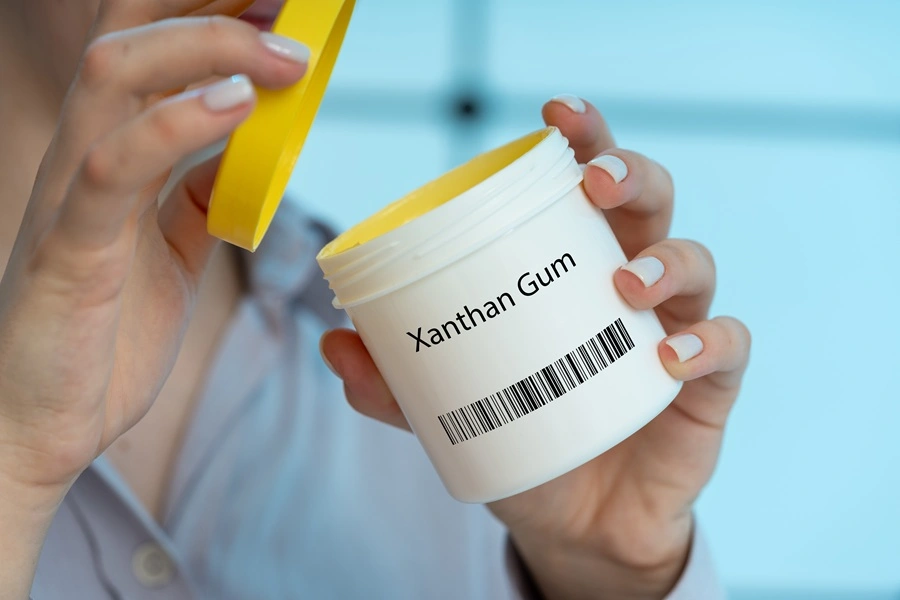 The site also houses a Food Innovation Center center where manufacturers can test xanthan gum and other texturizers in dairy, desserts, and beverages to optimize performance at scale.There are also potential benefits in terms of marketing claims, but they need to be handled carefully, Bauchart says.
“The materials support the fact that production is more efficient from an energy standpoint, including lower emissions at the site level. Any product-level or on-pack claim would need to be fully substantiated and aligned with local regulatory requirements. That distinction is important,” he explains.
Strengthening innovation
Cargill’s investment also aligns with France’s focus on industrial decarbonization and energy efficiency, while reinforcing the role of local manufacturing in delivering more sustainable food ingredient production.
Established in 1941, the site employs around 275 people and exports more than 75% of its production worldwide, supporting both the regional economy and Europe’s ingredient supply. It also houses a dairy-focused Food Innovation Center for product development and application expertise.
“The Food Innovation Center is what connects ingredient performance to real-world products. Baupte isn’t just a manufacturing site, it’s also a place where customers can test, adapt, and scale formulations with direct support from application and R&D teams. That’s especially relevant right now because reformulation is getting harder,” Bauchart says.
“Manufacturers are trying to reduce cost, replace ingredients, and still deliver the same sensory experience. Texture, in particular, is non-negotiable, especially in areas like plant-based, where performance gaps are still a challenge.”
“What the center enables is faster co-development. Customers can work through those trade-offs in a practical way, testing how carrageenan, xanthan and other Cargill texturizers perform in specific applications, whether that’s dairy, desserts, beverages or sauces, and work toward a solution that holds up at scale.”
A broader signal for industry
As F&B companies continue to reformulate — whether for plant-based innovation, cost optimization, or clean label demands — the importance of dependable, high-performance ingredients remains constant. Ensuring these inputs are produced efficiently and sustainably is becoming a shared priority across the value chain.
In that context, investments in advanced processing technologies are likely to play an increasingly central role in shaping the future of ingredient production.