



Cargill chief economist warns “food security is global security” as index exposes resilience gaps


Key takeaways
- A new 60-country index finds global food systems are far more vulnerable than assumed, with no nation fully resilient and a 42-point gap between the strongest and weakest performers.
- Cargill’s chief economist calls trade “foundational, not optional,” as the Hormuz crisis disrupts fertilizer flows and tightens food supply chains.
- Reducing food loss and waste is the single fastest resilience strategy, but cold chain investment remains critically low across most countries assessed.

Global food systems are far more vulnerable than policymakers assume, a new 60-country resilience benchmark warns, with no nation scoring above 80 out of 100 and climate risk emerging as a universal weak spot. The findings have emerged as the Strait of Hormuz crisis disrupts a third of globally traded fertilizer, threatening major knock on effects for the F&B industry worldwide.
The inaugural Resilient Food Systems Index (RFSI), published by Economist Impact and supported by Cargill, evaluates resilience across four pillars — affordability, availability, quality and safety, and climate risk responsiveness — using 71 indicators, and identifies a 42-point gap between the most resilient system (Portugal, 76.83) and the least (Democratic Republic of Congo, 34.86).
“Food security is global security in a world where roughly a quarter of food crosses borders,” Lauren Bresnahan, chief economist at Cargill, tells Food Ingredients First. “Resilience comes from connecting farmers to markets, building more flexible supply chains, and strengthening the infrastructure that helps the system absorb shocks when climate, conflict, or logistics disruptions hit.”
Concentration risk in a fragile system
The index underscores how concentrated global food production remains. Just 15 countries produce 70% of the world’s food, with 11 of them among the top 15 exporters, accounting for more than 60% of global food exports. Yet, even these systems fall short — the 15 largest exporters average just 70.07 on the index, and no country scores above 80.
Just 15 countries produce 70% of the world's food, but none has built a fully resilient system.That concentration carries systemic risk. The RFSI finds that when major producing countries function well, they stabilize markets far beyond their borders — but when they falter, shocks cascade globally. The current Hormuz closure is a case in point: Brazil, one of the world’s largest food exporters, is almost entirely reliant on imports for its fertilizer supply, nearly half of which transits the strait.
“Trade is not optional. It’s foundational,” says Bresnahan. “When trade flows are disrupted, prices rise, affordability tightens, and volatility increases, particularly for those countries that rely on imports to continue providing nutritious, affordable meals.”
The RFSI backs this up quantitatively, finding strong correlations between agricultural trade openness and both the affordability of a healthy diet (0.60) and dietary diversity (0.62). But the current trajectory — rising tariffs, non-tariff measures that range from zero to 1,806 across index countries, and the effective closure of a major maritime chokepoint — is pulling in the opposite direction.
The execution gap on climate
Climate risk responsiveness is the weakest pillar in the index, averaging just 56.43 across all 60 countries. The constraint, according to the report, is not a lack of innovation. Policy and blended capital support for low-emissions R&D averages 76.11, and sustainable farming practices score 87.50. But political commitment to agriculture-specific mitigation and adaptation targets averages just 34.03 — the lowest indicator score in the entire index.
“Innovation is moving faster than execution at scale,” says Bresnahan. “Resilience requires policy, finance, innovation, infrastructure, and market incentives to all move together. This is where partnership becomes critical.”
She points to Cargill Galleon, an AI-powered platform that uses one of the world’s largest microbiome datasets to analyze gut health in poultry through non-invasive sampling. The tool improves feed efficiency and reduces waste, strengthening farmer economics while lowering the environmental footprint of production. It’s the kind of scaled intervention the index says is needed — but that too few countries have translated from pilot to system-wide adoption.
The affordability paradox
Food affordability is the strongest-performing pillar, averaging 71.83. But that headline figure masks deep inequalities. In 62% of index countries, the cheapest healthy diet absorbs around two-thirds of the income of the poorest households. Low- and lower-middle-income countries have seen food prices rise by 23.09% over the past five years.
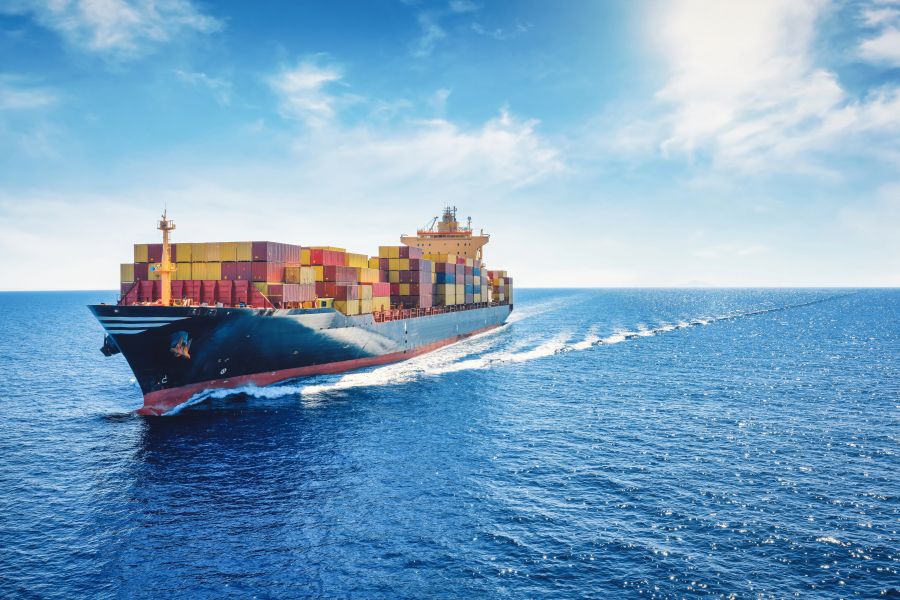 Trade disruptions like the Strait of Hormuz closure expose how dependent global food systems are on a handful of shipping routes.The index warns that systems optimized solely for affordability, without balancing nutritional needs, risk locking in long-term public health costs through rising non-communicable diseases. The US, for instance, ranks third on affordability but 51 out of 60 on dietary diversity — driven by high consumption of low-nutrient foods.
Bresnahan says Cargill approaches this gap through reformulation. “Improving the nutritional profile of everyday foods allows people to access better nutrition without fundamentally changing consumption patterns or cost structures,” she says. “This can include reducing sugar, sodium, saturated fat, or increasing fiber and other essential nutrients.”
Food loss and waste: The fastest win
Asked to name the single intervention that would deliver the greatest resilience return per dollar, Bresnahan is clear: “Reducing food loss and waste is one of the most efficient and effective interventions,” she says. “It delivers immediate impact without requiring additional land, additional water, or additional inputs.”
The index supports this. Around 13.2% of food is lost between harvest and retail globally, while an estimated 19% of total food production is wasted in households. Fifty of 60 countries in the index have food loss and waste strategies, yet dedicated policy and investment for end-to-end cold chain capacity averages just 42.78 — a critical bottleneck for perishable, nutrient-dense foods.
Bresnahan points to two Cargill innovations. The first is an AI-enabled computer vision system used in beef processing that increases the amount of meat recovered from each cut, translating into millions of additional meals without expanding production. The second is a natural flavors technology that extends the shelf life of ground beef by up to five days, reducing retail discard, while maintaining safety and quality.
Scaling what works
The RFSI’s central conclusion is that the ingredients for resilience already exist — what is missing is coordination and scale. Persistent shortfalls in electricity, connectivity, transport, and cold chains continue to limit farmers’ access to markets and services, preventing proven technologies and financial tools from delivering impact at system level.
With the Hormuz crisis now entering its fourth week and nitrogen fertilizer supplies tightening ahead of the Northern Hemisphere planting season, the findings carry particular urgency for future food systems development.
“A more connected food system is a more resilient one,” says Bresnahan. “The priority is to keep food moving and investing in the supply chain continually, so that when disruptions occur, we’re ready.”