


Energy shock, fertilizer crunch, freight surge: Food manufacturers face triple hit from Iran war

Key takeaways
- The Strait of Hormuz closure is disrupting roughly one-third of globally traded fertilizer at the start of Northern Hemisphere spring planting, with no strategic reserve to buffer the shortfall.
- Soybean oil has hit a two-and-a-half-year high while QatarEnergy has halted urea and ammonia production at Ras Laffan, the world’s largest LNG liquefaction and industrial complex.
- Cape of Good Hope rerouting adds roughly US$1 million per voyage in fuel costs and weeks of additional transit time, threatening temperature-sensitive ingredient shipments.
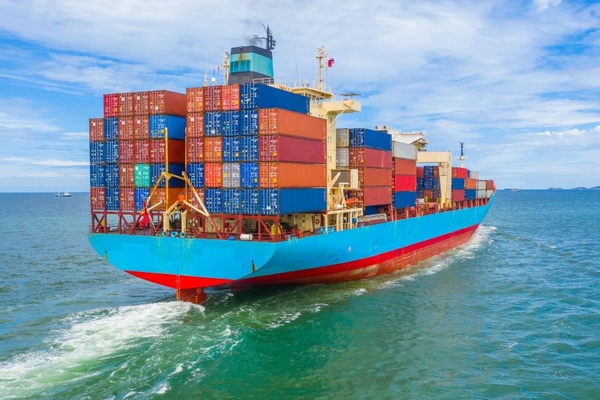
The closure of the Strait of Hormuz amid ongoing US-Israeli strikes on Iran has triggered a supply chain crisis that extends far beyond crude oil, threatening food ingredient markets through a cascade of fertilizer shortages, vegetable oil price spikes, sugar refinery disruption, and a sharp escalation in logistics costs that industry analysts warn could persist for months.
The strait — a 21-mile-wide chokepoint between Iran and Oman through which approximately 20% of the world’s seaborne oil and 20% of its liquefied natural gas transits daily — has been functionally closed for commercial shipping since Iran’s Islamic Revolutionary Guard Corps began issuing radio warnings prohibiting vessel passage.
Major shipping carriers have suspended all Hormuz transits and are rerouting vessels around Africa’s Cape of Good Hope, adding weeks to delivery schedules and close to US$1 million in fuel costs per voyage.

Maritime insurance war-risk coverage for the Persian Gulf was withdrawn by major providers effective March 5, making transit economically unviable regardless of military conditions on the ground.
For the F&B industry, the consequences are both immediate and structural. In the near term, ingredient buyers are confronting soybean oil at a two-and-a-half-year price high, urea fertilizer costs rising sharply, and the world’s largest standalone sugar refinery in Dubai cut off from raw supply.
Looking further out, the disruption lands at the worst possible moment for Northern Hemisphere spring planting — the season in which nitrogen fertilizer demand peaks globally — with no strategic stockpile equivalent to the oil reserve available to buffer the market.
The fertilizer crunch
While media attention has focused on oil prices, the most acute upstream threat to global food production may be nitrogen fertilizer. According to Kpler — a commodity intelligence platform that tracks vessel movements and trade flows in real time — approximately 33% of the world’s fertilizer supply transits the Strait of Hormuz, with exports from Qatar, Saudi Arabia, the UAE, Iraq, and Iran all reliant on the waterway.
 Nitrogen fertilizer is a critical upstream input for global food production, with no strategic reserve equivalent to oil buffers available to cushion supply shocks.The disruption has already hit production. QatarEnergy — the state energy company that operates Ras Laffan, the world’s largest LNG liquefaction and industrial complex — halted urea, ammonia, methanol, and related output following Iranian drone strikes on the facility. Natural gas, which QatarEnergy uses as the primary feedstock for nitrogen fertilizer, is no longer flowing safely to the complex.
According to Bloomberg Intelligence, Qatar alone accounts for approximately 11% of global urea exports, with roughly 45% of all urea shipments originating from Persian Gulf facilities.
Janes — a defence and national security intelligence firm — warned in a March 2 brief that elevated gas prices “will also very likely add pressure to increases in global fertilizer costs” and “raise the risk of global food price instability with commensurate effects on political stability in import-dependent regions.”
Unlike crude oil, there is no strategic reserve for nitrogen fertilizer. Kpler’s analysis notes that Iranian fertilizer producers have already halted urea and ammonia output, removing a further significant volume from a market that was already under supply pressure before the conflict began. Northern Hemisphere spring planting begins now.
Vegetable oils under threat
Bloomberg’s commodity markets coverage reported that soybean oil futures surged as much as 3.9% on March 2 to their highest level in more than two years, driven by expectations that higher crude prices would increase biodiesel demand and pull vegetable oils higher in tandem. Benchmark palm oil prices in Kuala Lumpur rose 1.6% in the same session.
Aletheia Capital analyst Nirgunan Tiruchelvam noted, according to Bloomberg, that approximately 20% of global palm oil supply transits the Strait of Hormuz. Gulf Cooperation Council states, alongside Afghanistan and Pakistan, collectively import around 5 million tons of vegetable oils per year — volumes now facing either significant delay or sharply elevated freight costs.
Soybean meal told a different story, dropping as much as 2.7% — its steepest fall since November — with Iran a key buyer of the protein-rich animal feed. Bloomberg’s reporting attributed the move partly to “rising freight rates that could dent future US soymeal export sales,” a signal that the logistics shock is suppressing protein ingredient demand as well as inflating fat and oil costs simultaneously.
Sugar refining: A structural risk specific to the Gulf
One of the least-reported commodity impacts sits in the refined sugar market.
Bloomberg’s agricultural markets desk reported that the premium refined sugar commands over raw sugar jumped sharply following the effective closure of the strait, because raw cane supplies for the world’s largest standalone sugar refinery — located in Dubai — transit through the Strait of Hormuz.
A disruption to raw supply, even a temporary one, tightens refined sugar availability across the Gulf and wider South Asian markets that depend on the refinery’s output. For F&B manufacturers sourcing refined sugar from the region, this represents an acute procurement risk that has no direct equivalent in the European supply chain and has received almost no coverage in the food trade press.
Carrier rerouting costs
The rerouting decisions taken by the world’s largest container carriers have now produced a concrete cost figure.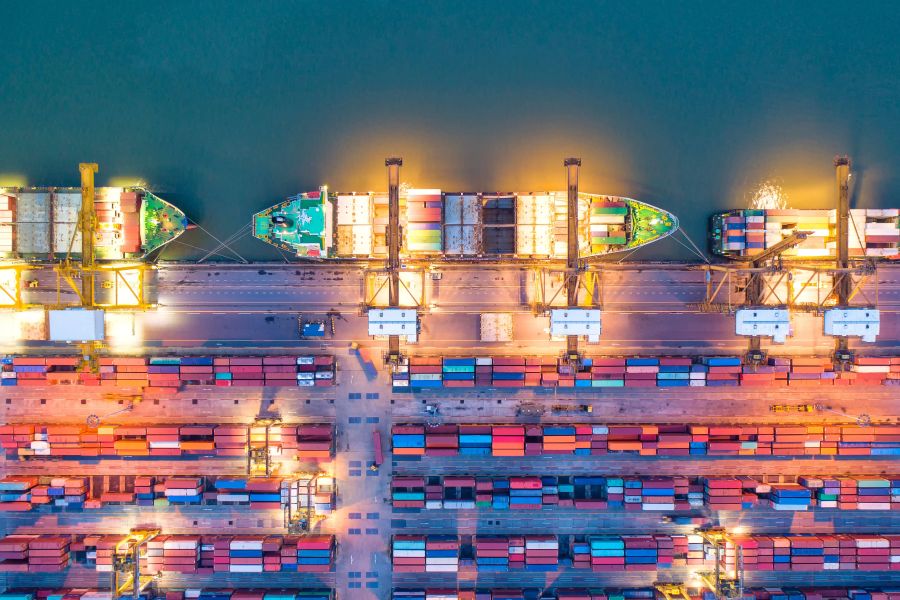 Major carriers including Maersk and Hapag-Lloyd have suspended Hormuz transits, rerouting vessels via the Cape of Good Hope and adding weeks to ingredient delivery schedules.
Research by LSEG Shipping Research — a division of the London Stock Exchange Group — calculated that rerouting a tanker from Asia to northwest Europe via the Cape adds close to US$933,000 in incremental costs per voyage, driven primarily by additional fuel burn, while doubling transit times from 16 to 32 days.
Flexport — the US freight forwarding and logistics technology company — advised clients on February 28 to “prepare for longer lead times, tight capacity, elevated rates, and continued volatility across both ocean and air networks.”
For temperature-sensitive food ingredients — chilled dairy proteins, fresh botanicals, perishable flavour compounds — the Cape detour does not just increase cost — it consumes shelf life.
The UK Maritime Trade Operations Centre, the Royal Navy’s maritime security body, confirmed at least three commercial vessels suffered damage from suspected projectiles in the strait on March 1–2, underlining that the insurance withdrawal driving the rerouting reflects a genuine and ongoing physical threat.
Europe’s downstream exposure
For European food manufacturers, the primary risk is not direct trade disruption, but energy cost inflation. Vesper — an agricultural commodity intelligence firm specializing in European ingredient markets — published analysis warning that EU TTF gas prices risk returning to 2022 levels of €200/MWh (US$220/MWh) or higher in a prolonged disruption scenario, as Europe would be forced to compete with Asian buyers for scarce spot LNG cargoes.
Vesper also raised a more nuanced risk specific to the food ingredients sector: that the demand recovery narratives underpinning some commodity markets — cocoa being the clearest example — could stall under tighter financial conditions driven by a sustained energy shock.
The Janes brief also warns that a protracted conflict “would sustain, or potentially elevate, global oil and gas prices, driving broad-based inflation across industrial sectors.” Oxford Economics — the independent forecasting and research firm — published its own scenario analysis placing Brent crude at around US$84 per barrel during active Strait disruption, with the messy geopolitical aftermath expected to keep a floor under prices through 2026 even in a relatively swift resolution.
OPEC+’s announcement on March 1 — that eight member states would increase collective output by 206,000 barrels per day — failed to calm markets, given that the additional supply cannot reach buyers if Hormuz remains closed.