

Kraft Heinz raises R&D spending as functional foods gain traction


Key takeaways
- Kraft Heinz raised R&D spending 22%, focusing on functional nutrition innovation.
- PowerMac and Capri Sun Hydrate show early traction, while Philadelphia Lactose Free expands distribution.
- Emerging markets and foodservice offer growth opportunities for ingredient suppliers.
Kraft Heinz is leaning harder on formulation-led innovation to restore growth, increasing R&D spending as protein, fiber, hydration, and lactose-free products begin to gain commercial traction.
The food giant’s second-quarter results remain challenging. Organic net sales declined 1.3%, as a 1.3 percentage-point benefit from pricing was outweighed by a 2.6 percentage-point drop in volume and mix. Adjusted operating income fell 18.4% to US$1 billion, reflecting weaker volumes, higher advertising spending, and inflation in manufacturing and logistics.
A reported US$6.4 billion operating loss was largely driven by US$7.4 billion in noncash impairment charges. However, for ingredient suppliers and product developers, the more consequential signal is where Kraft Heinz is placing its future bets.
The company increased R&D spending by 22% in the first half of 2026 compared with the same period last year. It plans to raise R&D expenditure to about 0.9% of net sales, supporting what it calls “innovation, renovation, and productivity.”
Nutrition without sensory compromise
Kraft Heinz highlights Kraft Mac & Cheese PowerMac, Capri Sun Hydrate, and Philadelphia Lactose Free as examples of its consumer-led innovation strategy.
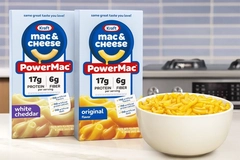
PowerMac contains 17 g of protein and 6 g of fiber per serving, positioning a familiar comfort-food brand within the fast-growing functional nutrition space. The formulation challenge is to add meaningful nutritional value without undermining the indulgent taste and texture associated with the core product.
CEO Steve Cahillane says PowerMac has reached about 35,000 stores and ranks in the top quartile of innovations based on consumption.
“The early read is it is very, very incremental to us and to the category,” Cahillane told analysts, adding that retailers had been pleased with its performance. Kraft Heinz ramps up R&D investment as weaker volumes and rising costs weigh on Q2 results.
Capri Sun Hydrate brings electrolytes and functional hydration into a children’s beverage format. Kraft Heinz describes it as its fastest-turning kids’ beverage innovation. Philadelphia Lactose Free, meanwhile, was developed to offer the brand’s “same signature creaminess, without compromise,” with distribution continuing to expand.
Together, the launches illustrate the increasingly complex brief handed to food ingredient companies. Manufacturers need to combine protein, fiber, electrolytes, or lactose-free accessibility with taste, texture, familiarity, and affordability.
The strategy echoes Danone’s Q2 performance, in which resilient demand for high-protein dairy and specialized nutrition helped lift like-for-like sales by 4.2%. Danone’s volume and mix increased by 1.9%, suggesting its health-focused platforms are operating at a more mature scale.
Kraft Heinz is drawing on similar nutrition cues but its functional pipeline is also being asked to reverse declining volumes across large, mainstream categories.
Investment meets affordability pressure
Kraft Heinz is increasing its planned incremental investment by US$100 million to about US$700 million in 2026. The spending covers marketing, sales, R&D, product superiority, and pricing initiatives.
CFO Andre Maciel says additional personnel in innovation and R&D were intended to help teams “build bolder plans,” with more activity expected toward the end of 2026 and into 2027.
The investment comes as manufacturers confront a difficult formulation equation. Kraft Heinz raised prices, particularly in coffee and ready-to-drink beverages, to mitigate higher input costs, but volumes remained under pressure.
This creates an opportunity for suppliers that can combine nutritional enhancement with sensory performance and cost efficiency. The strategy creates opportunities in protein and fiber fortification, electrolyte delivery, lactose-free formulation, texture management, and cost-efficient product development.
The comparison with Mondelēz International is interesting. The snack maker delivered 2.2% organic growth in Q2, with pricing, and volume and mix contributing positively. Like Kraft Heinz, Mondelēz is reinvesting behind brands and innovation, but its results suggest greater current consumer resilience.
Kraft Heinz must demonstrate that its new formulations are not only attractive innovations, but also scalable volume drivers.
Unilever Foods offers a closer parallel. Its underlying second-quarter sales increased just 0.2%, with volumes down 0.1%, while commodity inflation and value-focused investment compressed margins. Both companies are relying on innovation and improved execution to reinvigorate mature food portfolios.
Foodservice and emerging-market openings
Kraft Heinz’s strongest growth signals came outside its core developed-market retail business. Emerging Markets organic sales increased 8.5%, while Heinz delivered about 12% organic growth in those markets. The company also launched Heinz Zero in Brazil.
Global Away From Home organic sales rose 2.9%, with Kraft Heinz targeting expansion beyond ketchup, deeper penetration in quick-service restaurants, and growth across hotels and stadiums.
For B2B partners, the message extends beyond one quarter. Kraft Heinz is tying its turnaround to stronger R&D capabilities, functional renovation, and channel-specific product development.
The opportunity will favor suppliers that can help iconic brands deliver measurable nutritional benefits and operational efficiencies without sacrificing the sensory qualities consumers expect.