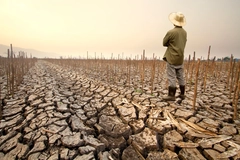



Chonnam scientists identify rice gene that boosts drought tolerance and grain yield


Key takeaways
- Chonnam National University researchers report identifying a rice gene that improves drought tolerance while supporting chloroplast development.
- Field trials showed rice engineered with the gene delivered 33–42% higher yields under drought conditions.
- The discovery could help breeders develop climate-resilient, high-yield crops to support food security and ingredient supply stability.
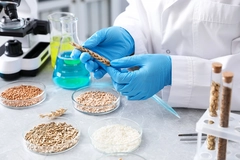
Researchers at Chonnam National University, South Korea, have reported identifying a rice gene that could support the development of climate-resilient, high-yield crops. The discovery comes as drought pressure intensifies across global agricultural systems.
The gene, OsFeSOD3, was shown to protect rice plants from drought-related cellular damage while supporting chloroplast development, helping plants maintain productivity under stress.
The findings could hold significance for rice supply chains and wider crop improvement programs, as food producers and ingredient suppliers face rising volatility linked to climate change, water scarcity, and extreme weather.
In field trials conducted over two consecutive growing seasons, rice plants engineered to overexpress OsFeSOD3 produced 33–42% higher grain yields under drought conditions compared with wild-type plants. The yield gains were mainly linked to improved grain filling and higher grain numbers.
The study was led by Professor Geupil Jang at Chonnam National University and published online in December 2025, before appearing in the Plant Biotechnology Journal in 2026.
Solving a breeding trade-off
A long-standing challenge in crop science is that improving stress tolerance can come at the expense of yield. Activating plant defense systems often diverts energy away from growth, limiting agricultural productivity.
The new research suggests OsFeSOD3 may help overcome this limitation by performing two functions at once. The gene encodes a chloroplast-localized iron superoxide dismutase, an enzyme that helps neutralize reactive oxygen species (ROS). These harmful molecules accumulate in plant cells during environmental stress, including drought, and can damage chloroplasts, reduce photosynthesis, and impair yield.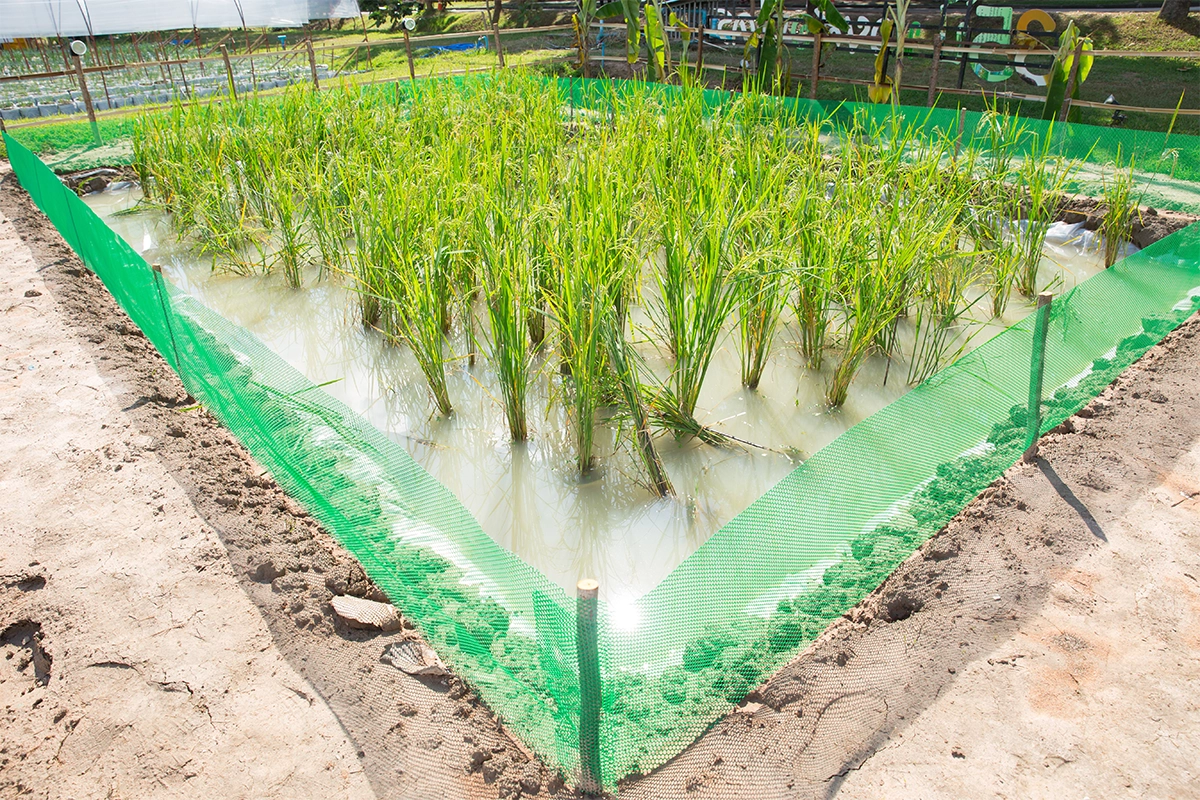 The OsFeSOD3 gene protects rice chloroplasts during drought while boosting grain yields.
Using time-lapse visualization of ROS dynamics and genetic analysis, the researchers found that drought-induced ROS accumulation begins primarily within chloroplasts before spreading through plant cells. Increasing OsFeSOD3 expression reduced ROS buildup in chloroplasts, limited cellular damage, and improved drought tolerance.
“Chloroplast development is highly sensitive to environmental stresses such as drought, and this sensitivity is closely associated with growth inhibition and yield reduction under stress conditions,” says Jang.
Maintaining photosynthetic capacity
Beyond its antioxidant function, OsFeSOD3 was also found to support chloroplast biogenesis. The researchers discovered that the protein acts as part of the plastid-encoded RNA polymerase complex, which is essential for chloroplast gene expression and development.
This means the gene not only helps protect plants from oxidative stress but also supports the cellular machinery needed to maintain photosynthetic capacity. According to the researchers, this dual role is what makes OsFeSOD3 particularly promising for crop improvement.
“Our findings suggest that OsFeSOD3 serves as a bifunctional regulator that coordinates chloroplastic ROS metabolism and chloroplast biogenesis in rice,” says Jang.
The team also used CRISPR-Cas9 technology to generate rice plants lacking OsFeSOD3. These plants developed severe chloroplast defects, albino leaves, and arrested growth, underscoring the gene’s essential role in normal plant development.
Implications for food security
Rice is a staple crop for more than half of the world’s population, making drought resilience a critical issue for food security and ingredient supply stability. As climate change increases the frequency and severity of droughts, heat waves, and other environmental stresses, agricultural systems are under growing pressure to deliver reliable yields under less predictable conditions.
While the research remains at the scientific discovery stage, the findings could inform future breeding and biotechnology strategies aimed at producing crops that are both stress-tolerant and productive. For food and ingredient companies, such advances may become increasingly important as procurement teams seek more resilient raw material streams and lower exposure to climate-related crop losses.
The researchers believe that understanding genes such as OsFeSOD3 could contribute to the development of climate-resilient, high-yield crops capable of supporting food security in vulnerable regions worldwide.
According to new research from the University of Illinois Urbana-Champaign, US, global rice production nearly doubled between the 1960s and the 2010s, despite the growing impacts of climate change. The findings underscored the critical role of agricultural management in safeguarding food security.




Upcoming webinars

Oat-Standing Ingredients - Showcasing Irish Grain Through Innovation
Tirlán Ingredients

2027 Food Safety Risks for Quality & Compliance Leaders
FoodChain ID

Formulating for function: Developing benefit-led beverages with natural colours, botanicals, and flavours
Givaudan Sense Colour