


ISM 2026 live: California Natural Color talks color-flavor synergy and labeling strategies


Key takeaways
- California Natural Color is showcasing plant-based color solutions that align with clean label demands, with brands increasingly matching fruit-derived colors to corresponding flavors.
- The company's crystal color technology offers five to ten times higher concentration than liquid pigments and up to five years of shelf life.
- Processing conditions like heat, pH, and base matrices significantly impact color stability, making application-specific solutions increasingly important in confectionery.
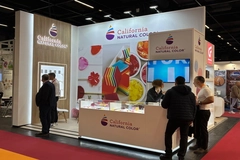
California Natural Color (CNC) is highlighting its extensive portfolio of vibrant, stable, and label-friendly colors derived from a range of natural, plant-based sources to boost trust and transparency among consumers at ISM 2026 in Cologne, Germany (Feb 1-4).
As demand for vibrant, adventurous natural colors for products on the shelf and in the digital space continues to rise, the company is innovating with plant-based solutions.
It cites how younger consumers are especially drawn to products that feel fun and eye-catching. However, it’s important to meet expectations that natural ingredients — like solutions sourced from grapes, carrots, purple sweet potatoes, and other plant-based sources that consumers recognize and trust — are intentionally chosen.
At the show, the global supplier of premium grape juice concentrates, natural colors, and grape seed extract, is highlighting how it delivers vivid natural hues to a range of sweets and confections.
We caught up with Dana Osborn, marketing manager, CNC, live from the show to discuss how brands are increasingly aligning fruit-derived colors with corresponding fruit flavors as part of a broader clean label and transparency strategy.
Spectrum of plant-based color ingredients
Osborn also highlights how natural color innovation will play a key role in helping flavors translate visually.
“As clean label expectations continue to rise, natural color innovation has shifted toward solutions that deliver brightness without compromising ingredient transparency or flavor integrity,” she tells us.
“Today’s solutions are increasingly fruit- and vegetable-specific, allowing formulators to achieve vibrant, cleaner shades that align more closely with familiar flavor cues. This allows formulators to create visually appealing confections where color reinforces flavor expectation, and label claims, supporting consumer trust while meeting performance demands of modern confectionery processing.”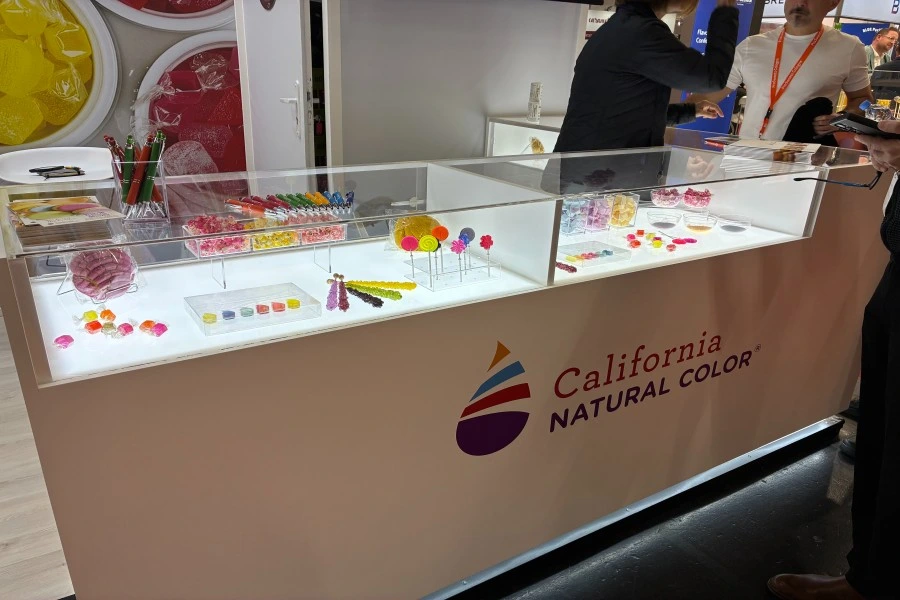 California Natural Color is highlighting how it delivers vivid natural hues to a range of sweets and confections.
“Shoppers expect visual cues to match ingredient labels, and inconsistencies between color and flavor can quickly undermine consumer trust. Beyond label clarity, this alignment also supports a more cohesive sensory experience, where color, flavor, and messaging reinforce one another (as part of a larger brand story).”
Osborn notes that formulation decisions around color are now closely tied to branding, ingredient sourcing, and regulatory considerations, rather than “being a purely aesthetic choice.”
Leveraging tech
CNC’s unique crystal color technology delivers manufacturing advantages. These include five to ten times higher color concentration than traditional liquid pigments, up to a five-year ambient shelf life, and supply chain savings because the high-strength color leads to low dosages and savings in transportation and warehouse storage.
In confectionery applications such as gummies and hard candy, processing conditions play a major role in natural color performance.
“Heat exposure and cook time can all impact color stability, particularly for heat-sensitive pigments. Other key factors include pH, water activity, and the base matrix — for example, gelatin versus pectin systems in gummies. Shelf life expectations and light exposure also need to be considered early in development,” Osborn says.
“Because these products are often flavor-forward, color dosage must be carefully balanced so it delivers the desired visual impact without distorting flavor perception. This is why application-specific color systems, rather than one-size-fits-all solutions, are increasingly important.”
Regulation in colors for F&B
The rise of natural colors comes as regulation over food dyes and artificial additives tightens, especially in the US where the FDA and Department of Health and Human Services are banning synthetic, petroleum-based food dyes, prompting a nationwide transition.
The new health regulations are driven by US Secretary of Health and Human Services Robert F. Kennedy Jr.’s “Make America Healthy Again” movement, and have spurred investment in natural, clean label products and ingredient traceability.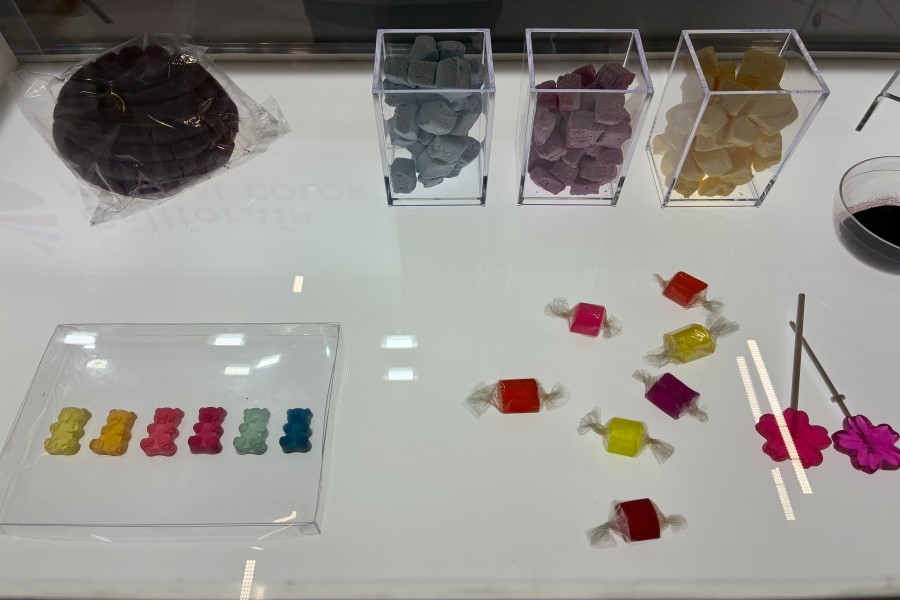 California Natural Color showcases jellies, candy, and lollipops at ISM 2026.
They also followed a ban on the use of Red dye No. 3, which had been used in formulating cherry-red products for decades, until its use was linked to concerns over cancer.
This kind of increased government scrutiny, backed by consumer demand for natural ingredients, led to Walmart removing 11 synthetic dyes and dozens of other additives from its private-brand foods in a major reformulation in retail last October.
In July 2025, Kellanova also announced that it is phasing out synthetic FD&C color additives across its US food portfolio, committing to remove them from all school foods by the 2026-2027 academic year and from retail products by the end of 2027.
Flexible formats
Looking ahead, the company is seeing growing interest in layered, nuanced shades that reflect sophisticated flavor combinations. In the coming years, Osborn believes that innovation will also be focused on improving format flexibility and process tolerance, enabling natural colors to perform across a wider range of confectionery applications and manufacturing conditions.
“At the same time, sustainability, traceability, and supply chain resilience are becoming integral to how new solutions are developed. Natural color innovation will continue to support flavor trends by helping brands deliver products that look as good as they taste, while meeting evolving consumer and regulatory expectations,” Osborn concludes.