



Danone Q3 results: Fiber and kefir shape US yogurt recovery plans

Key takeaways
- Danone is expanding US yogurt innovation into fiber, kefir, and everyday Greek formats.
- Production disruptions affected product availability despite increased manufacturing capacity.
- The F&B giant’s third-quarter sales rose 4% on a like-for-like basis, driven mainly by pricing.
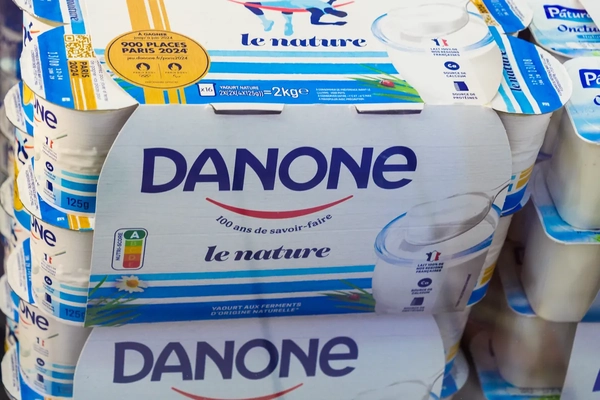
Danone is widening its US yogurt innovation pipeline to include fiber-enriched products, kefir, and everyday Greek yogurt as it works to restore momentum following production disruptions.
The French food and beverage company reported third-quarter sales of €7.23 billion (US$8.05 billion), up 4% on a like-for-like basis. Pricing contributed 3.6 percentage points to growth, while volume/mix added 0.4 percentage points. In North America, sales grew 2.4%, but volume/mix declined 0.6%.
“Demand for our winning platforms, from high protein to gut health and medical nutrition, remains strong across the world,” says CEO Antoine de Saint-Affrique.
US recovery moves beyond capacity
Danone’s results presentation identifies fiber, kefir, and everyday Greek yogurt as priorities for broadening its US portfolio beyond high-protein products.

The company says eight capacity expansion projects across four factories since December 2025 mean capacity is no longer a constraint on growth. However, operational disruptions have slowed the ramp-up, affecting service levels and product availability.
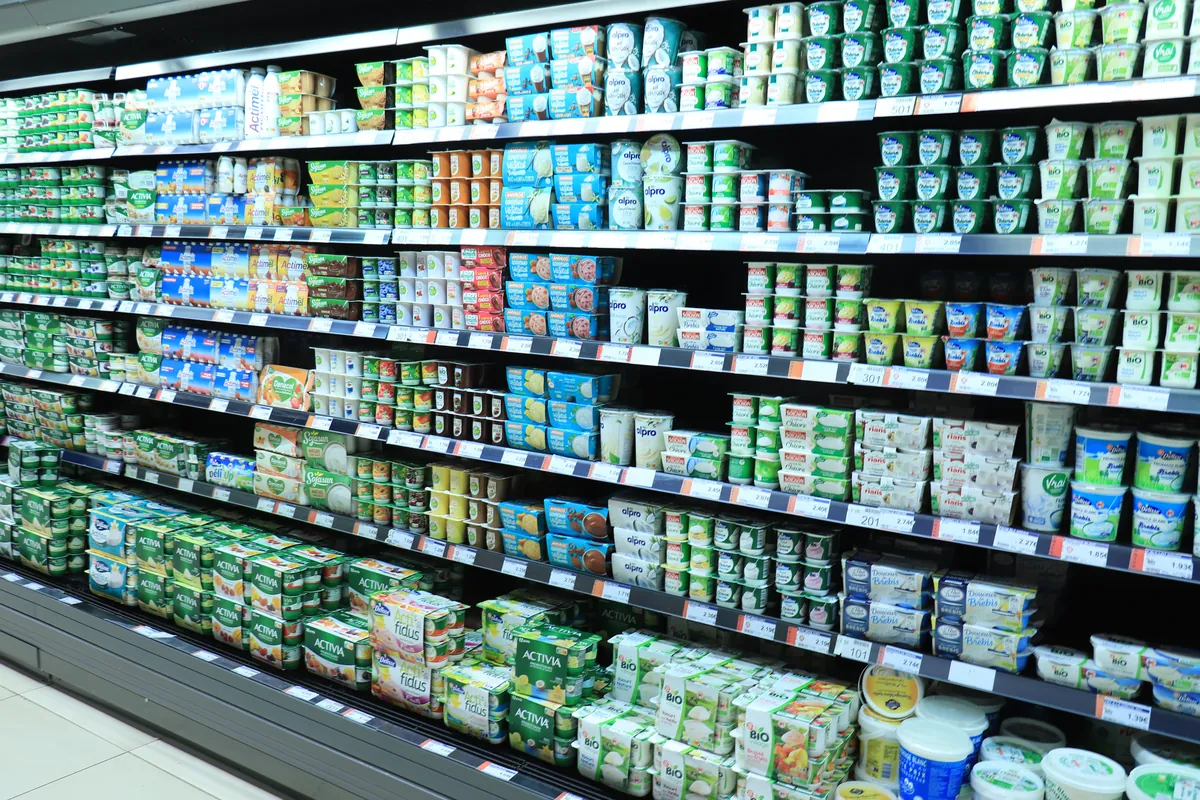 Danone is expanding its US yogurt pipeline with fiber, kefir, and everyday Greek formats.Speaking on the earnings call, CFO Juergen Esser said difficulties starting new lines and coordinating planning and operations had affected sales toward the end of the quarter. He said service levels were improving in October and needed to recover sufficiently for normal in-store activation and promotional activity to resume.
Danone has also appointed new US leadership, reporting to Henri Bruxelles, as it seeks to improve execution in its North American dairy and plant-based business.
The 2027 innovation pipeline will expand Danone’s presence in everyday Greek yogurt, alongside its established high-protein Greek offering. Esser said the company would pursue the segment through Oikos and the Danone brand, with an emphasis on products free from artificial ingredients.
Kefir and Skyr drive European growth
European performance offers encouragement for the broader portfolio approach. Activia recorded its fourth consecutive quarter of growth in Europe, while Esser said kefir and Skyr both grew at double-digit rates. Danone’s kefir business reached €100 million (US$111 million) on an annual basis, 18 months after launch.
The latest group figures show a greater reliance on pricing than in the second quarter, when Food Ingredients First reported 4.2% like-for-like sales growth, including 1.9 percentage points from volume/mix and 2.3 percentage points from pricing.
However, weaker volume/mix was not confined to North America. Adverse weather and inventory adjustments at Mizone in China reduced group like-for-like sales growth by approximately one percentage point, according to Danone.
Turning gut health into everyday products
The innovation plans build on Danone’s work in fermented dairy. In a recent interview with Food Ingredients First, the company explained how culture selection helps shape acidity, flavor, and texture, while fermentation conditions influence the final eating experience.
Its Activia Kefir combines Activia cultures with kefir yeasts in a blend of 16 strains. Danone also sees fermentation as a tool for reducing added sugar while maintaining consumer appeal, linking nutritional improvements with the sensory qualities that encourage repeat purchases.
“A product can have compelling nutritional benefits, but if consumers don’t enjoy the taste, they’re unlikely to make it part of their everyday diet,” a Danone spokesperson told us earlier this month.
The combination of protein and fiber is also shaping its plant-based portfolio. Our July coverage of Silk Protein detailed the brand’s expansion into yogurt and ready-to-drink shakes. According to Danone, the shakes deliver 30 grams of protein and 5 grams of fiber per serving, while individual yogurt cups provide at least 12 grams of protein and 4 grams of fiber.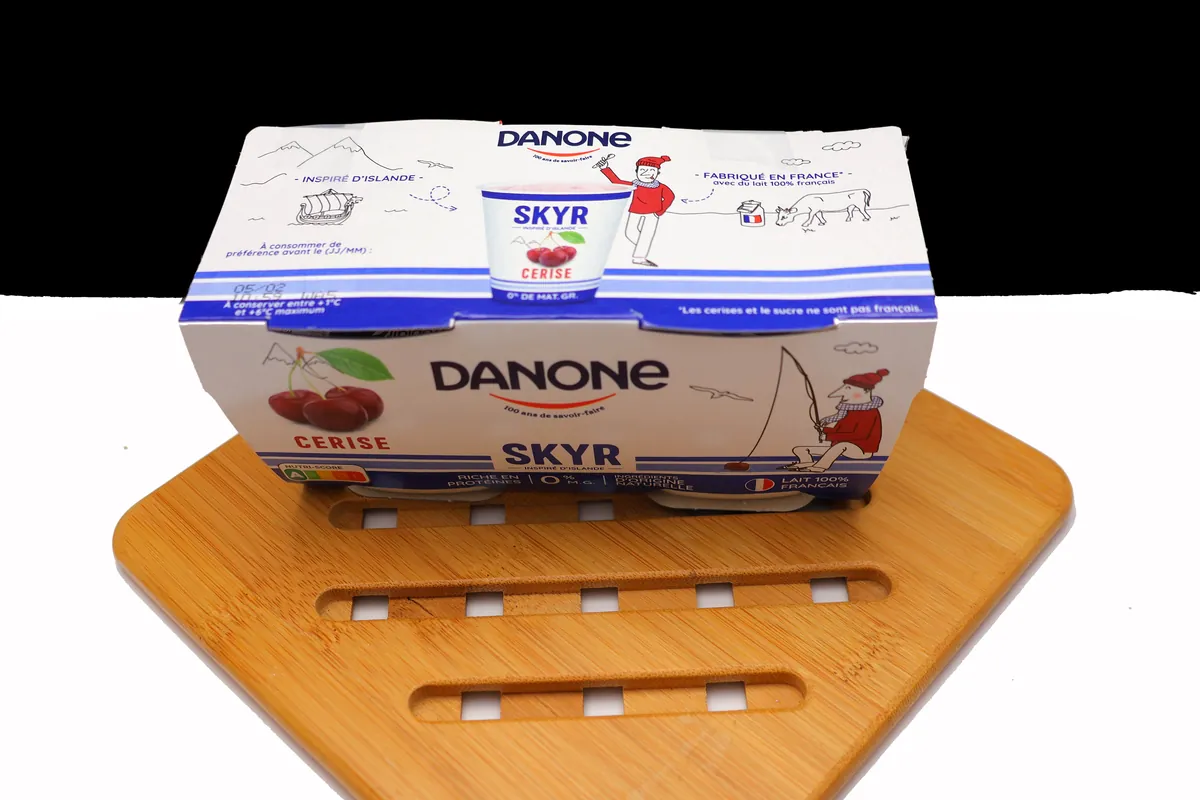 Kefir and Skyr delivered double-digit growth in Europe during the third quarter.
That approach reflects demand for products offering several benefits in familiar formats. Kallie Goodwin, Danone USA’s plant-based food and beverage lead, previously told us that protein, fiber, and lower-sugar products were outperforming.
Building fermentation capabilities
Danone’s broader investment in fermentation includes the €20 million (US$22.3 million) Biotech Open Platform, inaugurated with partners in Clermont-Ferrand, France. As we reported this month, the facility supports the scale-up of proteins, enzymes, and other fermentation-derived ingredients.
Its capabilities span fermentation, purification, and bioprocess development, allowing companies to produce ingredients for application testing before committing to commercial production. The platform is open to start-ups, established businesses, and research organizations.
Across the group, Specialized Nutrition sales rose 4.7% like for like in the quarter, with growth of 12.4% in the Americas. Danone highlighted contributions from Aptamil, Neocate, and Kate Farms.
The company maintained its full-year forecast for 3% to 5% like-for-like sales growth, with recurring operating income growing faster than sales.