


April in review: UN FAO food security warning, Coffee leaders merge, Cultivated chocolate bars

Key takeaways
- The UN FAO warned that the Strait of Hormuz crisis could lead to severe global food insecurity by decimating the supply of key agri-food inputs.
- PepsiCo increased revenue with price cuts and healthier snacks, while Keurig Dr Pepper acquired JDE Peet’s, creating a larger coffee powerhouse.
- Mondelez and its strategic partner Celleste developed the “world’s first” milk chocolate bars made with cultivated cocoa butter.
In April 2026, the UN FAO’s chief economist warned that a prolonged Strait of Hormuz crisis could result in a “global agri-food catastrophe,” urging anticipatory policy actions to mitigate a supply crunch for key agri-food inputs like fertilizer.
PepsiCo boosted its revenue through consumer price cuts and healthier snack sales. Fonterra sold its global consumer business to global dairy leader Lactalis. Keurig Dr Pepper acquired JDE Peet’s to form an expanded coffee giant.
Mondelēz unveiled what is said to be the world’s first milk chocolate bars made with cultivated cocoa butter, produced by its partner Celleste.
We look back at the biggest stories from April.
Fonterra’s strategic sale to Lactalis sets stage for B2B growth in dairy ingredients
Fonterra completed the sale of its global consumer and associated businesses, including Mainland Group, to global dairy leader Lactalis. We looked at how the deal enables Fonterra to refocus on its core B2B dairy operations and strengthen a key partnership with Lactalis, which is expected to drive future growth in the dairy ingredients sector.
Keurig Dr Pepper expands coffee portfolio with US$18B JDE Peet’s acquisition
Keurig Dr Pepper acquired JDE Peet’s in a reported US$18 billion all-cash deal, marking a milestone in the company’s long-term growth agenda. The deal is expected to create opportunities for innovation across multiple product formats by combining the Keurig business with JDE Peet’s portfolio of renowned coffee brands, with likely implications for food ingredient suppliers.
The post-synthetic shift: How US regulation is rewriting the food color playbook
Innovation in the natural color space continued to gather momentum against a backdrop of tightening regulation and shifts away from artificial ingredients. Companies are preparing supply chains and R&D pipelines, not just for compliance, but to meet growing consumer demands for real food with minimal processing. We took a closer look at the fast-evolving natural color market. Cargill won a BIG Artificial Intelligence Excellence Award award for integrating AI across its value chain.
AI as infrastructure: How Cargill is rewiring food innovation
Cargill picked up a 2026 BIG Artificial Intelligence Excellence Award for integrating AI across its value chain, from on-farm decision tools to customer co-creation. As Abhishek Roy, senior director of AI R&D at Cargill, explained, industry leaders are no longer testing AI at the margins, but integrating it into their core workflows, from product development through to commercialization.
GLP-1 medications accelerate frozen food’s shift toward nutrient-dense meals
As GLP-1s proliferate, they are accelerating a broader shift in how consumers think about food — not just in terms of calories, but nutritional output per bite. Within frozen food, this shift is increasingly visible, with companies like Nissin Foods beginning to rethink how convenience meals are formulated. Robert Little, CEO of Kanzen Meal USA, told us more.
Djazagro 2026: What’s driving innovation in North Africa’s F&B industry?
North Africa’s F&B industry is undergoing a significant transformation, driven by rising consumer demand for affordable products that blend taste with a healthier, natural profile. As Djazagro 2026, the region’s leading agri-food trade show, came to a close in Algeria, we looked back at the event’s highlights with experts from Döhler, IFF, Ingredion, and Lallemand.
“Global agri-food catastrophe”: FAO sounds alarm on Strait of Hormuz crisis
UN FAO chief economist, Maximo Torero, warned that a prolonged Strait of Hormuz crisis could result in a “global agri-food catastrophe.” The US-Iran war in the Middle East, which began in late February 2026, remains unresolved, with Torero urging anticipatory policy actions to mitigate a price and supply crunch for key agri-food inputs, such as fertilizer, oil and gas, and grain.
PepsiCo’s strategic price cuts and healthier snacks drive Q1 2026 revenue growth
Consumer price cuts and new, healthier snacks helped PepsiCo boost its sales and drive an 8.5% revenue increase to US$19.44 billion in Q1 2026, compared with the same period last year. We consider how these results provide an indicator for CPGs to effectively navigate challenging economic headwinds and consumer price sensitivity.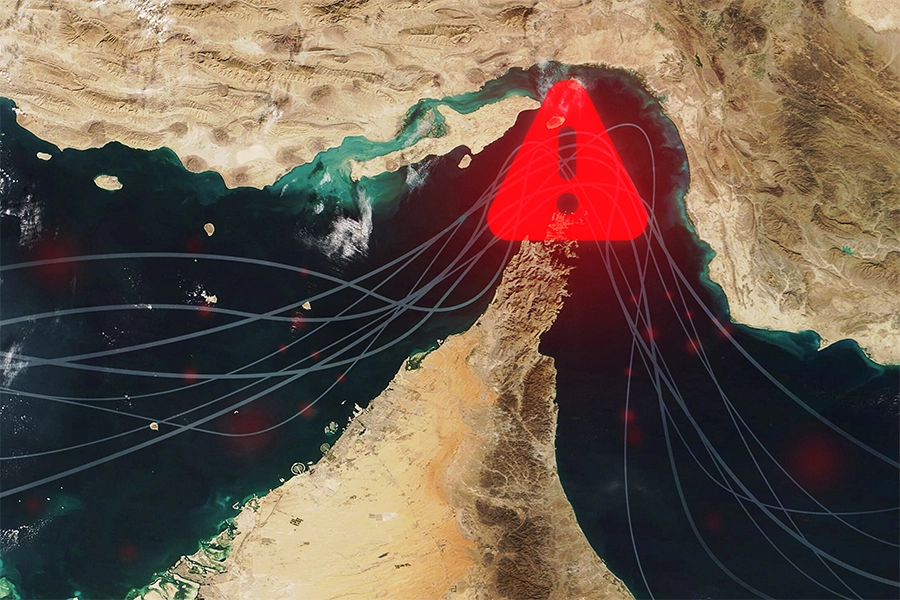 The UN FAO warned of a food security collapse if the Strait of Hormuz crisis persists.
Seafood sidestreams shift from waste to growth opportunity as consumer acceptance climbs
A new study revealed that most European consumers are open to consuming seafood sidestream-based products, pointing to growth opportunities for food manufacturers. However, as Michaela Lindström, CEO at Hailia, a food-tech firm aiming to transform efficiency in seafood, explained, transparency around how these ingredients are used could be essential.
Asia-Pacific flavor trends: Takasago on “digital natives” reshaping F&B innovation
Asia Pacific has emerged as a flavor innovation hub for F&B manufacturers, as social media-driven curiosity for global cuisines co-exists with local flavor demands. Japan-based flavor producer Takasago told us why it views the APAC flavor market as one of the “most dynamic and strategically important regions globally.”
EU’s two-tier crop rules could reshape food sourcing and labeling
The EU neared final approval of its new framework for gene-edited crops, following the EU Council’s adoption of updated rules. The proposal introduced a two-tier system for regulating new genomic techniques across the bloc — marking a significant policy shift that could reshape the regulatory landscape once implemented.
Mondelēz advances cell-cultured cocoa butter with scalable chocolate prototypes
Mondelēz International created what is reportedly the world’s first milk chocolate bars made with cultivated cocoa butter. The cocoa butter was produced by Mondelēz’s strategic partner, Celleste Bio, using its cell suspension culture technology. Investment in cultivated cocoa is on the rise, as confectionery manufacturers diversify their supply options amid volatile cocoa prices.
The year of fiber: How Danone turns surging demand into scalable product innovation
At Danone, fiber is a strategic priority — but execution is complex. Susan Zaripheh, chief R&I officer for the US and Canada at the food leader, told us about the challenges in delivering meaningful fiber levels without compromising taste or texture. Functionality varies widely across fiber types, making scalable, consumer-friendly innovation a key differentiator.