


Seafood sidestreams shift from waste to growth opportunity as consumer acceptance climbs

Key takeaways
- Most surveyed Europeans are positive or neutral toward seafood sidestream-based foods, especially younger, urban, and sustainability-focused groups.
- Growing acceptance across ready meals, foodservice, and home cooking signals new revenue streams for processors and manufacturers.
- Transparency around sourcing and processing is critical to overcoming “over-processed” perceptions and scaling adoption.
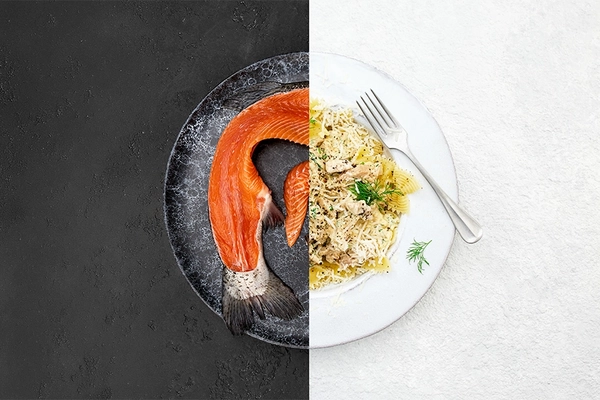
Consumer acceptance of seafood sidestreams in food is changing. A new study has revealed that most European consumers are now open to consuming sidestream-based products, pointing to growth opportunities for seafood processors and food manufacturers to repurpose these underutilized raw materials. However, transparency around how these ingredients are used in food products could be essential to their scalability.
The study, undertaken by Consumer Compass for Hailia, a food-tech firm aiming to transform efficiency in the seafood industry, surveyed 1,512 people in March 2026 from the UK, Sweden, and Germany about their attitudes toward food products made from seafood sidestreams. Most (74%) respondents say they have a positive or neutral attitude toward eating food made from filleting sidestreams.

Many respondents say they were open to consuming these ingredients in ready meals, quick-service restaurants, and cafeterias in workplaces or public institutions. Many consumers also indicated openness to using sidestream ingredients in home cooking, reinforcing their versatility across consumer-facing products and B2B applications.
The strongest support was among younger (aged 18–34) consumers. The most positive respondents reported living in cities where ready-made meals are most common. Families with children, people with high-protein diets, and environmentally conscious consumers reported more positive attitudes toward sidestreams for food products than other reference groups.
Among the most common answers, respondents stated that these products would be a good alternative source for protein, make it easier to consume fish as part of convenient, everyday diets, and provide the sustainability benefits of using more of each fish for human consumption. According to Innova Market Insights, protein intake, sustainability, and affordability demands are shaping consumer behavior globally.
Consumer trust in seafood sidestreams
The main concern raised in the survey was the perception that sidestream-based products are overly processed or “artificial.” However, Hailia argues that their production is similar to everyday foods like meatballs or falafel, using standard food preparation techniques (refining, mixing, cooking) — not complex industrial processes.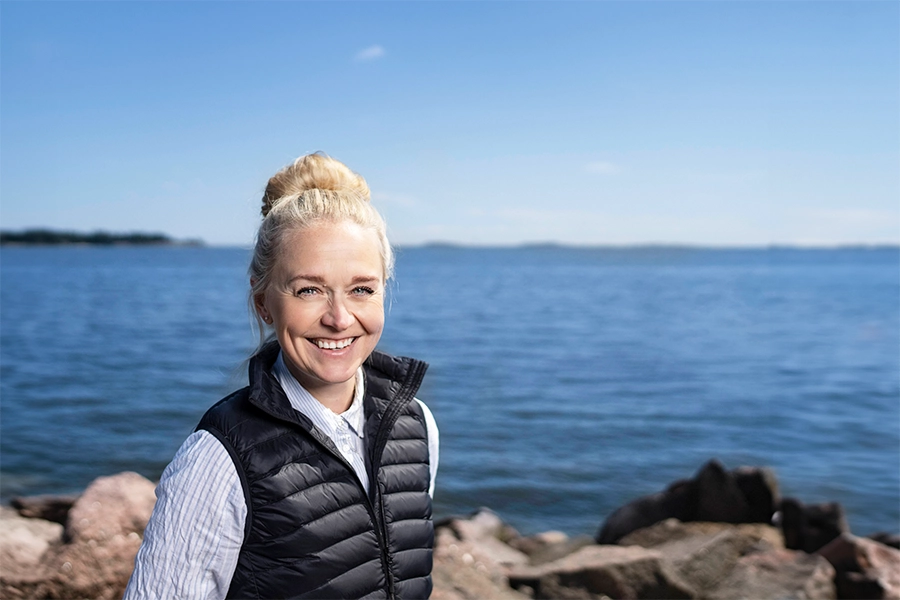 Michaela Lindström, CEO at Hailia: Consumer transparency is key to scaling sidestream-based food products.
“We see clear signals that consumers are open to incorporating these products into their daily lives, but transparency is essential to building lasting trust,” says Michaela Lindström, CEO of the Finnish company. “Sidestreams are handled with the same care and quality standards as fillets, and the process itself is simple and familiar. When people understand that, the hesitation tends to disappear.”
“A majority are already on board, fewer than one in five are opposed, and the large group in the middle simply needs more familiarity with what these products actually are, and the chance to taste them. We expected that young, urban people would be more receptive to new food products.”
Hailia is careful to ensure that its labeling is fully transparent to make clear that it is using more of the fish than just the fillet.
“For example, we state that a product is made from Norwegian salmon, rather than fillet,” Lindström tells Food Ingredients First. “The raw material comes from parts that remain after filleting, such as frames (including the tail) and other pieces and off-cuts. These are not to be treated as low-value sidestreams or waste — they’re valuable food-grade raw materials that have traditionally been underutilized.”
Seafood sidestream appeal across countries
The Hailia study showed that respondents in the UK and Sweden have a generally positive attitude toward sidestream-based food, with 55% and 58%, respectively, seeing these products as a “good thing.” The German market follows slightly behind at 49%, although only 19% responded negatively to the idea of these products.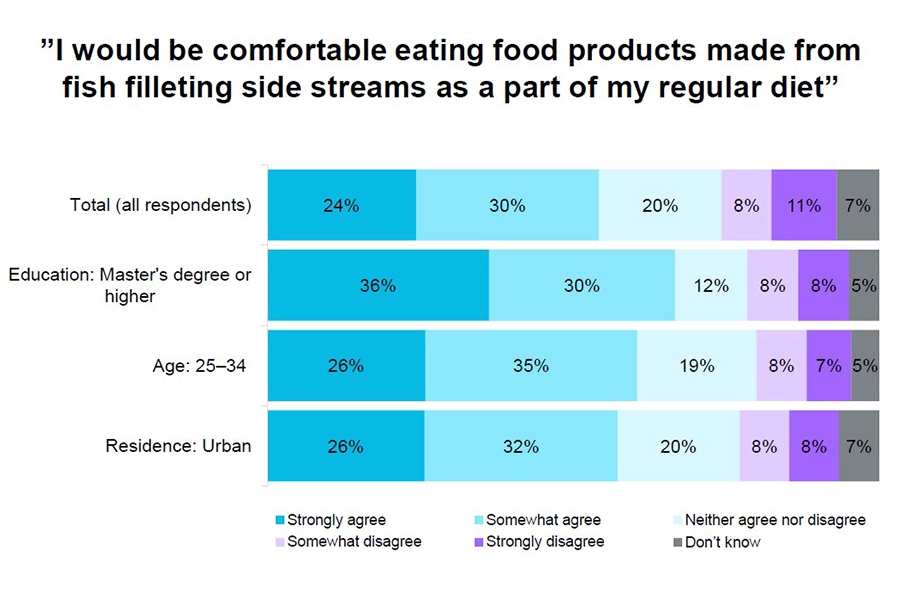 Seventy-four percent of Europeans are open to seafood sidestreams, signaling strong market readiness.
“We see our focus less on teaching German people or any other specific country to eat products made of sidestreams, but more on working with seafood processors and the food industry as a whole to make better use of the whole fish,” says Lindström.
“When these ingredients are used in familiar, high-quality food, consumers don’t need education to change their behavior — they simply choose to eat good food. Acceptance often follows availability. As more products enter the market through, for example, foodservice and prepared meals, trust and familiarity grow naturally over time, which will also support popularity in Germany.”
German respondents typically emphasized innovation, food quality, and process transparency as the most important considerations for sidestream-based products. UK respondents were more concerned with practical applications and fish products as a source of protein, while Swedish respondents focused on greater circularity and climate impact.
“According to several studies, 24 million metric tons of edible sidestreams are lost yearly, and depending on fish species, 30–70% of the fish end up as low-value products or waste,” Lindström tells us. “So there are enough sidestreams to be upcycled to food without risk of overfishing. Wouldn’t it be great if more of the fish that are being processed ended up as food?”
For food processors under growing pressure to boost yield, cut waste, and meet sustainability targets, these findings indicate that consumer acceptance may no longer be a major obstacle to scaling sidestream-based product innovation.