


Bridging the gap: Will high-quality hybrids open the door to eating more protein?


Key takeaways
- Hybrid proteins can be a bridge for flexitarians looking to increase plant-based consumption without sacrificing taste or familiarity.
- Blending animal, plant, and fermentation-derived proteins helps close gaps in texture, nutrition, cost, and supply stability.
- Advances in processing, formulation, and co-creation are accelerating hybrid innovation and driving growing market momentum.

Food innovators are considering whether hybrid products — solutions made from both animal- and plant-based ingredients — could be an entry point into increased plant-based eating. Hybrids familiarize consumers with the benefits of functional solutions that blend meat and dairy with alternative proteins such as soy, pea, fava bean, and lupin, as well as fermentation-derived proteins, while allowing formulators to combine complementary strengths in a more pragmatic way.
Key players in the alternative protein space are examining how hybrid proteins address functionality gaps that single-source proteins struggle with. Taste, texture, nutrition, and cost are among the main factors.
The growing flexitarian consumer segment demands protein from diverse and sustainable sources. They want to move beyond basic meat mimics and seek a range of alternative proteins in varied food formats that focus on nutrition and functionality. Many may not want to give up meat or animal-derived ingredients altogether, but they do want to increase their consumption of plant-based products.
These trends are driving manufacturers to innovate with alternatives that are more cost-efficient than animal proteins and that mitigate the supply volatility associated with meat- and dairy-based ingredients.
By blending animal, plant, and plant-based proteins, it becomes possible to preserve the taste, bite, and familiarity consumers expect, while improving nutrition, managing cost-in-use, and reducing pressure on supply chains.
Hybrids can be competitive on a cost-in-use basis because they allow brands to optimize performance rather than over-rely on any single, often expensive, protein source. Instead of pushing plant proteins to their functional limits or absorbing rising costs in animal proteins, hybrids give formulators more levers to pull, according to Cargill.
Blended plant protein ingredients
Hybrid proteins are really about solving multiple problems at once, rather than trying to force a single ingredient to do everything.
Cargill develops plant protein ingredients that are designed to work well in hybrid applications. For example, pea and wheat protein blends that aim to deliver meat-like texture and juiciness can be used alongside animal proteins or as part of hybrid meat formulations.
“When you use proteins from different sources, you can create formulations that hit both nutrition profile and texture, while delivering great structure, but at a cost point that’s hard to scale. The end goal isn’t novelty — it’s repeat purchase. Hybrids help close the gap between what performs well technically and what people actually want to eat again,” Nathalie De Clercq, director of R&D application for Cargill Health & Nutrition, tells Food Ingredients First.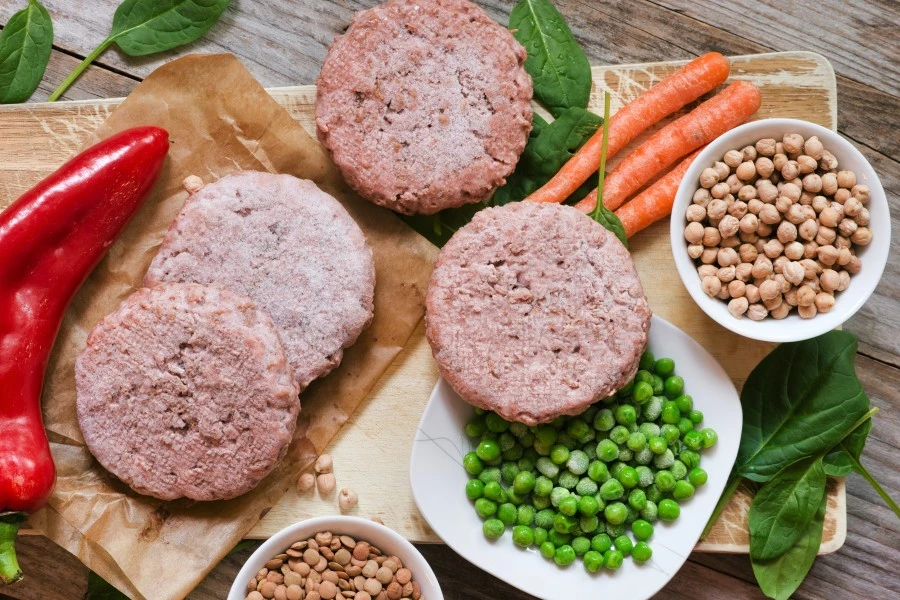 Hybrids familiarize consumers with the benefits of functional solutions that blend meat and dairy with alternative proteins such as soy, pea, fava bean, and lupin.
Effective protein combinations
De Clercq notes that animal-plus-plant proteins are gaining traction because they fit naturally with flexitarian habits, and they keep the sensory cues people know, while slowly helping to shift the protein balance.
“At the same time, plant-plus-fermentation combinations are opening up new possibilities, particularly where fermentation-derived proteins bring inherent structure, fiber, and nutrition that plants alone struggle to deliver.”
“Ingredients like mycoprotein (a protein and fiber-rich ingredient made from fungi, delivering a more sustainable and scalable alternative protein source), work especially well here because they already have a meat-like texture. This makes them effective both in fully plant-based formats and as part of hybrid systems. In practice, many of the most successful products deliver on key points of value: structure, texture, juiciness,” she says.
Fermentation and advanced extrusion
For Cargill, raw materials matter, but increasingly it’s the way they are processed and combined that determines success. Technologies like fermentation and advanced extrusion are what allow proteins to express their full potential, particularly when it comes to texture and mouthfeel, two areas where consumer expectations are still very high, according to De Clercq.
“Fermentation can deliver proteins with more neutral taste profiles and built-in structure, reducing the need for complex formulation. Extrusion continues to evolve, especially for whole-cut and fibrous applications, where small improvements in structure can make a big difference to how a product is perceived,” she explains.
AI-driven formulation, on the other hand, is also starting to play a role, helping teams understand how ingredients interact and speeding up optimization.
“Products reach the market faster with fewer compromises. It’s the combination of ingredient choice and processing intelligence that really moves the needle.”
Manufacturers work with Cargill to discuss hybrids because they are actively looking for ways to balance taste, nutrition, and affordability without alienating consumers.
“At the same time, we’re often helping to shape those conversations by bringing a broader new protein solutions toolkit and showing what’s technically possible when different protein sources are combined thoughtfully. We reimagine familiar products, such as a burger or nugget, through a co-creation process with our customers, and the discussion becomes about how far the protein mix can evolve while keeping the eating experience intact. This approach is where hybrids really come to life.” Paula Garcia, senior director of R&D, shares insights from Cargill’s industrial-scale fermentation room on how biotechnology is reshaping food innovation.
Hybrid momentum
Helen Breewood, senior market and consumer insights manager at non-profit think tank the Good Food Institute Europe, tells Food Ingredients First that despite blended meat being a relatively small segment in terms of products and sales, with most consumers reporting low familiarity with the category, there is growing momentum behind the hybrid category with new products being launched and consumer research demonstrating potential.
“The category appears to have the potential to serve as an entry point for the increasing number of consumers looking for ways to reduce their conventional meat consumption while also supporting some consumers to reach certain health goals, such as increasing fiber intake,” says Breewood.
“This may be one approach to help create a bridge to a future where alternative proteins taste as good or better and cost the same or less than conventional meat.”
Nutritional guidelines back alternative proteins
The importance of proteins (both animal- and plant-based) and plant-based foods has been highlighted worldwide recently.
Last month, the UK government unveiled plans for a new Nutrient Profiling Model, which will be used to classify foods and drinks based on their nutritional composition. This model is a tool that determines what are “less healthy” foods and drinks by calculating the beneficial and less beneficial nutrients in these products and producing a score.
Also in January, the new Dietary Guidelines for Americans raised protein intake recommendations, presented up-to-date thinking on healthy fats and grains, and explicitly called for limits on “highly-processed” foods.