


From cheese to craft beer: IFF’s latest technologies address F&B’s top pressure points

Key takeaways
- Choozit Lift eliminates 100% of curd-washing water use, addressing cheesemakers’ growing sustainability and energy cost pressures.
- Diazyme Nolo enables full-flavored, no- and low-alcohol beer without sacrificing taste or increasing production costs.
- IFF now scores all innovation projects for sustainability, making environmental impact a mandatory development consideration.
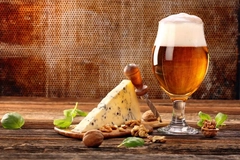
International Flavors & Fragrances (IFF) is addressing two of the food and beverage industry’s most pressing demands — sustainability in production and the rise of no- and low-alcohol drinking — with its Choozit Lift and Diazyme Nolo (no- and low-alcohol) solutions.
Choozit Lift is a culture that eliminates 100% of the water used in curd washing by controlling lactose levels. The culture helps cheesemakers who are seeking improvements in their environmental footprint and are facing mounting pressure around water scarcity and energy costs.
Meanwhile, Diazyme Nolo, a specialized transglucosidase enzyme, offers brewers a route into the fast-growing no- and low-alcohol category without compromising on flavor or cost efficiency.

Food Ingredients First sits down with Simon Bird, VP of food, beverage, and biosciences at IFF, and Annie Mornet, the company’s senior business product director cheese, to discuss these latest technologies, market demand, and why sustainability has become a non-negotiable in IFF’s innovation pipeline.
How are manufacturers applying Choozit Lift across different cheese segments, and which markets are most ready to embrace sustainability-focused cheese cultures?
Mornet: Choozit Lift is a unique culture that has been specifically designed to support the semi-hard cheese industry. Curd washing is used to control acidity and final texture in semi-hard cheese processes, but it is highly water and energy intensive. Choozit Lift naturally reduces lactose levels, allowing cheesemakers to control post‑acidification without washing the curd. This results in a more consistent flavor profile, no bitterness, and a homogenous taste — while significantly reducing water and energy use. Simon Bird, VP of food, beverage, and biosciences at IFF.
The markets that are the most ready to adopt sustainability‑focused cheese cultures are those facing water scarcity and rising energy costs, particularly Germany, France, the Netherlands, and Spain. Choozit Lift delivers both technological performance and tangible environmental benefits, making it an ideal solution for cheesemakers looking to improve efficiency while advancing their sustainability goals.
Another innovation you are focusing on is Diazyme Nolo, which you say enables a full-bodied, non-alcoholic beer, while lowering grist use. How can brewers leverage this technology to expand into craft, flavored, or functional beverages?
Bird: One of the most important things is making sure that you’re starting with an affordable, flavorful base. Compared to de-alcoholization or reducing fermentation, the benefits of Diazyme Nolo ensure that brewers are not sacrificing flavor to achieve non-alcoholic beer.
At the same time, the technology enables grist reduction, which helps lower costs. This gives brewers around the world a strong, economical base beer that they can build on — whether that’s developing craft-style profiles, adding flavor complexity, or creating functional beverages that align with evolving consumer demands.
What consumer segments are shaping the growth of the NOLO beer category, and how does Diazyme Nolo meet their expectations?
Bird: No- and low-alcohol beverages make up only about 3.5% of the total beer beverage volume today. However, it’s a fast-moving segment that is on track to grow. By the end of 2025, the non-alcoholic beer market was projected to hit $38.37 billion in revenue with a 7.4% CAGR through 2032.
This is really coming from the newer generations — Gen Z and Millennials. They have a more health- and sustainability-conscious mindset. This is where Diazyme Nolo really meets that market trend.
Looking across both innovations, how does IFF see these technologies shaping future opportunities in adjacent categories, and what broader sustainability or wellness trends will guide your ongoing ingredient development?
Bird: Sustainability is at the heart of everything we do. Our goal is to deliver sustainable value propositions across several categories — whether it's cheese, fresh dairy, brewing, or baking — and all our new innovations are developed with that mindset from the outset. Annie Mornet, senior business director of dairy and cheese at IFF.
These technologies are designed to be flexible and scalable, allowing learnings from one application to unlock opportunities in adjacent categories. At the same time, sustainability is no longer a “nice to have.” Consumers want to understand where their food and beverages come from and are increasingly conscious of the choices they make at the shelf. That growing focus on transparency, responsible sourcing, and wellness continues to guide how we develop ingredients that help our customers meet both performance and sustainability expectations.
Mornet: To echo that, there is a real and growing concern from the final consumer — especially among Gen Z. They really want to buy with an eye toward being conscious of sustainability, making it important for all segments.
At IFF, all of our innovation projects are scored for sustainability to make sure that we also identify benefits. It’s not always easy, but IFF believes we must take sustainability into account when we develop a new product to make sure that we can help the consumer and the producer. It’s not even a question — it’s a mandatory consideration.




Upcoming webinars

2027 Food Safety Risks for Quality & Compliance Leaders
FoodChain ID

Formulating for function: Developing benefit-led beverages with natural colours, botanicals, and flavours
Givaudan Sense Colour
Let's reveal the grain potential: Innovate
Meurens Natural