



Protein boom keeps pressure on global whey market as supply struggles to catch up

Key takeaways
- Global whey supplies remain under pressure as demand for high-protein foods and beverages continues to outpace production.
- Dairy ingredient suppliers are investing in additional whey processing capacity, but structural demand trends are expected to keep markets tight.
- Manufacturers are increasingly adopting hybrid protein strategies to reduce reliance on whey while managing costs and maintaining product performance.

More than two years after global whey supplies first tightened, the market remains under sustained pressure as demand for high-protein F&B continues to outpace production. Despite significant investment in additional processing capacity, manufacturers are still navigating constrained supplies and rising competition for whey ingredients.
Derived as a by-product of cheese production, whey has become a critical ingredient in sports nutrition, functional beverages, protein bars, and everyday high-protein foods. However, because whey production is tied to cheese manufacturing rather than demand for protein ingredients alone, supply cannot easily expand to keep pace with the market.
The imbalance is being driven by several long-term trends. High-protein products have moved firmly into the mainstream, while aging populations are prioritizing protein to support healthy aging.

Sports nutrition continues to attract a broader consumer base, and the growing use of GLP-1 weight-loss medications has increased interest in protein-enriched foods that help preserve muscle mass during calorie restriction.
Investment aims to ease supply pressure
As the market for high-protein F&B has expanded, manufacturers are facing tighter availability of whey-based ingredients, particularly premium forms such as whey protein isolate and concentrate.
In response, dairy ingredient suppliers are investing in additional processing capacity to strengthen long-term supply and support continued market growth.
While these investments are expected to improve availability over time, industry leaders say structural demand is likely to keep the market tight.
FrieslandCampina recently announced it was investing over €90 million (~US$105.8 million) to advance its whey protein innovation and further optimize its ingredients production network in the Netherlands as part of a target growth plan for whey production.
Alongside this, the company is also investing across its wider Dutch whey network, upgrading equipment and processing lines at Bedum and Workum to expand capacity for high-value whey proteins such as microparticulated whey and whey protein concentrate. The company is also optimizing its lactose facility in Veghel.
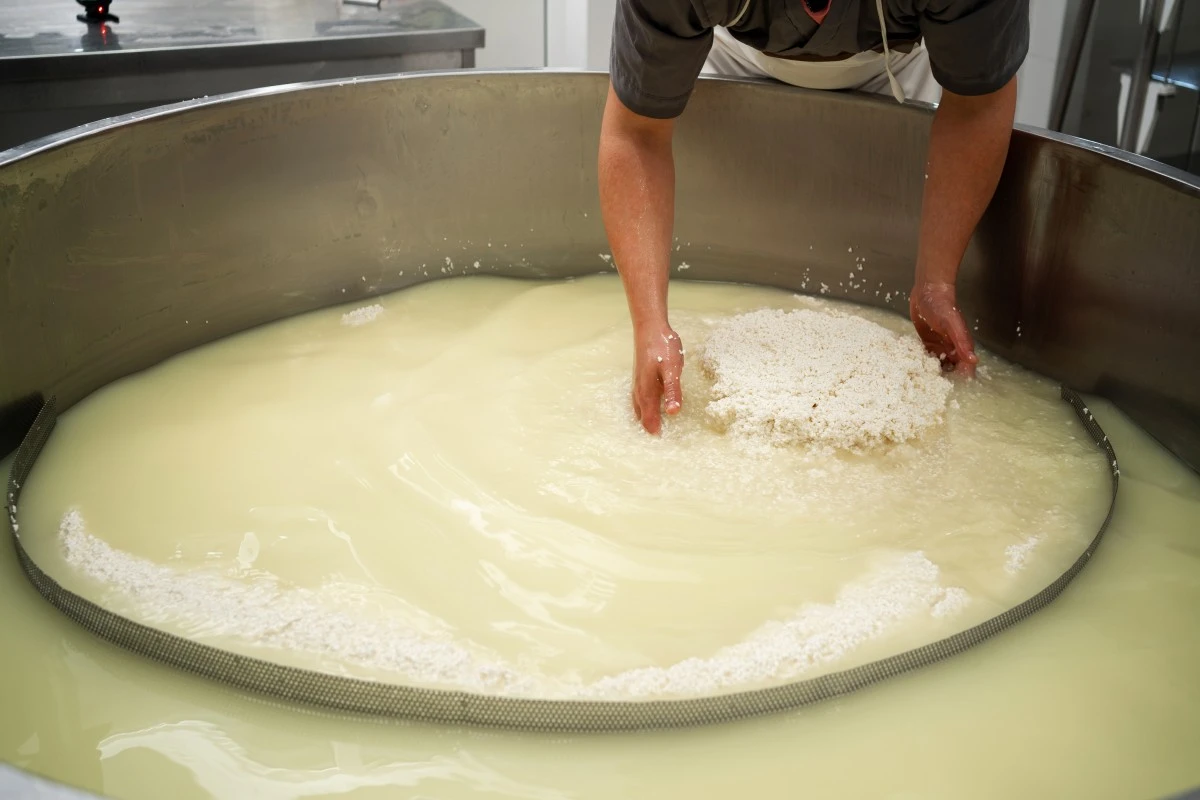 Dairy ingredient suppliers are expanding processing capacity to improve supply resilience, but strong underlying demand is expected to keep markets tight.
Guus Aerts, global director marketing & product strategy at FrieslandCampina Ingredients, explains how the demand behind today’s supply pressure is built on structural shifts in how people eat, rather than a passing spike — making a compelling argument that whey availability is more of a long-term challenge than a temporary shortage.
“Nearly 60% of global F&B consumers say they are deliberately increasing their protein intake, and protein fortification has become an everyday expectation. Add in an aging population looking to stay healthy and the influence of GLP-1 medications on eating habits, and it’s clear that the current demand — and consequent shortage — is unlikely to be temporary,” he tells Food Ingredients First.
“What gives us confidence is that supply can be built, provided the industry invests with a long-term horizon. That’s the approach we’ve taken, through major organic expansions like our Borculo facility and selective inorganic growth, including our acquisition of Wisconsin Whey Protein.”
Supply security matters
Aerts highlights how the conversation with customers has changed as supply security has moved up the agenda. Collaborations that once centered on price and specification now start with reliability and long-term availability as customers focus on innovative high-end products and plan further ahead.
“However, they are also looking beyond supply alone. Increasingly, customers want strategic partners who can support them throughout the product development journey, bringing application expertise, technical support, and market insight alongside high-quality ingredients,” he tells us.
“This means the relationship is becoming less about simply securing protein supply and more about working together to solve formulation challenges and accelerate innovation to meet consumer needs. Part of this is making smarter use of the right proteins for the right applications.”
“As part of our protein expertise, we can help customers to also leverage caseinates, which are better-suited to some products, especially those positioned at providing longer-lasting support and recovery. Caseinates also currently offer better availability and pricing. So, in some instances, they can provide a more resilient and cost-effective formulation solution without compromising on product performance.”
FrieslandCampina Ingredients’ recent investments in whey production will help relieve supply pressure. However, with demand continuing to grow, supply may remain tight in certain markets.
“That’s why we see capacity expansion and investment as an ongoing commitment, rather than a one-off response, and why close collaboration with customers remains just as important to help meet their needs,” Aerts says.
 Healthy aging is becoming a key driver of protein demand, with consumers seeking more protein to support muscle health as they age.
Response to the whey supply challenge
Ingredient suppliers are now exploring ways to help manufacturers manage whey exposure while maintaining product performance.
While dairy processors are investing to increase whey capacity, manufacturers cannot rely on new supply alone. Many are also looking at ways to reduce their exposure to whey price volatility and supply constraints through reformulation.
Barentz, a global specialty ingredients distributor, has highlighted hybrid protein systems as one potential approach, combining whey with alternative protein sources to reduce reliance on a single ingredient stream while balancing cost, functionality, and consumer expectations.
According to application work conducted at Barentz Human Nutrition Development Centres, replacing 20% of whey with alternative proteins can deliver cost savings of up to 17%, depending on the application and protein selection, while maintaining key attributes such as taste, texture, and solubility.
The company says that hybrid protein is moving from a niche concept to a practical solution for managing protein market volatility, with applications spanning shakes, bars, soups, and meal replacements.
“Hybrid protein systems allow manufacturers to optimize formulations without compromising performance. The challenge is not replacing whey but finding the right balance between different protein sources, and using that balance to define both product functionality and market positioning,” Tally Zangy, technical marketing manager Human Nutrition at Barentz says.
The pressure on whey supply highlights how quickly protein has moved from a specialist nutrition category into mainstream F&B.
As consumer expectations continue to evolve, the ingredient landscape will likely become defined not only by performance, but by adaptability and strategic sourcing.