




Fi Europe 2026 review: Whey scarcity accelerates shift toward alternative proteins
As whey prices show signs of easing, protein blends demonstrate functional and nutritional benefits beyond cost savings
Key takeaways
- High whey prices have helped drive demand for alternative proteins; Angel Yeast says it has sold out of its yeast protein even at full production capacity.
- Pulse proteins offer extra benefits: faba protein can halve the egg in a quiche, clear lentil protein offers natural electrolytes, and pea protein can texturize.
- The dairy industry is rediscovering overlooked ingredients like rennet casein, which is high in protein but requires extra processing to get the right mouthfeel.

 Functional yeast company Revyve has expanded its position from replacing eggs to “replacing eggs and whey.”
Recent high prices on whey and beef have made alternative ingredients more interesting than ever. Stands across Fi Europe 2026 featured hybrid concepts, incorporating yeast, pulses, and dairy caseins into conventional meat and dairy matrices.
Importantly, these lesser-known ingredients brought more than just lower costs to the prototypes. Many offered clean label functionality, such as emulsification, gelling, or binding. They also offered more in terms of nutrition, since blending different amino acid profiles can provide even higher protein levels.
Protein was again a top trend in Innova Market Insights’ Top Ten Trends for 2027, following on from “Powerhouse Protein” in 2026. This year, it came in second under the name “Precision Protein,” placing an emphasis on quality and tailoring the protein to the individual and the application.
Lu Ann Williams, president of Innova, pointed out on the show floor that stands promoting proteins at Fi Europe are increasingly describing them in terms of their digestibility or PDCAAS (Protein Digestibility-Corrected Amino Acid Score). She also reinforced that blends can help brands when prices get too high in the naturally cyclical commodity market.
“Formulation plays an important role in figuring out what works to get a product that is affordable enough,” she told Food Ingredients First. “But it is a challenge and one of the big topics right now.”
Yeast: The new protein on the block
For manufacturers used to working with whey, yeast protein is a relatively new option. At Angel Yeast, the rush to try it had already led to a sellout. At the time of the show, the company was running at full production capacity, and buyers wanted more than it could supply.
“We didn’t expect it to happen because the market changed so fast,” said Dr. Winston Sun of Angel Yeast. He attributed the sellout to several factors. Expensive whey prompted buyers to consider alternatives just as demand for protein was increasing overall. Within that larger market, he also saw customers specifically seeking new protein sources.
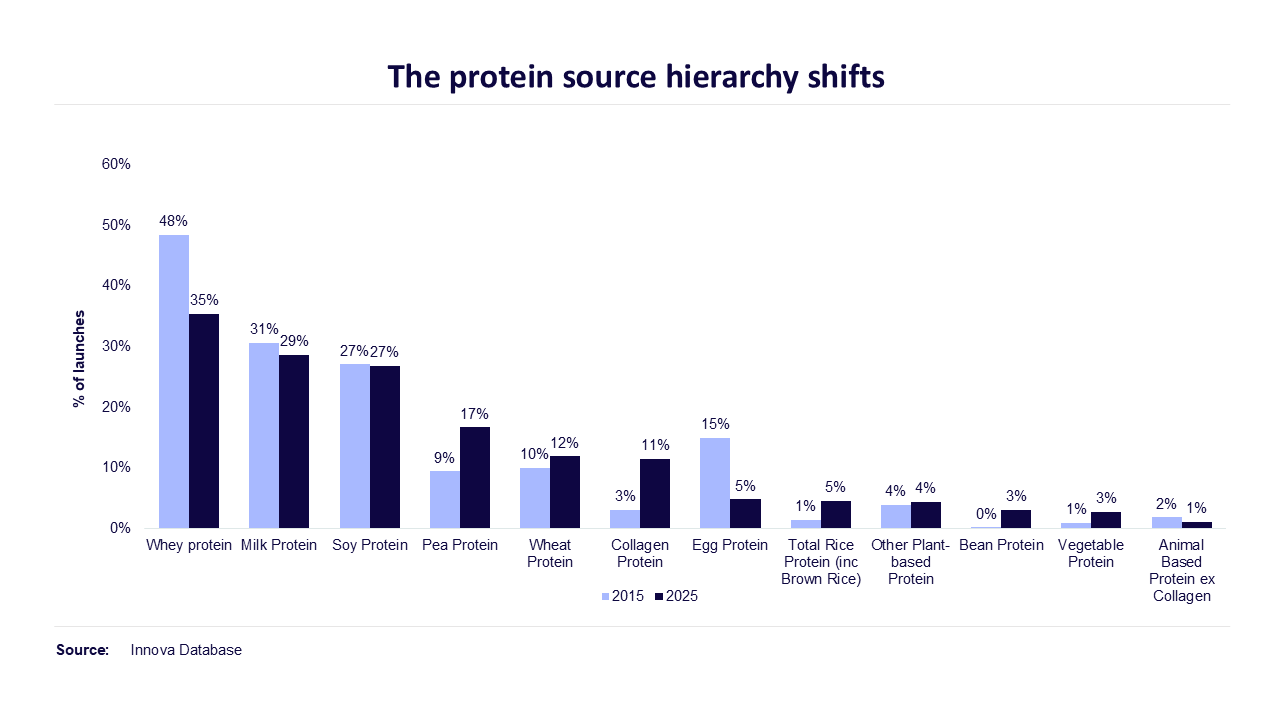 Whey protein has shifted from holding roughly half of the protein market share to one-third over the last decade as other proteins ramp up, particularly pea protein and collagen (Source: Innova Market Insights).
No short-term fixes
Sun expects a new Angel Yeast factory to help ease the shortage, although how much stock becomes available will depend on demand when it opens. As for whey, he said the company was already seeing signs of “whey protein prices coming down a little bit.”
Building additional whey capacity is a longer process, he pointed out. Whey production is tied to cheesemaking, and new cheese facilities can take two or three years to bring online. Sun expects interest in yeast and plant proteins to continue in the meantime.
What yeast brings to a panna cotta
One of yeast’s advantages compared to other emerging proteins on the market is its complete amino acid profile, being neither part of the plant nor animal kingdom.
That makes it a strong contender for nutritional fortification, as exemplified in Lallemand Bio-Ingredient’s panna cotta prototype made with dairy and its Engevita HiPro Beyond yeast protein.
Its work in merging dairy and yeast protein earned the company a finalist place in the Alternative Protein Innovation Award category at the Fi Europe Innovation Awards 2026.
The demo flavored with vanilla and tonka bean delivered more than 14 g of protein per 200 g serving, which Lallemand said is two to three times the protein in a standard panna cotta.
Silvia Soragni, category manager for savory ingredients at Lallemand Bio-Ingredients, said the company sees increased interest in yeast protein from sports nutrition brands.
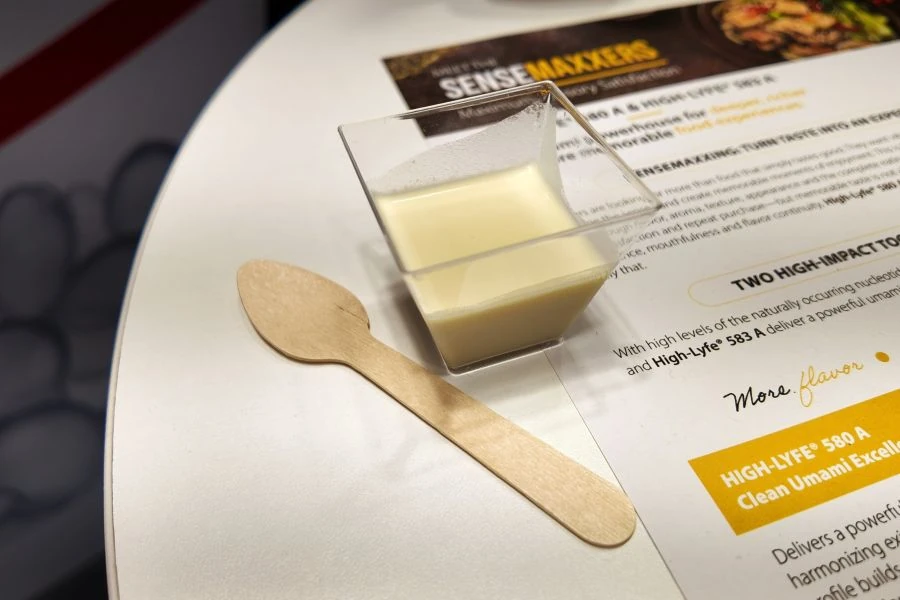 Lallemand Bio-Ingredients was able to more than double the standard content of protein in a panna cotta using its neutral-tasting yeast.“Dairy protein prices are very high, and there is not much availability, so we offer yeast protein as an alternative that can fit in combination with dairy or as a standalone protein.”
For the panna cotta demo, cost was not the main focus. Instead, it highlighted the neutral taste and delicate texture that can be achieved with yeast protein. Soragni said the aim was to give consumers “more protein in a dessert they love.”
Replacing eggs
Egg prices have been volatile for several years, pushing suppliers like Carbery to come up with whey solutions to replace eggs in mayonnaise. In the current price paradigm, Dutch yeast specialist Revyve is moving its positioning from replacing eggs to replacing eggs and whey.
Hans Brand, applications director at Revyve, said the company has reduced the whey in protein bars by 30–40% in test recipes. The company also uses yeast fiber to slow hardening. “We keep some softness and chewability during shelf life in the bars,” Brand said.
At the trade show, Beneo took a different route to egg reduction in a goat cheese quiche. The company said faba bean protein allowed it to cut the egg content by about 50%, offering quiche makers a way to manage both egg costs and supply fluctuations.
Meanwhile, Meala FoodTech presented a functional pea protein ingredient that can be used in bakery to achieve egg-like functionality with properties such as foaming, binding, emulsification, and gelation.
CEO and co-founder Hadar Razmovich told Food Ingredients First that the ingredient is “pea protein with all of the nutritional properties of protein, but with different texture properties.” The company sources its peas in Europe and also produces the ingredient in Europe.
Meala reported 30–40% savings on recipe costs in bakery tests, which Razmovich attributes partly to the small amount needed to deliver those functions. A low inclusion rate can keep the economics attractive even when egg prices come down.
The company also showcased the ingredient in a blended meat/plant-based patty that works as a binding system that can help replace egg or methylcellulose with a single ingredient..webp) Meala showcased its texturing pea protein ingredient at a private dinner following day two of Fi Europe 2026 (Image credit: Gerhard Wentnage).
Clear lentil protein
In beverages, whey has offered an advantage in the transparent protein space. But that is changing.
At Fi Europe 2026, Ingood by Olga launched a clear lentil protein, with the goal of achieving similar functionality with a French-grown plant-based ingredient. Daria Jeanne, business developer for health and nutritional ingredients, said that the company wanted to avoid the bitterness and lingering aftertaste associated with pea protein.
The isolate contains more than 70% protein and naturally occurring potassium and magnesium, giving it a strong positioning for hydration beverages.
“In our concept, we didn’t add any electrolytes,” explained Chloe Trelluyer, marketing and communication manager at Ingood by Olga. Both minerals occur naturally in the lentil ingredient and carry through to the finished beverage, she said.
At the event in Frankfurt, Germany, Ingood served it in a clear drink delivering 20 g of protein per 500 mL.
Jeanne said the protein waters she typically sees on the market contain about 10 g per liter. Ingood’s prototype delivered 40 g per liter, four times that concentration.
The lentils are grown, and the hydrolysate is produced in France, giving local beverage manufacturers a domestic option for clear protein formulations.
This year at IFT FIRST in Chicago, US, suppliers offered clear versions of yeast, rice, and pea protein. Ingredient supplier Nura told us at the time that high whey prices were driving increased demand for plant-based clear alternatives.
Casein: The forgotten dairy fraction
At Fi Europe 2026, rising whey protein concentrate (WPC) prices prompted Eurial I&N to revisit casein, a milk protein better known for its use in processed and analog cheese.
“Casein is way more competitive than WPC or other types of proteins,” said Gérald Dard, managing director, Pôle Ingredients and Nutrition at Eurial. He described it as “very difficult to solubilize, yet very rich in protein at a minimum of 82%.”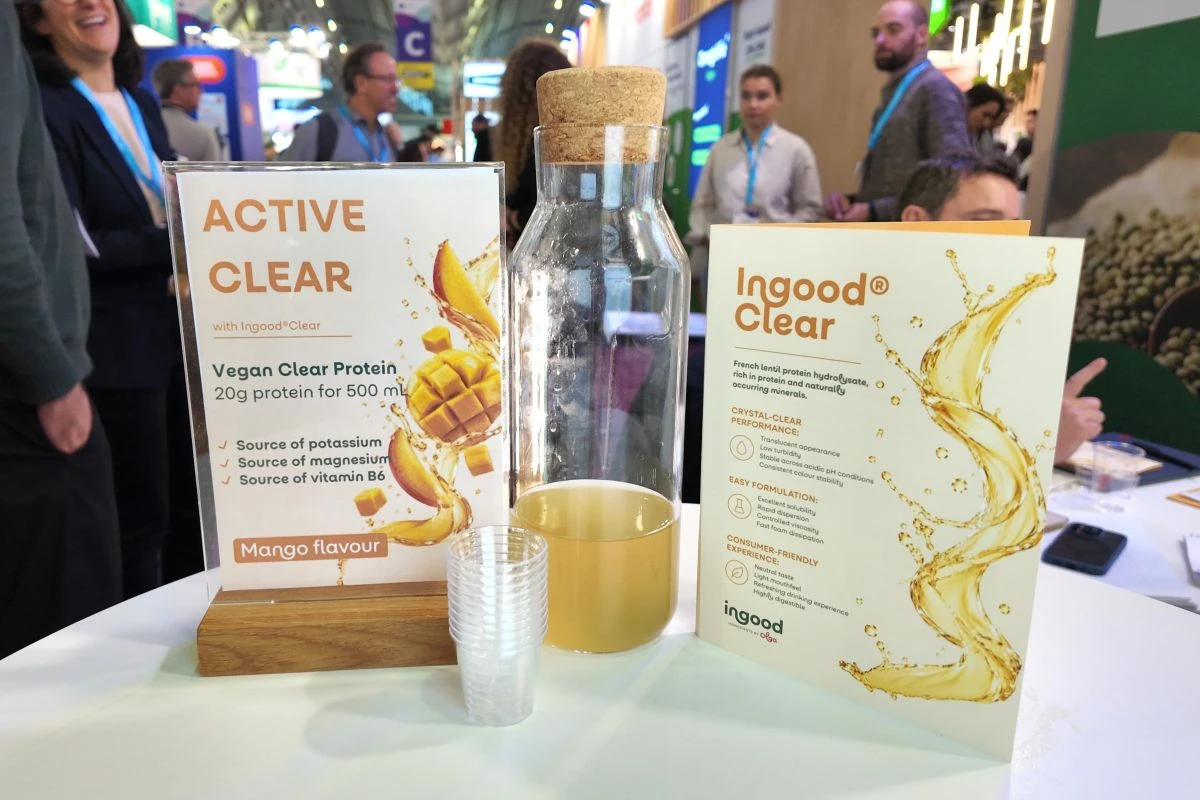 Ingood by Olga launched a clear lentil hydrolysate for protein beverages.
Eurial replaced part of the flour in its Muffinity muffin with casein. Its bakery lineup included CookiePlus, a chocolate chip cookie, CakePower, a protein-rich cake high in calcium, and NutriBun, a soft brioche. Eurial also used whey permeate in a hard caramel candy and a chocolate bar. Dard estimated the chocolate recipe could deliver 6–8% savings while retaining its taste and melt-in-the-mouth texture.
Meanwhile, Lactalis Ingredients blended rennet casein, acid casein, micellar casein, and WPC80 in two bars containing 35% and 43% protein. Marion Bucas of Lactalis Ingredients said 35% is typical for the category. Keeping a bar soft gets harder at 43%, yet in Lactalis’ tests, its 43% bar took about as much force to cut as a 25% protein bar.
Bar makers have used acid casein for years, pointed out Bucas. Rennet casein was harder to incorporate because consumers could feel its coarse particles. Additional processing gave it a finer particle size that brought it to new applications.
In any case, blending proteins is nothing new for the food industry. “You have to find the right equilibrium between all your proteins to find the right texture, the right taste,” said Bucas.