


MicroLub accelerates protein-based fat reduction tech with US$10M funding


Key takeaways
- MicroLub has raised US$10 million to commercialize its technology and expand into the US and Asia.
- The company’s ingredients can cut fat and calories by up to 75% in some formulations while preserving mouthfeel.
- Applications include reduced-fat and high-protein foods, with customer validation and production scale up-underway.
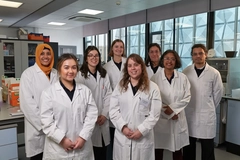
Preserving creaminess while cutting calories is the formulation challenge behind a University of Leeds spinout’s push into the US and Asia. MicroLub uses patented protein-based ingredients to replicate fat’s lubrication using water, with fresh funding supporting team growth, manufacturing expansion, and customer scale-up.
Founded by Professor Anwesha Sarkar, the company continues to collaborate with the UK-based university and operates a food innovation laboratory at Nexus in Leeds, England.
David Peters, CEO at MicroLub, says: “We have already moved from laboratory-scale development to industrial-scale manufacturing and are working with some of the world’s largest food and ingredient companies.”
“The US$10 million investment allows us to accelerate the next step: converting those development programs and customer trials into products that can be manufactured commercially and ultimately reach the shelf,” he tells Food Ingredients First.
Testing sensory performance
Peters says the level of fat reduction is application-specific, but the company has demonstrated significant reductions across various categories, including dairy and plant-based dairy, bakery, sauces, and dips.
“In some formulations, fat and calorie content can be reduced by up to 75%,” he says.
Peters stresses that the maximum reduction is not a target for every product. Performance is assessed through physical measurements and tasting.
“We validate performance against the full-fat product using instrumental and sensory assessment. Our scientific approach includes tribology, which measures friction and lubrication, alongside rheology and other measures of texture and flow.”
“We then benchmark the reformulated product against the full-fat equivalent through sensory testing. In blind trials across several food categories, tasters have been unable to distinguish between products containing MicroLub technology and the full-fat originals.”
The limits of fat replacement
Peters says MicroLub’s strength is lubrication, which influences creaminess, smoothness, and the overall sensory experience.
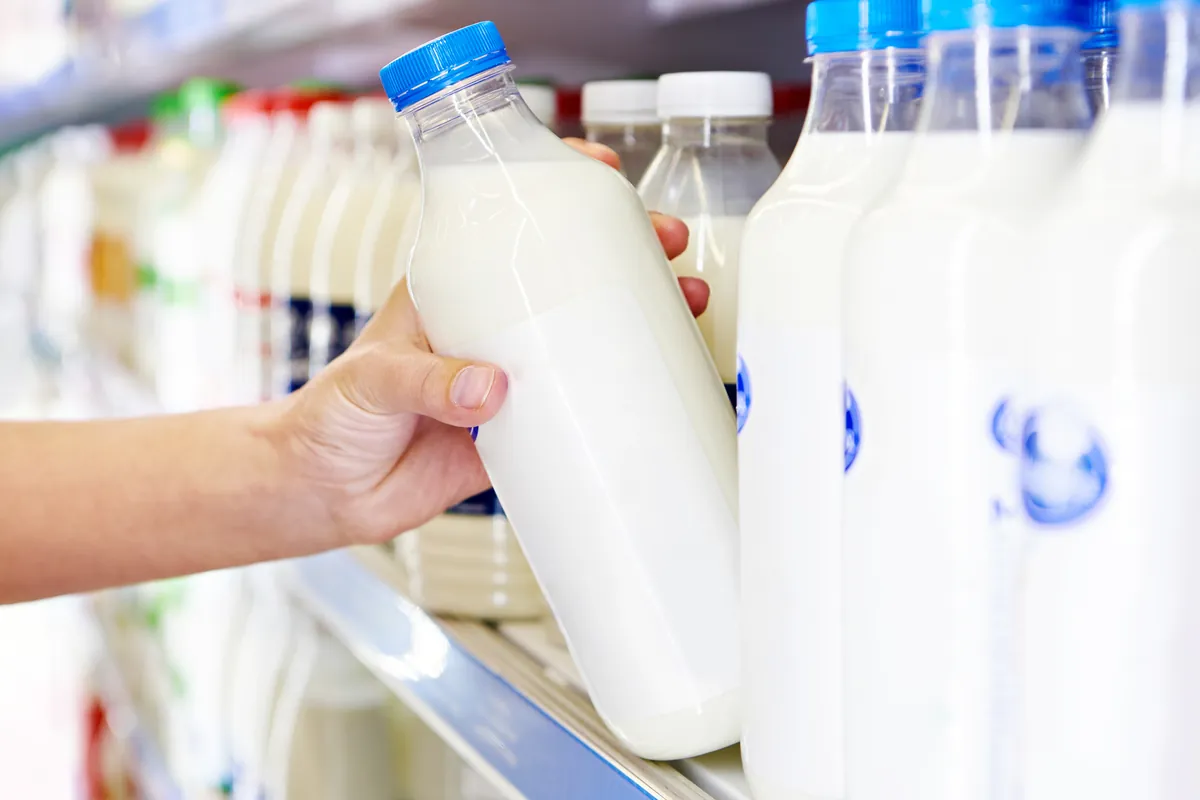 MicroLub achieved fat reductions across various categories, including dairy and plant-based dairy, bakery, sauces, and dips.“Structure can be more challenging in products where a solid fat network is fundamental to the product, while flavor delivery can also require careful formulation where fat-soluble flavor compounds are involved.”
“This is why we approach MicroLub as an ingredient technology platform rather than a single drop-in fat replacer. We develop application-specific solutions around the particular role fat is playing in that product. In some applications, the technology can also reduce the need for emulsifiers and thickeners, but this is assessed formulation by formulation.”
Cost and production compatibility
According to Peters, the technology’s performance rests on reducing friction.“On performance, our technology takes a fundamentally different approach from conventional starches, gums, or alternative fats,” he says.
‘MicroLub’s biolubricants reduce molecular friction to levels associated with oil and, in our measurements, achieve around an order of magnitude greater friction reduction than existing best-in-class fat replacers.”
“Cost needs to be considered at a recipe level, rather than simply comparing the price per kilogram of individual ingredients. MicroLub can replace a proportion of the fat or oil in a formulation and, in some applications, can also reduce the need for other ingredients, such as emulsifiers and thickeners.”
Additionally, Peters explains that MicroLub can pull from its dairy and plant protein “toolbox,” along with its polysaccharides, to help create solutions based on a customer’s “technical, cost, and supply-chain requirements.”
“The precise ingredient declaration will depend on the formulation and market, but our platform can support cleaner and shorter ingredient lists,” he says.
“The technology is also being developed to integrate with existing food manufacturing infrastructure. The precise point of addition and processing conditions vary by application, which is why customer trials include validation within the manufacturer’s own process before moving to commercial scale.”
Protein brings new sensory challenges
Food Ingredients First previously looked into how GLP-1 use is shaping protein-rich and portion-controlled foods, alongside protein enrichment in everyday staples. Peters sees the medication trend reinforcing wider demand.
“We do not see MicroLub as a ‘GLP-1 ingredient,’ the opportunity is a lot broader than that. What GLP-1 is doing is increasing the relevance of products that are higher in protein, lower in calories, and nutrient-dense, while also putting even more emphasis on making every eating occasion satisfying.”
“That is influencing our work across areas, including high-protein drinks and yogurts, reduced-fat dairy, sauces and dips, desserts, and other nutrient-dense formats. Increasing protein can itself create sensory problems such as grittiness, astringency, and an unpleasant mouth-coating effect, so the ability to manage lubrication and mouthfeel becomes increasingly valuable as protein levels rise.”
The round was led by Northern Gritstone, with all existing investors participating, including NPIF II – PXN Equity Finance, managed by PXN Ventures.
Clearing the path to launch
MicroLub has not named its customers or provided a launch timetable. Peters identifies the work still needed to bring products to market:
“The remaining challenges are largely those associated with commercializing any new food technology at scale: completing customer qualification and validation processes, transferring formulations successfully onto commercial production lines, establishing resilient supply chains, and addressing the different regulatory, labeling, and commercial requirements of individual markets.”
“The funding gives us the resources to work much more closely with customers, large and small, through that process.”
“Historically, improving one of those areas has often meant compromising another, particularly sensory quality. Our ambition is to use deep-tech ingredient solutions to remove more of those trade-offs, and make healthier food feel every bit as enjoyable as the products it replaces,” he concludes.