

EU Livestock Strategy revives cage-free farming push as Brussels targets protein security

Key takeaways
- The EU Livestock Strategy puts animal welfare back on the legislative agenda, with cage-free commitments welcomed by animal protection groups but still awaiting binding laws.
- The strategy links livestock reform with food security, farmer resilience, and the EU Protein Plan’s push to reduce reliance on imported feed proteins.
- Industry groups welcome the direction but want clearer funding and implementation, while environmental NGOs argue the strategy does not go far enough on emissions, pollution, and livestock reduction.

The European Commission’s first EU Livestock Strategy has placed animal welfare, protein security, and farm competitiveness into one policy package, setting up a new phase of debate across Europe’s agri-food value chain.
Published alongside the EU Protein Action Plan earlier this week, the strategy is intended to keep Europe’s livestock sector “strong and resilient in the long term.” It also responds to pressures around climate, feed imports, disease, consumer expectations, and farm profitability.
Brussels describes livestock farming as a “strategic part” of Europe’s food system, noting that the sector accounts for 40% of EU agricultural added value, €400 billion (~US$456 billion) in annual turnover, 7 million jobs, and 4 million livestock farms.

For food ingredients suppliers, the immediate takeaway is that animal welfare and sourcing claims are moving closer to the center of EU policy. The commission’s roadmap includes targeted revisions to animal welfare rules, new tools to measure farm-level livestock emissions, clearer EU origin labeling, and optional reserved terms to highlight production methods.
Animal welfare groups welcome cage-free direction
One of the most closely watched elements is the commission’s commitment to bring forward revised rules for laying hens and broilers by the end of 2026. A later pig welfare proposal is expected in 2027. Animal welfare groups are broadly pleased that cage reform is back on the table, while stressing that the strategy is not yet law.
Eurogroup for Animals says “the end of confinement” for laying hens, and better welfare for meat chickens and pigs are “finally within reach.” The group welcomed the commission’s plans on male chick culling, imports, and producer funding, but warned that “no species should be left behind.”
Reineke Hameleers, CEO of Eurogroup for Animals, says EU citizens had “showed up” against cages and that Brussels is now presenting its “first real plan.” But she added that the group wants “more concrete plans” for other caged animals and meat chickens.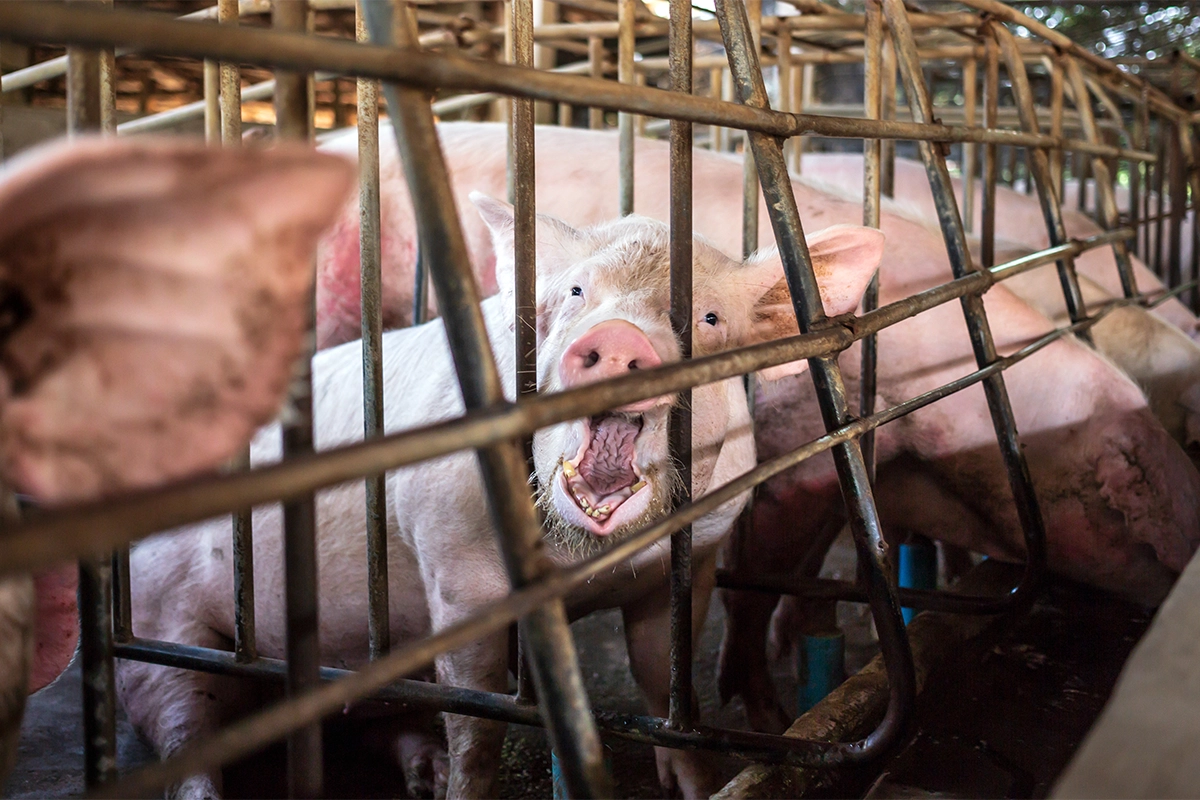 The EU Livestock Strategy puts cage-free farming back on the legislative agenda, with welfare groups welcoming the shift but urging firm timelines.
Animal Equality also welcomes the strategy, saying it includes plans to phase out cages for hens and chickens, move mother pigs away from crates, and end the killing of male chicks. Matteo Cupi, the group’s vice president for Europe, called the move a “positive signal,” but said the commission must deliver “clear timelines” and “no unjustified exemptions.”
The European Institute for Animal Law & Policy struck a similarly cautious tone. It noted that the strategy “creates no legal obligations” by itself and that the cage phase-out is not yet dated. Still, it welcomed the fact that there are now concrete dates for legislative proposals.
EggTrack raises pressure on egg users
The cage-free signal lands just as Compassion in World Farming’s latest EggTrack points to sustained corporate progress, but also incomplete delivery.
EggTrack 2025 marks a key milestone because many corporate cage-free egg commitments were set for the end of 2025. Compassion’s latest update says the global average transition to cage-free eggs has reached 79% — up from 64% in 2023.
For bakery, confectionery, sauces, ready meals, and foodservice suppliers, the implication is significant. Egg sourcing is no longer only a corporate responsibility benchmark — it is increasingly aligned with the direction of EU law. This could sharpen expectations on shell eggs, liquid egg, powdered egg, and egg-derived ingredients, particularly where brands have existing cage-free pledges or animal welfare claims.
Protein Plan links feed security to livestock reform
The EU Protein Plan adds another layer for ingredient and feed markets. The EU says it produces 67 million metric tons of plant-based protein from arable and fodder crops, while using around 80 million metric tons for feed, food, and industrial purposes. Livestock alone uses 74 million metric tons of protein as animal feed each year.
Brussels says only 25% of protein from oilseeds and protein crops was sourced in the EU in 2025, while 67% of high-protein feed materials came from outside the bloc. The plan aims to raise the share of EU-produced oilseeds and protein crops used in animal feed to 35% by 2035.
That target is being welcomed by feed manufacturers. FEFAC (The European Feed Manufacturers’ Federation) describes the package as a “timely and constructive response” to vulnerabilities in Europe’s feed and food chains. The federation says it “strongly welcomes” the plan, while stressing that the EU will continue to rely on imported high-protein soy for years.
FEFAC also argues that the debate must go beyond soy. It says Europe remains exposed to import dependency for feed additives, such as vitamins and amino acids, and that circular feed solutions, biofuel co-products, and formulation innovation can help lower soy dependence without undermining nutrition or farmer competitiveness.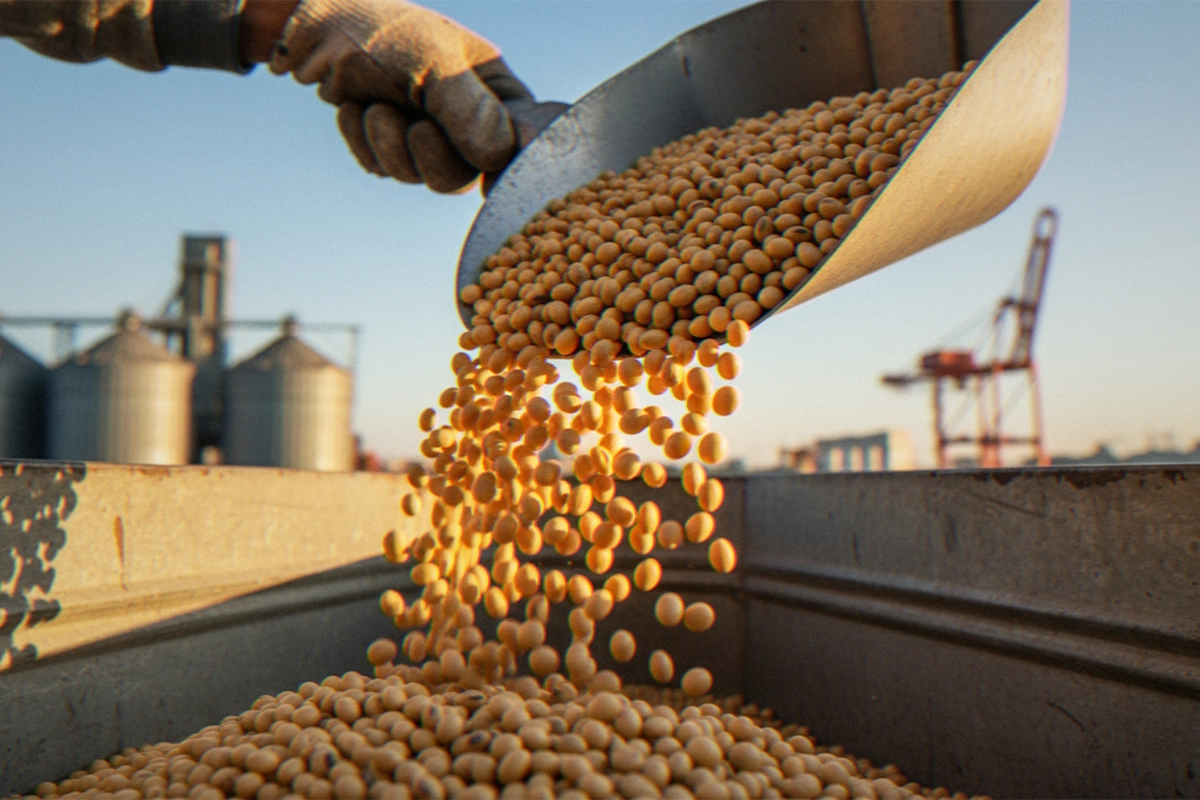 The EU Protein Plan targets greater feed autonomy, aiming to reduce reliance on imported high-protein crops, such as soy.
Farmers want money and clarity
Farm groups are more guarded. Copa-Cogeca welcomed the commission’s “renewed political recognition” of livestock’s role in food security, rural vitality, circularity, and high-quality protein production. But it warns that too much of the strategy remains “little more than statements of intent” and lacks “operational and technical clarity.”
The organization was especially critical of the financing gap around animal welfare. While it acknowledged that the strategy identifies investment costs for poultry and pig housing transitions, it says Brussels fails to provide a “credible roadmap for financing them.”
Young farmers also want practical delivery. CEJA (European Council of Young Farmers) vice president Katharina Schobersberger says the strategy sends “a positive signal” that livestock is part of Europe’s strategic future, but adds that any long-term vision must answer “who will be farming in 2040, and under which conditions.”
Environmental groups see missed opportunity
Environmental NGOs are far less enthusiastic. The European Environmental Bureau (EEB) says the Protein Plan and Livestock Strategy send “starkly different signals.” It welcomes the Protein Plan’s recognition of plant-rich diets and home-grown protein crops, while accusing the livestock strategy of doubling down on an industrial model.
The EEB says the strategy lacks a credible route to reduce pollution, cut methane, and shift toward extensive, higher-welfare farming. Senior policy officer Mathieu Mal says methane should receive “priority reduction,” warning against narratives that delay climate action.
What happens next?
The Livestock Strategy does not immediately change EU law. Its significance lies in the legislative pipeline it creates: laying hens and broilers in 2026, pigs in 2027, import-equivalence questions, future financing debates, and potential labeling reforms.
For food ingredients companies, the EU’s strategic direction is becoming clearer. Cage-free egg sourcing, transparent animal welfare claims, lower-footprint feed inputs, and EU-grown protein crops are likely to become more commercially important, as Brussels attempts to align livestock resilience with supply chain autonomy and consumer expectations.
Innova Market Insights data reveals that 30% of consumers globally look for animal welfare claims on F&B products. It also suggests that 27% are willing to consume meat or dairy from farms with higher animal welfare standards to show support.
On the product launch side, Innova tracked 4% growth in ethical animal welfare claims in F&B launches from October 2020 to September 2025.




Upcoming webinars

2027 Food Safety Risks for Quality & Compliance Leaders
FoodChain ID

Formulating for function: Developing benefit-led beverages with natural colours, botanicals, and flavours
Givaudan Sense Colour
Let's reveal the grain potential: Innovate
Meurens Natural