




“Cultivated meat is broken”: Former Meatable CEO says start-ups must sell or die

Key takeaways
- Investments in the cultivated meat have collapsed in recent years, with two of the sector’s biggest players shuttering late last year.
- Former Meatable CEO Jeff Tripician says cultivated meat industry’s struggles stem from regulatory tightening and mismatched investment timelines.
- His advice to surviving start-ups if Big Meat comes calling: “Get a pen and sign immediately.”
In 2021, investors poured nearly US$1 billion into cultivated meat. Last year, that figure was US$65 million — a 93% collapse, according to AgFunder data. In late 2025, two of the sector’s most prominent companies ceased operations within days of each other: Meatable, a Dutch start-up that had raised over US$100 million and was named one of Time magazine’s best inventions of 2024, and Believer Meats, which had completed the US regulatory pathway and built the world’s largest cultivated meat factory.
Jeff Tripician, a veteran of the traditional meat industry, became Meatable’s CEO in mid-2024 with a mandate to lead US market expansion — only to watch the company’s prospects collapse within 18 months. He believes the sector’s decline is due to a two-fold failure: start-ups who overpromised to impatient investors, and governments that chose political convenience over long-term food security.

Regulatory restraints have come alongside the drain in financing. Seven US states and two EU member states (Italy and Hungary) have imposed outright bans on cultivated meat.
The EU’s Biotech Act, published in December, explicitly excluded novel foods like cultivated meat from regulatory sandboxes that could have accelerated approval.
Food Ingredients First speaks with Tripician about his views on why the cultivated meat sector has taken such a significant fall and how it could survive by merging with the traditional meat industry.
A “self-impaled” failure
Tripician claims the cultivated meat sector may have suffered from a lack of strong business leadership, in which development efforts were driven chiefly by scientists who could not deliver on the production timescales that investors wanted.
He says that when company leaders sat down with private equity investors who expected quick returns, “They said what they felt they needed to say because they were naive or not familiar with the business side. Everyone wants this to be bigger, faster, more profitable. But in a young and evolving industry, that is often not the case.”
Private equity typically expects returns within five to seven years. For technology requiring a decade or more to mature and scale, that timeline was always unrealistic, he asserts.
“Science has to mature. Then it has to scale. Even if the science works at the scale they’re talking about, the price is ten times traditional protein. They set an expectation that scared those initial investors.”
Regulatory pressures
Tripician also says his experience with regulators in the US, EU, and Asia all showed politicians choosing short-term convenience over the long-term benefit of more sustainable food systems.
“Those people are not going to be in charge when it matters two decades from now. There’s a risk to do it today — there’s no benefit to them today as an individual.”
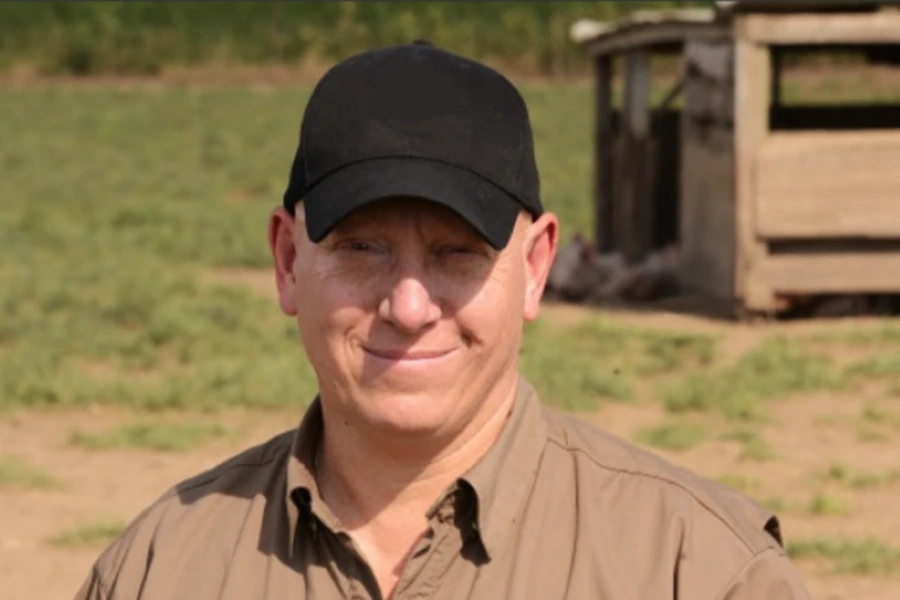 Jeff Tripician, former CEO of now-shuttered Meatable.Tripician also confirms what investigations have documented regarding aggressive lobbying practices made by livestock associations against cultivated meat. “The trade associations of lobbying groups for those people were, naturally and rightfully, fighting on behalf of their constituents. There was no one fighting on the other side.”
Livestock producers and farmers drove the lobbying pushback, he says. Meat processors, by contrast, were more open to investing in cell-based innovation.
That openness evaporated as regulatory walls went up. “As regulators slowed it down, those billion-dollar meat companies became more apprehensive.”
The pattern Tripician describes aligns with documented EU lobbying activity. An investigation by Follow the Money found that Italy’s biggest farmers’ organization began a campaign against “Frankenstein meat” in November 2021, and was granted official meetings at the highest level of the European Commission in 2024, including with President Ursula von der Leyen and Agriculture Commissioner Janusz Wojciechowski.
The agriculture commissioner confirmed in February 2024 that the commission had removed an attempt to promote lab meat from a key climate proposal.
In the US, the pattern has produced outright bans. Indiana became the fifth state to prohibit cultivated meat in May 2025. Two other states have now followed suit. Representative Beau Baird, who introduced Indiana’s bill, framed it as protecting farmers and ensuring consumer transparency — despite the products undergoing rigorous FDA and USDA oversight.
“Consumer concerns”
The EU recently excluded novel foods, including cultivated meat, from its regulatory sandbox provisions (frameworks allowing real world testing on novel products while ensuring consumer protection), on the basis that these products “may trigger ethical or cultural concerns among various consumer segments.”
However, studies into global consumer interest for cultivated meat have shown strong openness to the idea, something Tripician also saw during his time at Meatable.
The European Food Safety Authority (EFSA) also confirmed to Food Ingredients First that it was not consulted on the EU’s sandbox exclusion decision. “No, we were not asked to provide scientific advice on this,” an EFSA spokesperson says.
EFSA says it has not assessed whether its existing Novel Foods framework would be compatible with a sandbox approach — the question was never put to them.
The Good Food Institute, meanwhile, says it is “not aware of any consumer groups that have specifically advocated for novel food sandboxes” being excluded.
The consumer concerns rationale, Tripician argues, may simply be political convenience dressed up as public protection. “They’ve kicked it down to another generation, who will need food but can’t vote yet, so that they don’t have to deal with it now. And they don’t have to address farmers or ranchers that don’t understand these issues. It’s easy and it’s convenient.”
Should lab meat start-ups join the meat industry?
Tripician’s prognosis for standalone cultivated meat companies is bleak. The industry’s momentum, he says, is “broken.”
“I don’t think as standalone companies they will survive,” he says. “If I was advising them, I would say they need to become part of — as in sell to — meat companies, so that it’s almost like an R&D investment they can manage over time. I don’t think there’s external funds that are going to come in to prop up the small companies the way they’re constituted today.”
For the lab meat start-ups that have survived, Tripician says they should take any opportunity they get to merge with major meat corporations: “I would advise them to get a pen and sign immediately.”Lobbying by the livestock industry has hindered regulatory progress on cultivated meat and may have deterred investors.
The logic, he argues, is simple survival. “They have no other alternative.”
He also dismisses concerns that major meat companies would simply bury the technology. Major meat corporations, he notes, often make investments on long time horizons.
They will eventually need alternative protein technologies for economic rather than ideological or marketing purposes, he says. Population growth and dietary shifts in developing countries will put unsustainable pressure on livestock-based production.
Tripician estimates that if meat corporations acquire cultivated meat companies, they’ll do so at “pennies on the dollar.”
Following pharma tactics
Tripician says he believes in cultivated meat as a technology with a promising future, but stresses a fundamental structural problem: the mismatch between venture capital timelines and regulatory realities.
“Where you have a very fragile system that’s going to take a long time to mature, a short-term financial system in a long-term regulatory process doesn’t work.”
Cultivated meat, he argues, should have been treated more like pharmaceutical development, where 10–15 year timelines are expected and planned for.
And unlike pharmaceuticals, the regulatory goalposts for lab meat kept moving. “In some countries’ cases, you go through the entire process, you get to the very end, and they say, ‘We’ve rethought this. We’ve changed the rules. Start again and spend the money again,’” he says. “You, as a small company dependent on private money, can’t have that happen.”
Meatable had 86 scientists and was running regulatory processes in five countries at approximately US$2 million each. When regulators reset the process, the money ran out.
Looking back
Tripician is now fully returned to traditional meat, but says he wishes he’d arrived earlier on the cultivated meat scene to temper the promises made to investors.
His disappointment is not with the science or the concept, but with the system that couldn’t accommodate it. When Beyond Meat and Impossible Foods showed meteoric success with plant-based alternatives, he says he saw cultivated meat as the logical next step: more efficient, less environmentally damaging, and genetically identical to conventional meat.
“The people who were investing were right-headed,” he says. “It was just too short an expectation on the return, and people got scared — namely, governments.”
The technology, he believes, will eventually find its way into the food system — most likely incorporated within major meat companies that can afford the long development timeline.
But Tripician’s assessment is clear: “I believe 100% that if they (start-ups) don’t figure out a way to work within the industry, they are going to go out of business.”