

Cultivated meat on dairy farms? Dutch start-up launches world-first pilot

Key takeaways
- RespectFarms unveils the world’s first farm equipped with a lab for small-scale meat cultivation on a Dutch dairy farm.
- The project explores how farmers can diversify their income and participate directly in cultivated meat production, rather than seeing it as competition.
- The launch comes as the cultivated meat sector faces funding and regulatory challenges, and highlights the Netherlands’ pioneering role in cellular agriculture development.
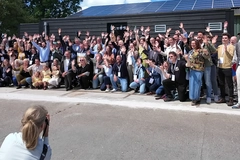 The inauguration brought together RespectFarms’ stakeholders.
RespectFarms has inaugurated what it describes as the world’s first cultivated meat farm in Schipluiden, South Holland, Netherlands. The proof-of-concept cultivation lab is located on the farm of the fifth-generation dairy farmer Corné van Leeuwen. The project marks a significant milestone in the cultivated meat industry by moving production closer to traditional agriculture rather than concentrating it in large industrial facilities.
The announcement follows the installation of Van Leeuwen’s pilot farm in 2025, with the site now generating its first proof points and entering a new phase focused on demonstration, public engagement, and discussion around the future of cultivated meat production.

Food Ingredients First caught up with Ira van Eelen, co-founder and director of RespectFarms, along with dairy farmers, scientists, and government representatives, at the pilot farm’s opening. We explored how cultivated meat can be integrated into existing operations as an additional revenue stream and discussed the future of the cultivated meat sector.
The pilot serves as a decentralized model of cultivated meat production, which Van Eelen notes is an extra activity at the farm and not a replacement for their current farming.
“The cells produced here can become meat products or ingredients for meaty products. It’s named RespectFarms because our vision is for farmers to be producers of cultivated meat or fish cells.”
Meindert Stolk, regional minister for Economy and Innovation, South Holland, describes the cultivated meat farm as a “connection between technology and everyday agricultural practice.”
“What is happening here is not science fiction. It is a carefully developed practical trial. Small-scale, realistic, and grounded in reality,” he says. “Not mass production, but an honest test — can cultivated meat become an additional revenue model for farmers? Can it contribute to future-proof agriculture?”
“That is exactly what the Province of South Holland aims to support,” Stolk adds.
The region is investing €500,000 (US$576,000) in the cultivated meat farm project. The funds will be used for knowledge exchange, public outreach and education, and setting up an experience center.
Cultivated meat on conventional farms
Dairy farmer Corné Van Leeuwen comes from a family of innovators, so it’s no surprise he welcomed RespectFarm’s pilot on his Schipluiden dairy farm.
 Dairy farmer Corné Van Leeuwen (left) at the inaugural event with his family and RespectFarms director and co-founder Ira van Eelan (middle).“In 1993, my father installed the first milking robot in the world. Back then, that was a huge step as it meant you didn’t need your own hands anymore to milk the cows. Looking back, it’s really obvious how significant that was.”
The robots were manufactured by Lely, a Dutch agricultural technology company, also based in South Holland, that designs and manufactures automated systems and digital solutions that help make dairy farming more efficient and sustainable.
The Van Leeuwen farm began diversifying its income as early as 2003 when it installed a restaurant and event space, hedging against uncertainty and finding new income models.
“In 2016, we created a cooperation with a few young farmers and started raising our own cows, selling them regionally. That, unfortunately, didn’t succeed for technical reasons,” Van Leeuwen continues.
“We then shifted to making artisanal cheese and created our own brand called Delflander. This allowed me to use the farm’s own milk to generate income to pay off the land. Because of my background in meat, I was still open to projects related to it. That’s how cultivated meat finally came into the picture.”
Revenue streams for farmers
RespectFarms proposes integrating bioreactors and cell-cultivation technologies directly into existing farms so that livestock farmers remain active participants in food systems as alternative protein technologies develop.
The company collaborates with livestock farmers, scientists, and food companies to design sustainable and decentralized models for the future of meat production.
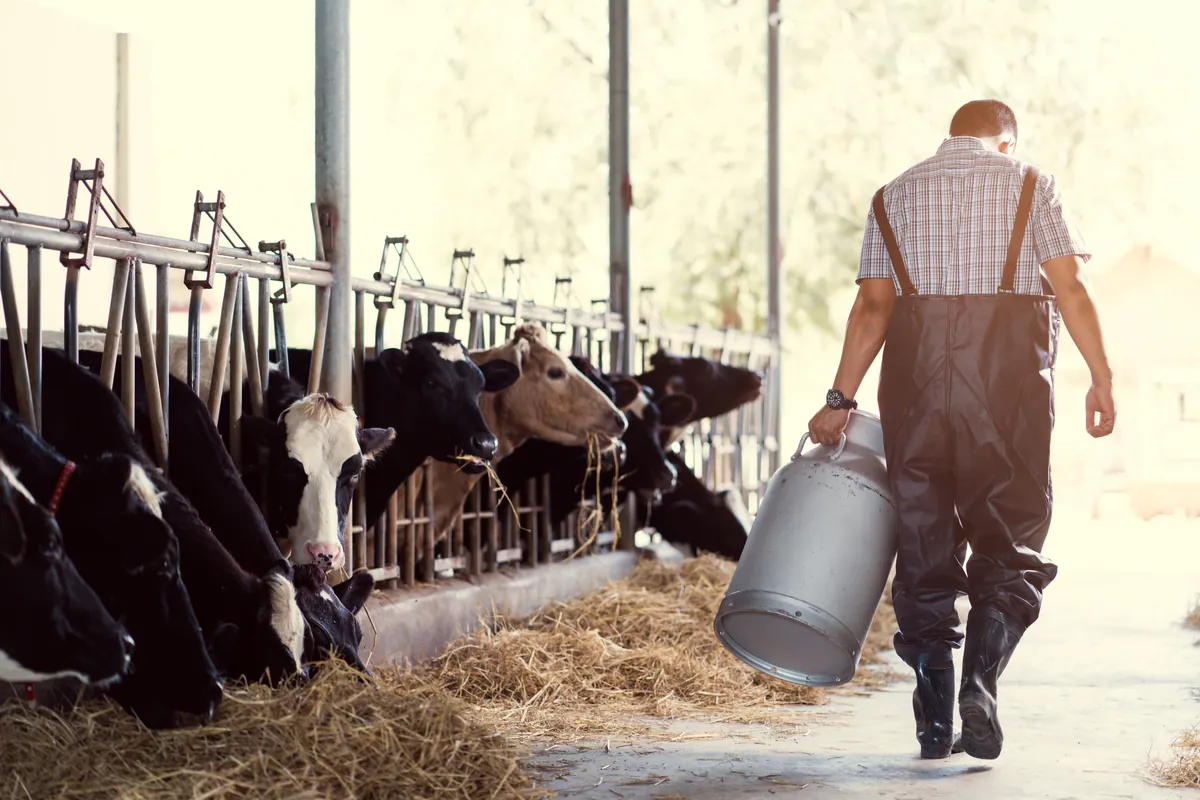 A 2026 RespectFarms study in the FEASTS consortium found that over 63% of 41 farmers use two or more agricultural strategies to improve income stability and manage regulatory and climate risks.“The diversity in farming is huge. It’s not just that you have diverse ingredients in food; you have a diverse set of farmers, whether they are dairy farmers, pig farmers, or cell-cultivating farmers,” says Van Eelen. “That last group doesn’t exist yet, but we think we will be part of that group coming to fruition.”
Respect Farms aims to make cultivated meat an additional business model for farmers by understanding how farmers operate, what they need, and who their buyers are.
“Then replication is natural: one farm, then the next, and the next. A farmer could have several bioreactors to produce enough cells for products, and others can replicate the model,” Van Eelen adds.
Cultivated meat drives protein transition
Cultivated meat production involves producing meat with significantly lower social and environmental impact, according to RespectFarms.
Stolk urges the F&B industry to use “our land, water, and environment more responsibly.”
“Research shows cultivated meat has the potential to use land and water more efficiently. But let us be honest: we are still at the beginning. There is much to learn, test, and improve.” As global demand for protein increases, he describes the protein transition as “an urgent task.”
“For us as a province, the responsible production of sufficient and healthy food is central. Innovations like this are not a replacement for agriculture, but a complement, an additional option, a new opportunity.”
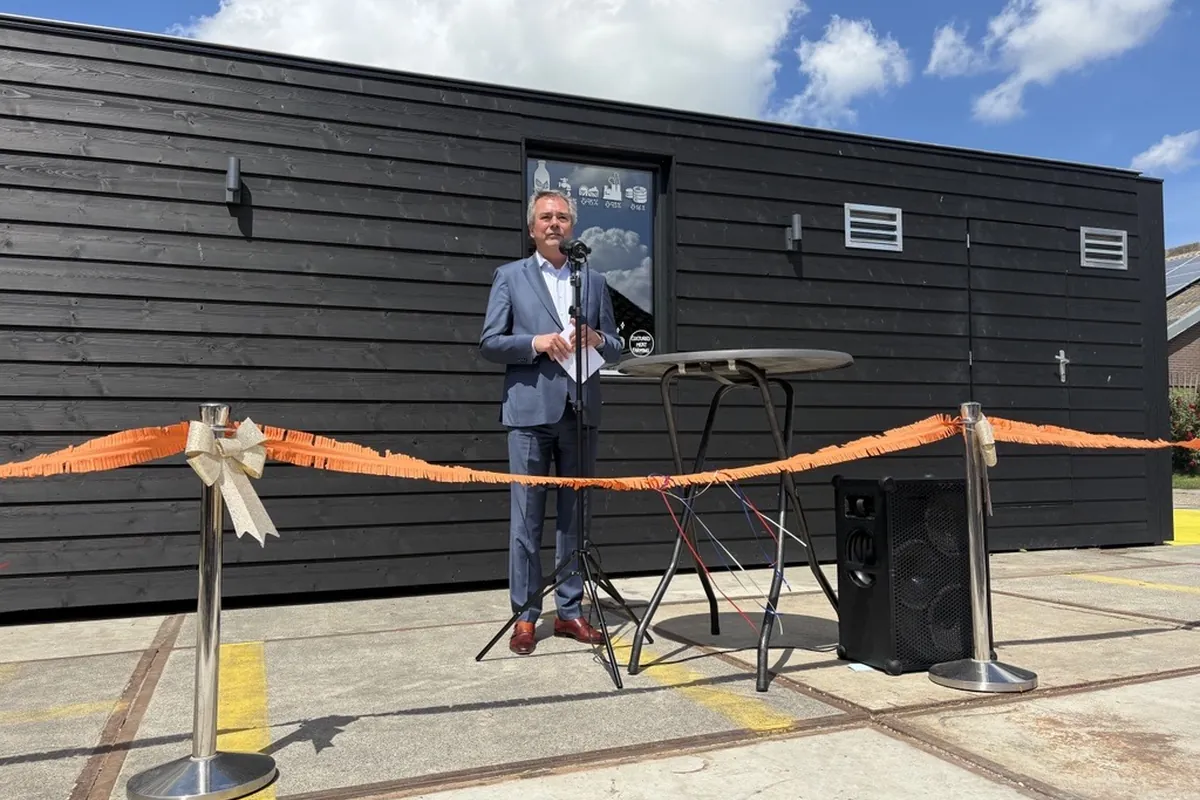 Meindert Stolk: The need to use land, water, and natural resources more responsibly makes the protein transition an urgent task; and cultivated meat can help.Meanwhile, Cor van der Weele, former professor at Wageningen University, Netherlands, and member of the supervisory board at RespectFarms, points to the potential of a small-scale cultivated meat production concept to benefit farmers rather than competing with their business.
“I ran many focus groups and it kept coming back to consumers preferring that cultivated meat be produced on a small scale, and then I started to wonder: could it be an option for farmers as well, rather than just a threat to their normal business? In the meantime, I had met Ira [van Eelen], and joined their project.”
Cultivated meat barriers
The RespectFarms launch comes at a time when some of the industry’s most technically advanced cultivated meat companies have closed despite raising significant capital and achieving technical milestones.
It also faces regulatory barriers, as several US states and EU countries, including Indiana and Italy, have imposed bans on cultivated meat.
Hannah Lester, CEO of Atova, a regulatory consultancy who advises RespectFarms and Gourmey, says the European Food Safety Authority is expected to issue its first opinion on cultivated meat next year in response to a dossier submitted by cultivated duck company Gourmey. That opinion could pave the way for future companies.
Another possible barrier is that cultivated meat is also harder to scale, since expanding to commercial volumes requires extremely large bioreactors and inefficiency at scale translates to high costs for consumers.
For RespectFarms, this “problem” is another reason why small-batch production seems like a more viable business model for the nascent sector.
Van Eelen acknowledges that private investment in cultivated meat has dropped in recent years. “What happened with all that investment money is that it mainly went to first-of-a-kind cultivated meat companies that had to start from scratch,” she says.
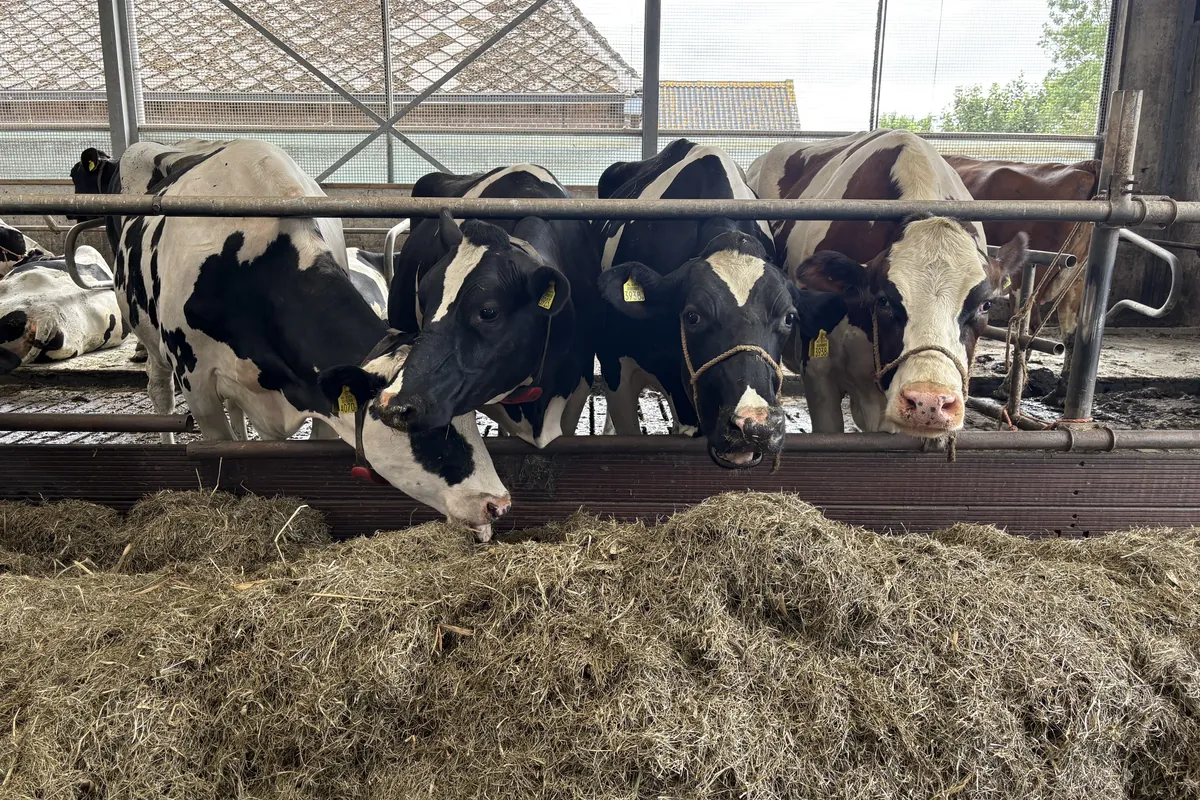 RespectFarms’ project focuses on adding cultivated meat production to existing farming operations, not replacing current practices.“This was because there wasn’t enough cultivated meat research being done in universities. There was no open-source resource for companies to work from, so they had to hire expensive people, use expensive materials, and see if they could make a piece of meat.”
Strengthening cultivated meat’s future
Despite these challenges, Van Eelen is optimistic about the sector’s future.
“Even though investing money into companies — whether plant-based companies or any company — is hard right now, public funding into universities all over the world has been coming along.”
While cultivated meat has not yet been approved for sale in the EU, she cites the example of a major Dutch public grant of nearly €60 million (~69 million) to over €100 million (~US$115 million), which is funding an eight-year, open-source cellular agriculture research program in universities, and supports about 95 researchers.
“We now have open-access facilities here in the Netherlands so that even young start-ups can scale up without having to buy machinery or get that experience themselves. So we’re in a better place than we were a couple of years ago, from a science standpoint,” Van Eelen emphasizes.
Stolk describes the Netherlands as among the European leaders in alternative proteins. “The Netherlands is also the first country in Europe where controlled tastings of cultivated meat are possible. This underlines the strength of our innovation climate and our competitive position.”
“There is also support at the European level. Through EIT Food, European funding is being brought to South Holland. In this way, our efforts as a province act as a lever for additional European investment and collaboration.”
“On this farm, the entire chain comes together: from fundamental research to practical application. In doing so, we strengthen not only sustainable food production, but also the future earning capacity of our farmers and the international competitiveness of our region.”
With additional reporting by Missy Green in Schipluiden, South Holland, Netherlands