


Engineering sweetness: ADM and Ingredion map the future of sugar reduction


Key takeaways
- Consumers want less sugar without sacrificing taste, but preferred sweetness levels vary by market and occasion.
- ADM and Ingredion are developing multi-ingredient systems designed to manage sweetness onset, intensity, aftertaste, texture, and functionality.
- Taste, affordability, clean labeling, scalability, and reliable supply determine whether new sweetness systems are commercially viable.

Sugar reduction is becoming less about how much sweetness a product delivers and more about how that sweetness behaves. Rather than simply pursuing the closest possible match to sucrose, formulators are examining when sweetness appears, how quickly it builds, what happens at its peak, and whether it leaves an unwelcome aftertaste.
The shift builds on a year of rapid industry development. Previous Food Ingredients First reports have explored the move beyond single-sweetener replacements toward integrated formulation systems, the impact of GLP-1 use, allulose, and “post-sweeteners,” and advances in sweet proteins, bioconversion, and taste modulation.
Now, research from ADM and Ingredion points to the next stage. Formulators are focusing on designing sweetness around distinct consumers, markets, and consumption occasions, rather than treating sugar as the only sensory benchmark.
Sugar reduction gathers pace
Innova Market Insights data shows that F&B launches carrying reduced-sugar claims recorded a 7% CAGR from July 2021 to June 2026. Soups and Sauces recorded the fastest growth during this period, demonstrating how reduction strategies are moving beyond Soft Drinks and Confectionery.
Innova’s global sugar reduction analysis also finds that almost half of consumers are eating less sugar to improve their diets. Launch activity is particularly strong in the Middle East, Africa, and Asia, while Soft Drinks and Sports Nutrition remain the leading categories for sugar-related claims. ADM’s Sarah Diedrich highlights the need to manage sweetness, texture, and functionality together.
But less sugar does not necessarily mean consumers want every product to taste less sweet.
“Our latest global beverage research across the US, the UK, Brazil, India, and Mexico indicates that the change is more nuanced than a universal move toward less sweetness. Sugar is no longer the single benchmark for preference, but not every consumer wants a lighter profile,” says Trisha Terry, manager of customer agility and stevia innovation at Ingredion.
Ingredion’s research divides consumers into two broad groups. “Sweet Tooths” welcome products that exceed standard market sweetness levels and rarely find a product too sweet. “Subtle Sweetness Seekers,” meanwhile, want sweetness to sit within a more complex profile so that fruit, acidity, botanicals, and other tastes remain perceptible.
“The proportions vary by market, making both local context and the target consumer important,” Terry explains.
Moving beyond sweetness intensity
The character of sweetness may be as important as its strength. Ingredion found that fruity, juicy, and balanced sweet notes generated greater appeal than syrupy sweetness. Lingering sweetness and notes perceived as artificial reduced preference across the markets studied.
“Intensity alone also does not determine liking. Fruity, juicy, and balanced sweet notes were more appealing than syrupy sweetness, while lingering sweetness and notes perceived as artificial reduced preference across the markets studied,” Terry says.
“For product developers, the objective should not be to reproduce a universal sugar curve. It should be to create the right sensory experience for the consumer, application and market.”
ADM’s consumer research supports this more fragmented picture. The supplier reports that 83% of consumers globally limit or avoid sugar, while 35% seek to avoid artificial tastes when assessing product quality. However, it also sees space for full-sugar, reduced-sugar, and no-added-sugar options, depending on the occasion. Ingredion’s Trisha Terry says sweetness preferences vary by consumer, application, and market.
“ADM’s research points clearly to consumers becoming more intentional about sugar and taste preferences, although this should not necessarily be equated with a universal preference for less-sweet sensory profiles,” says Sarah Diedrich, senior product marketing director for global sweetening and texturizing solutions at ADM.
Research conducted by the company in Germany, Poland, Saudi Arabia, and the UK found that consumers describe the ideal “natural” sweet snack as rich-tasting but not overly sweet. Recognizable ingredients and sweetness from fruit were valued, while protein, fiber, and functional benefits were welcomed as long as indulgence was preserved.
For established brands, however, moving too far from the familiar remains risky.
“For an established product, the objective is typically to maintain the taste and sensory experience that existing consumers know and expect. That makes matching the full-sugar control especially important in reformulation projects. By contrast, line extensions and new product introductions generally offer more flexibility to intentionally evolve the taste or sweetness profile,” Diedrich explains.
Engineering the sweetness curve
Matching or deliberately departing from sugar requires formulators to consider sweetness as a sequence rather than a single measurement. A product can achieve the intended sucrose equivalence yet still disappoint if its sweetness arrives late, peaks at the wrong moment, or persists after the other flavors have disappeared.
“Sweetness perception is multidimensional. Formulators need to consider when sweetness is first perceived, how quickly it builds, peak intensity, and how the sensation evolves and finishes. A product can reach the intended intensity and still disappoint if sweetness arrives too late or leaves an unwanted lingering note,” Terry explains.
Ingredion’s beverage research found that, in the formulations and comparisons evaluated, certain complex sweetener combinations received higher consumer-liking scores than the individual sweeteners tested. In trained-panel testing of a zero-sugar energy drink prototype, the company combined stevia with the sweet protein brazzein.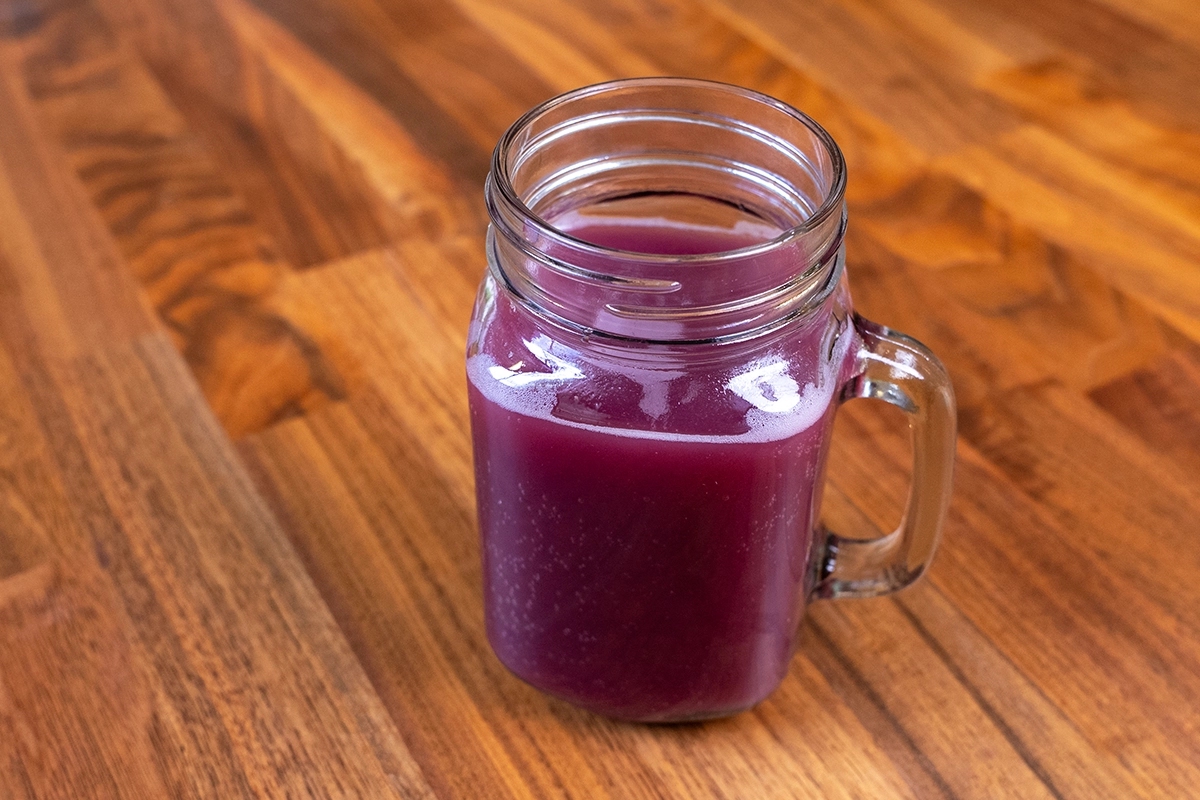 Ingredion’s Citrus Fig Mocktail combines brazzein, stevia, and fruit juice concentrates.
“In trained-panel testing of a zero-sugar energy drink prototype, a combination of stevia and the sweet protein brazzein was associated with earlier sweetness onset, greater measured sweetness intensity and less lingering sweetness than the Reb M-only and brazzein-only comparators. The findings are specific to the formulation, ingredient levels, methodology and testing conditions evaluated, but illustrate how complementary sweeteners may shape the complete temporal experience rather than simply target sucrose equivalence,” says Terry.
Ingredion also demonstrated this approach in its Citrus Fig Mocktail prototype at IFT FIRST 2026. The beverage combined its PureCircle 8101 Clean Taste Sweet Protein Solution, containing brazzein and stevia, with fig, pear, pineapple, lime, and lemon juice concentrates.
ADM similarly treats sweetness as part of a wider sensory system. The company combines allulose, stevia, taste-modulation solutions, and texturizing ingredients according to the application. Its SweetRight Allulose can provide upfront sweetness and bulk, while high-potency stevia can fill gaps elsewhere in the sweetness curve. TasteSpark Masking addresses astringency and off-notes, while TasteSpark Mouthfeel and Texperien resistant tapioca starch can rebuild body, richness, and texture.
“Successful sugar reduction or leveraging alternative sweetening solutions requires managing the entire sensory and functional system,” Diedrich says.
Rebuilding sugar’s hidden functions
Sugar’s removal affects considerably more than sweetness. Depending on the application, it can change bulk, structure, browning, moisture retention, binding, freezing-point control, texture, and shelf life.
ADM illustrates this challenge with a reduced-sugar gummy supplement. The company combines reduced-sugar glucose syrup with stevia and taste modulation. The syrup helps preserve chewiness and prevent hardening, stevia enables further reduction, and modulation balances off-notes from functional ingredients. Sweetener systems are moving sugar reduction beyond one-for-one ingredient replacement.
Ingredion also argues that sophisticated ingredient systems should not be judged simply by the number of components they contain. Its 2026 proprietary clean label study found that 64% of surveyed consumers believe an ingredient’s purpose matters more than whether its name sounds natural. Meanwhile, 77% want products to meet both healthfulness and clean label expectations.
“Simplicity is not only about ingredient count. It is about selecting ingredients appropriate to the application, giving each one a clear purpose and avoiding complexity that does not deliver a meaningful benefit,” Terry says.
This creates a delicate brief for manufacturers. A formula may require several complementary technologies behind the scenes, but the consumer-facing proposition still needs to be understandable. The technical complexity must translate into a recognizable benefit, whether that is reduced sugar, better nutrition, improved flavor, or a familiar eating experience.
From technical success to commercial viability
The industry’s next challenge is proving that these systems work beyond the laboratory. Taste, functionality, label acceptance, affordability, scalability, and supply reliability all influence whether a technically successful formulation reaches the market.
“To outperform sugar, a new sweetness system must deliver consumer-preferred taste, reliable application performance, scalable availability, and the right total cost-in-use,” Terry says.
“There is no single hardest barrier across every application, but balancing cost-in-use with taste, texture, and performance is frequently among the most significant development challenges.”
ADM’s research among US consumers selecting stevia-containing products found that 69% regard taste as their leading priority, followed by cost at 42%. This suggests that sugar content and sucrose equivalence alone provide an incomplete measure of success.
“The most meaningful measure of success is whether the product delivers the intended balance of enjoyment, label preferences and nutrition. A reduced-sugar product may meet a nutritional target, but it also needs to provide the taste, texture, satisfaction, and overall experience consumers expect from the occasion,” Diedrich concludes.