




Healthy indulgence: The ingredient strategies behind better-for-you foods

Key takeaways
- Healthy indulgence combines improved nutrition with appealing taste, texture, and mouthfeel.
- Hydrosol and Ingredion highlight opportunities in savory snacks, hybrid foods, and protein drinks.
- Integrated ingredient systems and sensory testing help address reformulation challenges and support repeat purchases.

Reducing sugar or fat and adding protein or fiber can reshape everything from sweetness and creaminess to crunch and juiciness. For manufacturers developing healthier indulgent foods, the challenge is to deliver nutritional benefits through products that consumers want to eat again.
Ingredient suppliers speaking to Food Ingredients First highlight opportunities spanning layered coffee drinks, crispy meat snacks, and meat and vegetable hybrids. Across these applications, nutrition, flavor, and texture need to be developed together, with changes to one ingredient often demanding adjustments elsewhere in the recipe.
“Successful healthy indulgence delivers a clear nutritional benefit through an experience people genuinely enjoy,” says Tara Kozlowich, director of global segment marketing, Healthful Solutions Protein, at Ingredion.

Choosing meaningful benefits
Protein and fiber are helping broaden the proposition beyond sugar and fat reduction. Kirsten Jacke, senior product manager at Hydrosol, sees opportunities in snacks and convenient meal alternatives that combine nutritional value with satisfaction.
“From meat snacks and hybrid products to high-protein yogurts and high-protein drinks, these concepts are meeting consumers’ desires for nutrient-rich snacks and mini-meals,” she says.
Meal replacement drinks offer another application, combining protein, dietary fiber, vitamins, and minerals in convenient formats, according to Jacke.
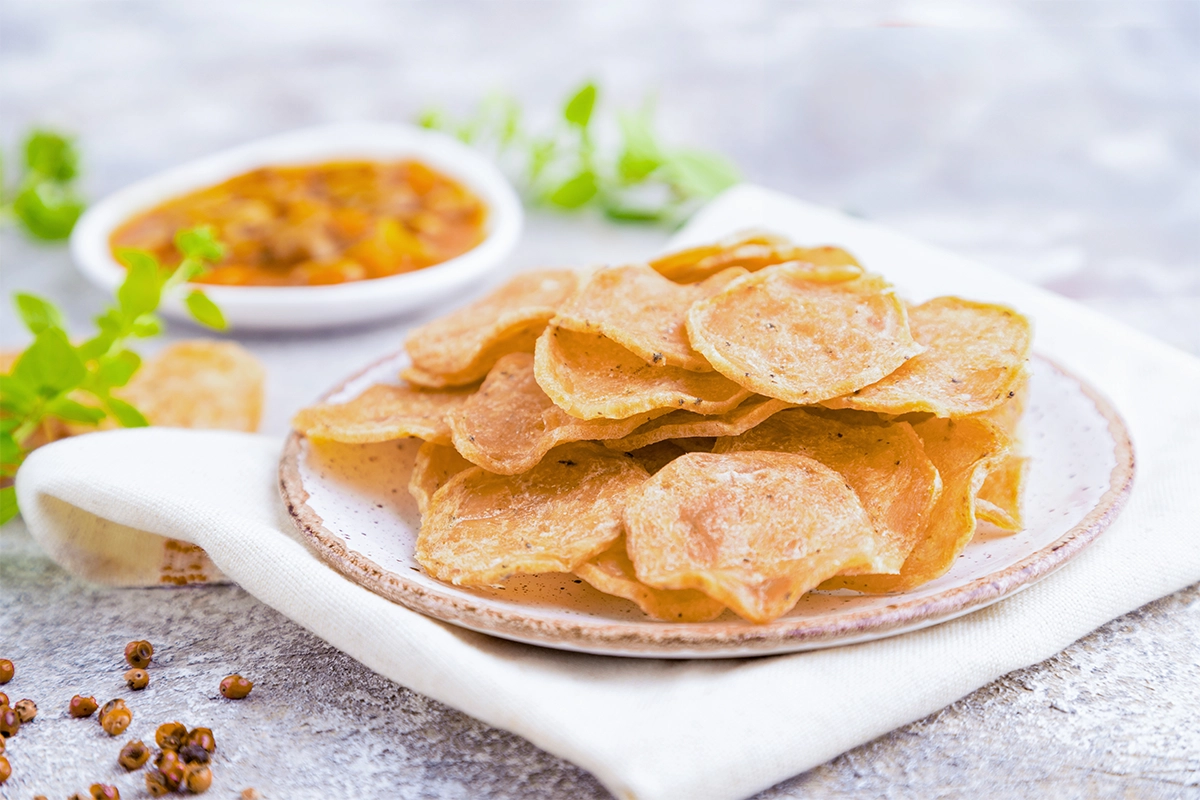 Hydrosol’s stabilizing systems help maintain texture in protein-rich savory snacks (Image credit: Hydrosol).Kozlowich emphasizes the need to make the nutritional proposition understandable.
“Reduced sugar, fiber, protein, and other positive nutritional attributes can give each bite greater value. However, adding more claims is not necessarily the answer,” she says.
“The benefit has to be credible and clear, and the product still has to deliver the taste, texture, and freshness expected from the category.”
Rebuilding sugar’s functions
Delivering that experience becomes more complex when sugar reduction changes the behavior of the formulation.
“Beyond sweetness, it can contribute body, browning, moisture retention, structure, flavor release, and shelf life performance. Removing it can expose bitterness, thin a beverage, or change a product’s structure,” says Kozlowich.
These functions vary by application. Bakery manufacturers may need to restore moisture, browning, and volume, while frozen dessert developers must account for freezing behavior.
“Brands must define the target eating experience and build a complete system around it, potentially combining sweeteners, fibers, starches, hydrocolloids, and flavors with modifying properties to manage sweetness, off-notes, body, moisture, and texture,” Kozlowich explains.
“Fibers can help add nutritional value while contributing bulk, water management, browning, or mouthfeel. Starches, hydrocolloids, and other texturizing tools can build body, structure, creaminess, crispness, or chew.”
Symrise identifies sweetness timing as another challenge, alongside changes in body and flavor impact. Symrise uses taste-balancing solutions to manage off-notes in reformulated foods (Image credit: Symrise).
“When it gets reduced, sweetness may arrive too slowly or sharply, linger unnaturally, and leave the product tasting thin. Bitterness, acidity, or astringency can become more noticeable, while mouthfeel and flavor impact decline,” says Sabrina Martin, marketing director for Beverages & Sweet, EAME, at Symrise.
The extent of the intervention depends on the reduction target and the application. Symrise says modest reductions may be achievable through a flavor solution, while higher targets may require a broader sweetening system.
For Hydrosol, selecting ingredients that work together is equally important when reducing fat or adding nutrients.
“To compensate for these changes and balance the positive technological properties of sugar and fat, we use carefully selected hydrocolloids and plant fibers,” says Jacke.
Texture opens new formats
Texture can help communicate indulgence immediately, while creating opportunities for differentiation through contrasting sensations.
“Ingredion’s global texture research found that 79% of global consumers believe texture determines their overall satisfaction with a food,” says Kozlowich.
“Creaminess can reinforce richness in yogurt, ice cream, or beverages. Layered contrasts, such as a crisp exterior with a creamy center, can make a better-for-you product feel more engaging and distinctive.”
Ingredion’s Fit Protein Coffee concept combines a creamy coffee base, espresso protein foam, and soft espresso pieces. The sugar-reduced, ready-to-drink concept provides 11 grams of protein per serving, using pea protein isolate, stevia sweeteners, allulose, citrus fiber, starches, and complementary texturizing solutions.
 Ingredion combines protein, sweetness, and layered textures in its coffee concept (Image credit: Ingredion).“The concept illustrates the nutrition and sensory dimensions of that broader approach: define the nutritional objective and desired experience first, then design protein, sweetness, texture, and stability as one connected formulation,” Kozlowich says.
Hydrosol is exploring savory applications, including a functional system for phosphate-free, high-protein meat snacks.
“This flexible system enables manufacturers to produce protein-rich, reduced-fat meat chips with a crispy texture and an improved nutritional profile from various types of meat, as well as clean label chicken jerky,” says Jacke.
He also points to Hydrosol’s HydroTOP VE CL series as another example.
“It provides the foundation for high-protein recipes with fewer saturated fatty acids and reduced fat content. In addition, it is suitable for clean label concepts,” she says.
The series uses plant proteins and dietary fiber, supporting applications ranging from ground meat products with vegetables to salami and chicken-and-cauliflower snacks.
However, balancing ingredients in hybrids creates competing texture demands.
“Vegetables, for example, add more moisture to the mixture, causing the final products to lose texture and become less firm. Dietary fiber and plant-based proteins, on the other hand, can lead to reduced juiciness and a dry texture,” Jacke explains.
Cooking losses and shrinkage present further challenges. Hydrosol addresses these through the targeted selection and interaction of hydrocolloids and plant fibers.
Familiar flavors with a twist
Flavor development provides another route to making healthier formulations appealing. Symrise identifies familiar chocolate, caramel, coffee, vanilla, nut, and berry profiles as foundations for innovation, with added texture and contrast bringing novelty.
“Familiarity builds trust and provides immediate taste recognition, while the twist introduces novelty and differentiation,” Martin says.
Sonia Huppert, director of global innovation business development at IFF Taste, highlights sweet–heat combinations. IFF highlights sweet–heat flavor combinations as an opportunity for healthy indulgence.
“The sweet heat-swicy phenomenon pairs sweetness with layered heat for ‘familiar with a twist’ innovation, such as mango habanero, sweet chili, spicy caramel, and hot honey,” she says.
Flavor tools also address the less desirable sensory effects of nutritional enrichment. Symrise notes that protein source, quality, dosage, processing, and the surrounding formulation all influence the challenge.
“Pea or soy protein, for example, may introduce beany, green, bitter, or cardboard notes, while protein and fiber enrichment can create dryness, astringency, or chalkiness. Minerals may add metallic or lingering bitter notes,” Martin explains.
IFF uses flavor modulation alongside mouthfeel tools to address these issues, with Huppert emphasizing collaboration between flavorists and customers to optimize the solution.
Testing the finished experience
Sensory testing helps determine whether formulation changes deliver the intended result. Symrise compares finished products against full-sugar or full-fat benchmarks in blind, controlled tests with trained experts, adding consumer testing depending on the objective.
In a 2026 sugar-reduced strawberry yogurt project, the company says reducing sugar changed sweetness dynamics and fruity, creamy, and lactonic notes. An externally trained dairy panel evaluated its symlife solution against the full-sugar reference. Symrise reports that the solution performed best within the tested portfolio.
IFF also uses consumer panels to validate flavor and sensory performance.
“The final stage of the process is to validate performance, including flavor and sensory properties, through consumer panels to ensure the new or reformulated product meets consumer expectations,” says Huppert.
For Hydrosol, consistency over time remains essential.
“Ensuring that taste and texture remain consistent throughout the entire shelf life is always a prerequisite for us when developing our stabilization systems,” says Jacke.
“Besides the nutritional benefits that can be highlighted on the packaging, taste is always at the center of our development of functional systems. Repeat purchases can only be generated if the taste, texture, and mouthfeel are compelling.”