



Cargill strengthens Belgium as strategic European food innovation hub

Key takeaways
- Cargill upgrades its Izegem (edible oils), Mouscron (gourmet chocolate), and Vilvoorde (extrusion pilot plant) sites to strengthen production, innovation, and customer collaboration.
- Izegem boosts high-oleic oils with lower saturated fat, reduces emissions, increases recycled packaging, and uses solar energy.
- Vilvoorde’s new pilot plant and Mouscron’s expanded chocolate production enhance rapid product development and tailored solutions for European markets.
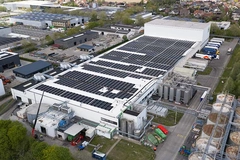 Cargill’s edible oil plant in Izegem, Belgium.
Global food and ingredient leader Cargill is reinforcing Belgium’s role as a core European hub for food production, innovation, and customer collaboration through a €56 million (~US$65 million) investment across three key sites.
The multi-site program covers upgrades at the Izegem edible oils bottling facility (€21 million (~US$24 million)), expansion of gourmet chocolate production in Mouscron (€30 million (~US$35 million)), and a new extrusion pilot plant at the Vilvoorde Innovation Center (€5.4 million (~US$6.2 million).
“These investments reflect Cargill’s commitment to growing alongside our customers and strengthening our ability to deliver innovative food solutions across Europe,” Geert Maesmans, vice president of R&D for Cargill Food EMEA and country lead for Belgium, tells Food Ingredients First.

“Belgium is a key strategic hub for Cargill in Europe, thanks to its strong food industry, close customer connectivity, and advanced logistics infrastructure that enable efficient supply across Western Europe.”
Izegem: Expanding edible oil production
Cargill has undertaken a significant expansion of one of Europe’s largest edible oils bottling facilities. The company’s work in healthier oils includes the development of high oleic oils with lower saturated fat and the removal of industrially produced trans-fatty acids from its global edible oils portfolio.
“High oleic sunflower oil offers similar properties to olive oil, with the stability needed for professional frying applications, and has contributed to changing consumption patterns across Europe, as food manufacturers and foodservice operators look for solutions that balance performance, nutrition, and affordability,” explains Maesmans.
“The Izegem site supports customers who need consistent oil performance during high-volume service, helping them deliver the taste and quality consumers expect, while also responding to growing demand for products that support healthier choices.”
The Izegem upgrades include automation and process improvements designed to enhance operational efficiency and sustainability. The site has achieved a 17.9% reduction in carbon emissions compared with FY21/22 through investments in more efficient equipment and continuous improvement initiatives.
Additional measures include increasing the use of recycled PET bottles, reducing plastic usage, transitioning to more efficient packaging formats, and generating approximately 30% of the site’s annual electricity needs through solar panels.
Mouscron: Doubling gourmet chocolate production
At the Mouscron facility, Cargill has invested €30 million (~US$35 million) to expand premium chocolate production. The expanded site will produce Cargill’s premium couverture chocolate range Veliche and support artisanal foodservice customers, restaurants, and food manufacturers.
“In Mouscron, we have nearly doubled our gourmet chocolate production capabilities, enabling us to better support customers with premium chocolate products, greater flexibility, shorter lead times, and tailored solutions,” says Maesmans.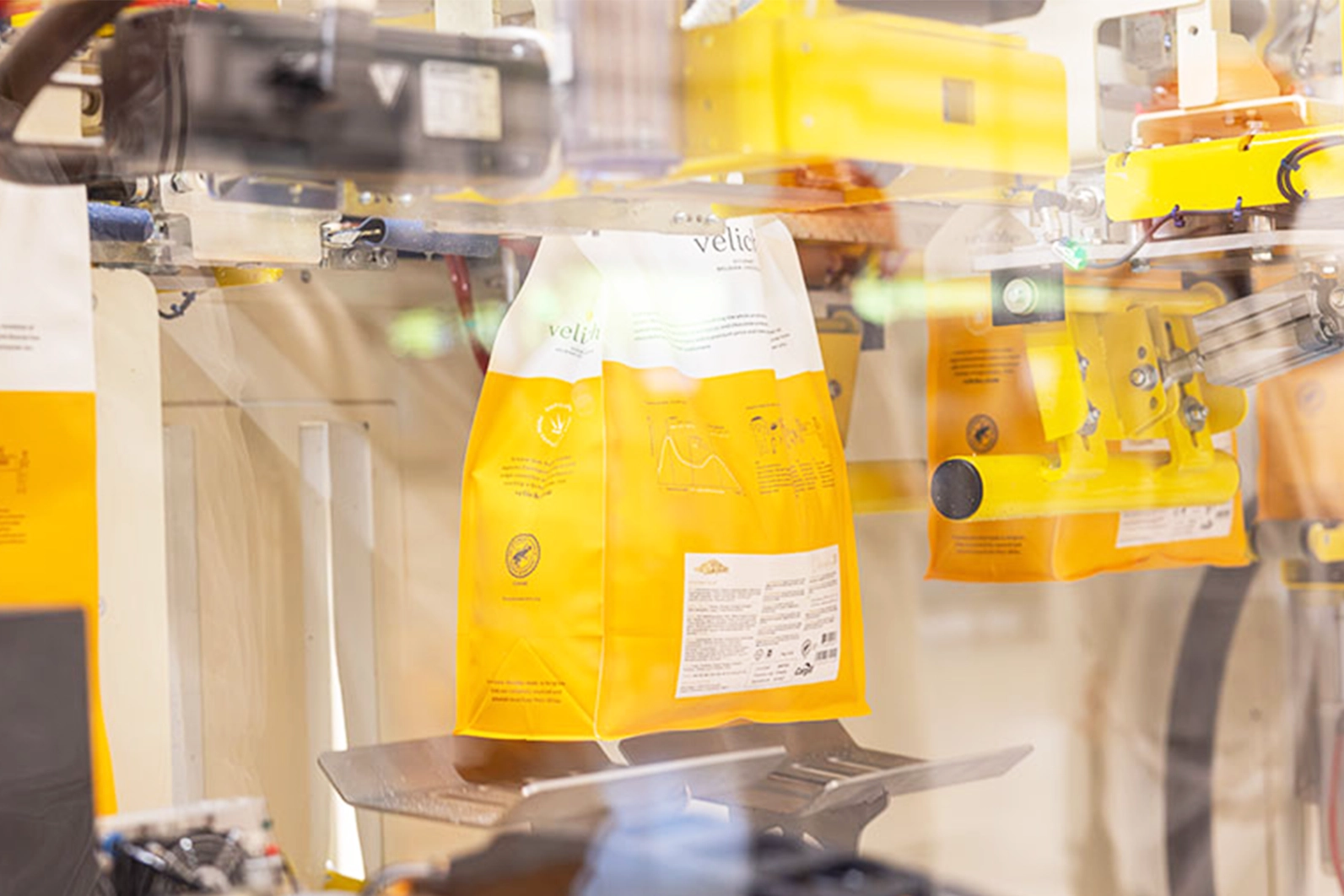 Veliche gourmet chocolate products on a new production line at Cargill’s site in Mouscron, Belgium.
“Today’s consumers increasingly want food that delivers on multiple expectations at once — familiar taste and enjoyable eating experiences, alongside nutrition, affordability, and more sustainable choices. TrendTracker research shows consumers continue to prioritize taste, while also placing growing importance on health, value, and sustainability.”
Cargill helps customers navigate those expectations through innovation, ingredient expertise, and reliable supply.
Vilvoorde: Accelerating F&B innovation
A €5.4 million (~US$6.2 million) investment at the Vilvoorde Innovation Center has established a new extrusion pilot plant.
“The new extrusion pilot plant expands the capabilities of our Vilvoorde Innovation Center and creates additional opportunities for hands-on collaboration with customers. The facility enables rapid prototyping, ingredient functionality testing, and product development across food, feed, and pet food applications,” says Maesmans.
“By allowing customers to test, refine, and validate concepts in a pilot-scale environment, we can accelerate the journey from idea to commercialization. The investment strengthens our broader European R&D network and supports a co-creation approach, bringing together Cargill’s technical expertise, application knowledge, and customer insights to develop solutions that address emerging market needs.”
Earlier this year, we visited the Vilvoorde Innovation Center and reported on how Cargill is leveraging fermentation to tackle the protein innovation challenges.
Belgium as a strategic European hub
The investments in Izegem, Mouscron, and Vilvoorde position Belgium at the heart of Cargill’s European operations, allowing the company to deliver tailored, innovative, and sustainable solutions to food manufacturers, foodservice operators, and retail customers across the region.
Across all sites, sustainability and operational efficiency were central considerations. “More broadly, these investments are designed to help customers meet their business objectives by combining reliable supply, innovation, and more sustainable production practices. They build on Cargill’s integrated European supply chains and long-term commitment to responsible operations across the region,” Maesmans tells us.
These recent investments add to Cargill’s broader footprint in Belgium, where the company has operated since 1953 and employs more than 1,500 people across nine locations spanning production, R&D, and regional coordination functions.