
Blue light offers new way to tackle Campylobacter in poultry, research reveals

Key takeaways
- Researchers found that blue light reduced Campylobacter across all 64 strains tested, including antibiotic-resistant isolates.
- The technology could give poultry processors another food safety barrier without relying on chemical antimicrobials.
- Commercial application remains unproven, and further testing is needed to establish effectiveness, scalability, and cost in real-world processing environments.

A blue-light treatment that targets Campylobacter on raw chicken could provide poultry processors with another tool for reducing one of the most persistent causes of foodborne illness, according to new research from the University of Reading and the UK’s Animal and Plant Health Agency.
The study, published in Microbiology, investigated whether violet-blue photodynamic inactivation (VB-PDI) could kill Campylobacter strains found in the UK poultry supply chain. Researchers tested 64 isolates collected through poultry surveillance programs and found that all were susceptible to the treatment.
What the study found
The findings could be significant for the poultry industry, where Campylobacter remains a major food safety challenge. In the UK, it is the most common cause of bacterial food poisoning, with tens of thousands of reported cases each year. Poultry is a major source of exposure, although contamination can also occur through cross-contamination during food preparation.

The research suggests that light-based treatment could eventually provide an additional intervention at the processing stage, reducing the bacterial load before chicken reaches retailers and consumers.
How does blue light work?
VB-PDI works by exposing bacteria to violet-blue light at a wavelength of around 405 nanometers. The light activates naturally occurring compounds within bacterial cells, triggering the production of reactive oxygen species that damage the cells and ultimately kill them.
One potential advantage for processors is that the approach does not rely on adding a chemical antimicrobial to the product. That could make it relevant as manufacturers look for additional food safety technologies that can be incorporated into processing systems while responding to regulatory requirements and consumer expectations around processing and ingredients.
The study also produced encouraging results around antimicrobial resistance. Researchers found that strains resistant to antibiotics were not less susceptible to the blue-light treatment than antibiotic-sensitive strains. In a separate experiment, repeated exposure to the treatment did not result in a detectable increase in tolerance in the Campylobacter strain tested.
That does not mean resistance to the technology is impossible, particularly under commercial conditions, but it provides an important early indication that the mechanism may be less vulnerable to conventional antimicrobial resistance.
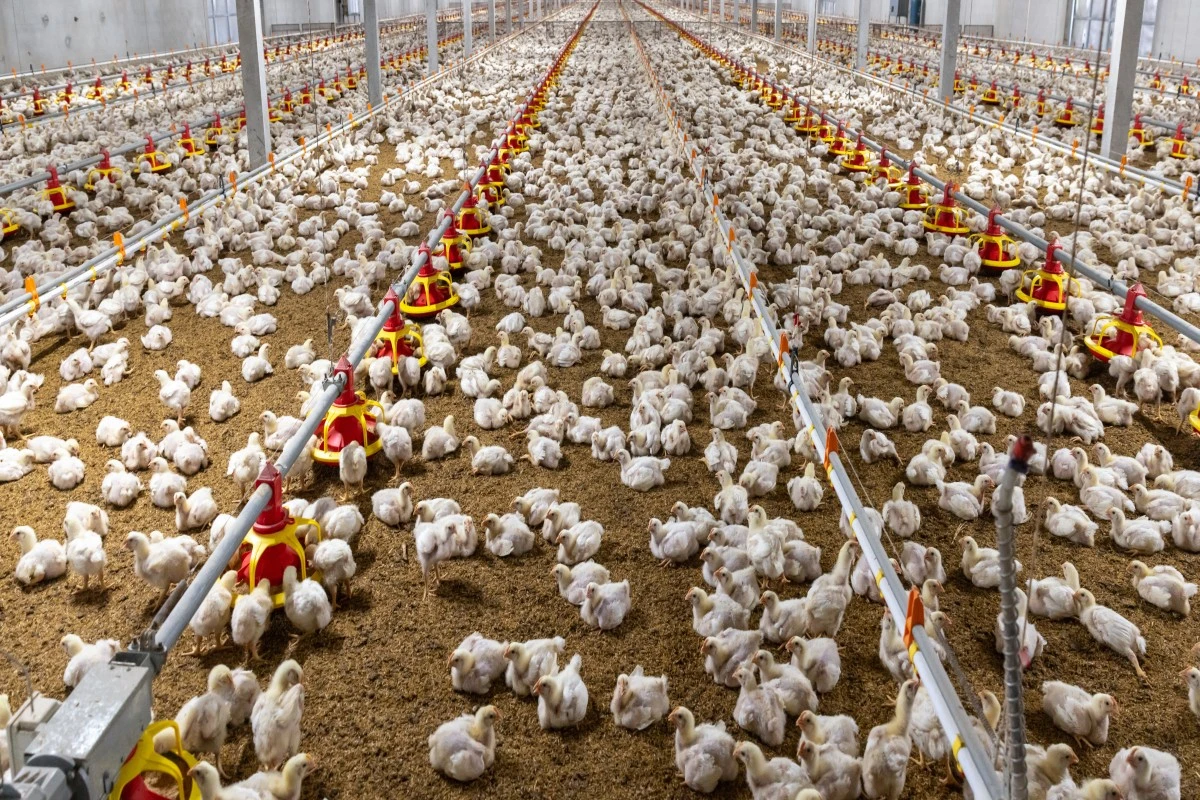 Campylobacter is a major food safety challenge, with poultry a key source of exposure and a leading cause of bacterial food poisoning in the UK.
From laboratory to processing line
For the poultry industry, however, the biggest question is whether the laboratory results can translate into an effective intervention on a production line.
The research was conducted under controlled experimental conditions, rather than in a commercial poultry-processing environment.
According to the researchers, real-world processing presents considerably more variables, including the uneven distribution of bacteria across carcasses, the presence of organic material, the shape and surface characteristics of chicken, exposure times, and the speed at which products move through a facility.
Those factors could affect how much bacteria the technology can remove and whether it can deliver consistent results at a commercial scale.
The researchers therefore see the work as an important step toward evaluating the technology, rather than evidence that blue light is ready to replace existing food safety controls.
That distinction is important for manufacturers. Campylobacter control is unlikely to depend on a single intervention. Instead, processors use multiple barriers throughout production, from farm-level measures and hygiene controls to processing interventions, cold-chain management, packaging, and consumer guidance.
Dr. Aidan Taylor, from the University of Reading and lead author of the study, says: “Campylobacter is a genuinely nasty bug, and its sheer abundance in the food chain, combined with rising antibiotic resistance, makes it a really difficult problem to tackle.”
“What’s exciting about this light-based approach is that it doesn’t rely on chemicals or antibiotics at all, so it sidesteps the resistance problem entirely. We’ve shown it works against a wide range of real-world strains taken directly from UK poultry, including the multi-drug resistant strains that worry us most, and we can’t find any evidence that resistance could evolve.”
“That combination of broad efficacy and durability is what makes this such a promising option for cutting contamination before chicken ever reaches someone’s kitchen.”
If further research demonstrates that VB-PDI can achieve meaningful reductions under commercial conditions, it could potentially become another layer within that system.
There could also be implications beyond Campylobacter. The researchers’ findings contribute to a broader area of interest in the food industry: physical technologies that can reduce pathogens without relying on conventional chemical treatments.
Technologies such as ultraviolet light, pulsed light, high-pressure processing, and cold plasma are already being investigated or used in different food applications. However, their suitability varies considerably by product and processing environment.
What it could mean for consumers
Reducing Campylobacter contamination before chicken reaches the retail stage could lower the amount of bacteria that consumers are exposed to when handling raw poultry at home. It would not, however, eliminate the need for safe food preparation. Thorough cooking and preventing cross-contamination remain essential because even relatively low levels of contamination can present a risk.
The research also highlights a broader challenge facing the food industry as consumers increasingly expect manufacturers to improve food safety without compromising product quality, affordability, or other attributes.
Interventions that can work without significantly altering the food itself may therefore have particular appeal.
For now, blue-light treatment remains a promising research-stage technology rather than a commercial solution. The next step will be demonstrating that the results can be replicated on naturally contaminated chicken, at industrial processing speeds, and at a cost that makes sense for manufacturers.
If those hurdles can be overcome, blue light could become another tool in the poultry industry’s increasingly multi-layered approach to controlling Campylobacter — helping to move some of the responsibility for food safety further upstream, before the product reaches the consumer.


Upcoming webinars

2027 Food Safety Risks for Quality & Compliance Leaders
FoodChain ID
Formulating for function: Developing benefit-led beverages with natural colours, botanicals, and flavours
Givaudan Sense Colour
Let's reveal the grain potential: Innovate
Meurens Natural