




Beyond Meat signals shift toward nutrient stacking in plant-based foods


Key takeaways
- Beyond Meat’s Phytosphere concept reflects a shift from meat replacement toward multi-benefit plant nutrition.
- Roquette sees growing demand for plant protein combined with fiber and other nutrients across more food categories.
- Nutrient stacking creates formulation challenges around taste, texture, solubility, and processing performance.

Plant protein company Beyond Meat’s recent move toward nutrient stacking reflects a wider shift from meat replacement toward multi-benefit plant nutrition. The approach taps a broader formulation trend — combining plant protein with fiber, phytonutrients, and other functional ingredients rather than relying on protein alone.
Through its Phytosphere platform, Beyond has brought together powders, beverages, bars, and center-of-plate products that offer consumers combinations of plant protein and other nutrients, including fiber, polyphenols, and phytosterols.
The Phytosphere strategy provides a consumer-facing example of this shift. Food Ingredients First speaks with Benjamin Voiry, head of marketing Plant Proteins at Roquette, about what it means for ingredient formulation and how plant protein is moving into broader nutrition-led applications.

Plant protein moves beyond meat alternatives
Last month, Beyond Meat launched three new product concepts: Beyond Starcut, a savory plant-based jerky bar (17 g of protein), Beyond Starmatter, a plant protein powder combining 20 g of protein with fiber and phytonutrients, and Beyond Veggie, a vegetable-forward burger format providing 12 g of protein, 6 g of fiber, and nutrients from fruits and vegetables.
The Beyond Burger manufacturer has been expanding beyond its traditional alternative meat solutions against a backdrop of weakness in the wider plant-based meat category. Sales in plant-based meat declined by 26% in the two years to 2023, and consumer demands dipped.
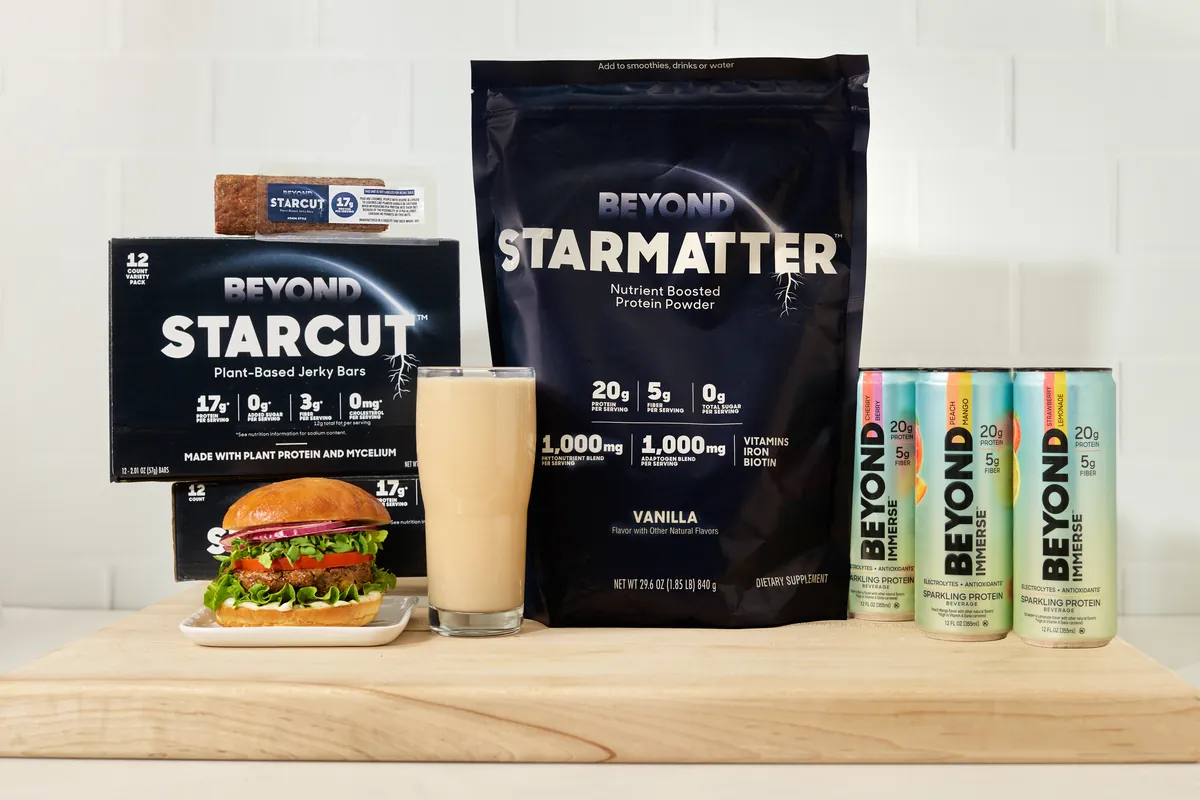 Beyond Meat’s Phytosphere portfolio lets consumers stack plant protein, fiber, polyphenols, and phytosterols across multiple formats (Image credit: Beyond Meat).Earlier this year, the company also expanded into functional beverages, tapping into protein fortification, gut health, and GLP-1–friendly nutrition trends.
Voiry agrees that brands are using plant-based proteins to explore more nutrition-led applications and products that deliver holistic health benefits.
This aligns with Innova Market Insights’ 2026 “Authentic Plant-Based” trend, with 55% of global consumers agreeing that plant-based foods should be considered as their own category.
Demand for nutrient-dense, convenient products is also being reinforced by online trends such as “proteinmaxxxing” and diets shaped by GLP-1 weight loss medication use, adds Voiry.
He describes protein as a “strong driver of innovation” but argues that the opportunity is increasingly about what plant-based formulations can offer beyond simply providing protein content in meat-free applications.
“Protein enrichment is also expanding, growing in everyday categories such as bakery and dairy, as well as specialized nutrition. Together, these developments point to a broader role for plant protein. It’s no longer confined to replacing animal proteins in meat substitutes.”
High protein evolves into multi-benefit nutrition
Beyond Meat’s Phytosphere concept exemplifies a broader move away from single-benefit positioning. The approach allows individual products to address several nutritional attributes rather than relying solely on a high-protein claim.
Voiry says this multi-benefit approach opens up opportunities to bring key nutrients together in convenient, appealing formats.
“As the category evolves, we expect communication to move beyond a broad high-protein position toward broader nutrition and health positioning.”
Combining complementary ingredients such as plant proteins and fibers can allow formulators to build products around multiple nutritional benefits, he explains.
Voiry cites Roquette’s Nutralys pea protein range and Nutriose soluble fiber as examples of ingredients that can be combined to support protein and fiber positioning while meeting the technical requirements of different applications.
 Benjamin Voiry: The key challenge is maintaining the consumer experience as nutritional content increases.“Roquette’s Nutriose 06 soluble fiber is designed for use in high-fiber snacks, supporting a balanced glucose response and prolonged energy release. Bringing ingredients like these together can help brands develop products with a more holistic nutritional profile rather than relying on a single proposition or message.”
“The right combination will, of course, depend on the application and the needs of the finished product.”
Multi-nutrient formulations raise taste challenges
For formulators, however, adding more nutritional components may increase technical complexity. Stacking proteins, fibers, minerals, and other functional ingredients can affect taste, texture, and processing characteristics, Voiry explains.
He identifies solubility, emulsification, and viscosity among the properties that can become more difficult to manage as nutritional density increases.
“The key challenge is maintaining the consumer experience as nutritional content increases. People have high expectations of taste, texture, and eating experience, whether they’re eating a standard product, a nutritionally enhanced version, or a completely new one based on multiple nutrients.”
He adds that ingredient selection increasingly needs to consider both nutritional composition and technical functionality.
“Advances in ingredient processing can improve their functional properties, giving formulators greater flexibility without compromising product performance.”
Nutrient stacking gains ground
The underlying approach behind Beyond Meat’s Phytosphere concept is increasingly visible elsewhere in the market.
The nutrient-stacking approach is appearing in finished products. Cargill, for instance, recently showcased a protein and prebiotic soda combining 5 g of protein with 5 g of soluble fiber, while plant-based nutrition brand Ka’Chava’s nutrition shakes layer plant protein with fiber, probiotics, micronutrients, omega-3s, and adaptogens.
The same concept is visible upstream in ingredient development. US-based Plantible has previously told Food Ingredients First that its Rubi Protein can simultaneously support texture, nutrition, and sensory performance, while its Lemna Leaf Greens ingredient combines protein, fiber, and micronutrients.
While these approaches differ considerably in ingredients, applications, and positioning, they point toward a similar direction of travel — plant protein is increasingly a part of a broader nutritional system rather than acting as the end proposition itself.
For ingredient suppliers, this transition creates opportunities beyond supplying higher concentrations of protein.



Upcoming webinars

Oat-Standing Ingredients - Showcasing Irish Grain Through Innovation
Tirlán Ingredients

2027 Food Safety Risks for Quality & Compliance Leaders
FoodChain ID

Formulating for function: Developing benefit-led beverages with natural colours, botanicals, and flavours
Givaudan Sense Colour