

Abolis CEO: How microbial intelligence reduces food fermentation trial-and-error


Key takeaways
- Microbial intelligence could reduce trial and error in fermentation scale-up.
- Multi-omics data can help manufacturers troubleshoot quality and consistency issues faster.
- Abolis highlights key opportunities in preservation, alternative proteins, flavor, dairy alternatives, and probiotics.
F&B manufacturers using fermentation and other microbial processes can produce large amounts of biological and process data, yet still struggle to understand why these systems behave a certain way, what to test next, or whether a promising approach will translate successfully to industrial scale.
That challenge reflects a wider biotechnology data gap. The European Commission notes that while high-throughput technologies have expanded genomics, proteomics, and metabolomics datasets, linking those data to biological traits remains difficult. This increases the need for computational tools that can integrate different omics datasets.
Biotechnology company Abolis Biotechnologies is positioning microbial intelligence as a way to tackle that bottleneck. The approach combines biological data and metabolic models to understand how microorganisms behave in food or fermentation systems and use those insights to guide R&D decisions.

Following its Microbial INtelligence Explorer (MINE) platform launch last week, Cyrille Pauthenier, co-founder & CEO of Abolis, speaks with Food Ingredients First about how microbial intelligence can help fermentation companies troubleshoot scale-up issues and identify more promising NPD pathways.
“MINE brings together microbial metabolic knowledge and multi-omics data, meaning genomic, transcriptomic, proteomic, and metabolomic measurements of the same system, with experimental and industrial context. It helps teams understand what is happening inside the system and narrow down the strains, precursors, or process conditions worth investigating,” he tells us.
“For food and ingredient companies, that means fewer experiments based on guesswork and more focus on routes that have a realistic chance of working at an industrial scale.”
Understanding fermentation scale-up bottlenecks
Industry experts have underscored fermentation’s potential for taste, texture, shelf life, and clean label formulation, while highlighting the technical expertise needed to produce products at scale.
 Abolis CEO Cyrille Pauthenier says MINE can reduce guesswork and focus development on routes with a realistic chance of working at industrial scale.Pauthenier says microbial intelligence can support new fermented products around taste, aroma, and raw material selection, while also helping manufacturers investigate shelf life, or industrial quality problems.
He points to fermented dairy as an example, where a plant may suddenly struggle to produce a product consistently, or where a newly duplicated facility does not deliver the same quality as the original operation.
“This can be explained by metabolic or microbials discrepancies over time or across locations. If you operate only on pH or temperature, it can take ages to troubleshoot your problem, while using multi-omic analysis coupled to a metabolic and phenotype elucidation will open the hood and provide explanations for the origin of those differences, enabling faster troubleshooting.”
Reducing trial and error
The economics of scale-up remain a significant hurdle. Innova Market Insights analysis highlights that the unique processing required for fermentation can increase production costs. Brands must find a balance between these costs and what consumers are willing to pay. Upscaling mistakes can also weigh heavily on companies’ finances.
Pauthenier argues that metabolic models and multi-omics data can help manufacturers prioritize which candidates and process conditions to test.
“Instead of screening large numbers of candidates simply because there is no better basis for choosing between them, metabolic models and multi-omics data can point you toward the organisms, pathways, precursors, or process conditions that are most promising.”
Experiments will still be required, he stresses, but the aim is to eliminate “weak or impossible options” earlier in development.
Microbial analysis can also help explain why particular cultures generate enzymes involved in raw material degradation, such as proteases and carbohydrate-degrading enzymes, as well as desirable flavor compounds or off-notes during fermentation, Pauthenier adds.
From clean label to food preservation
Abolis is also targeting broader food formulation applications, including ferment selection, product development, and reformulation.
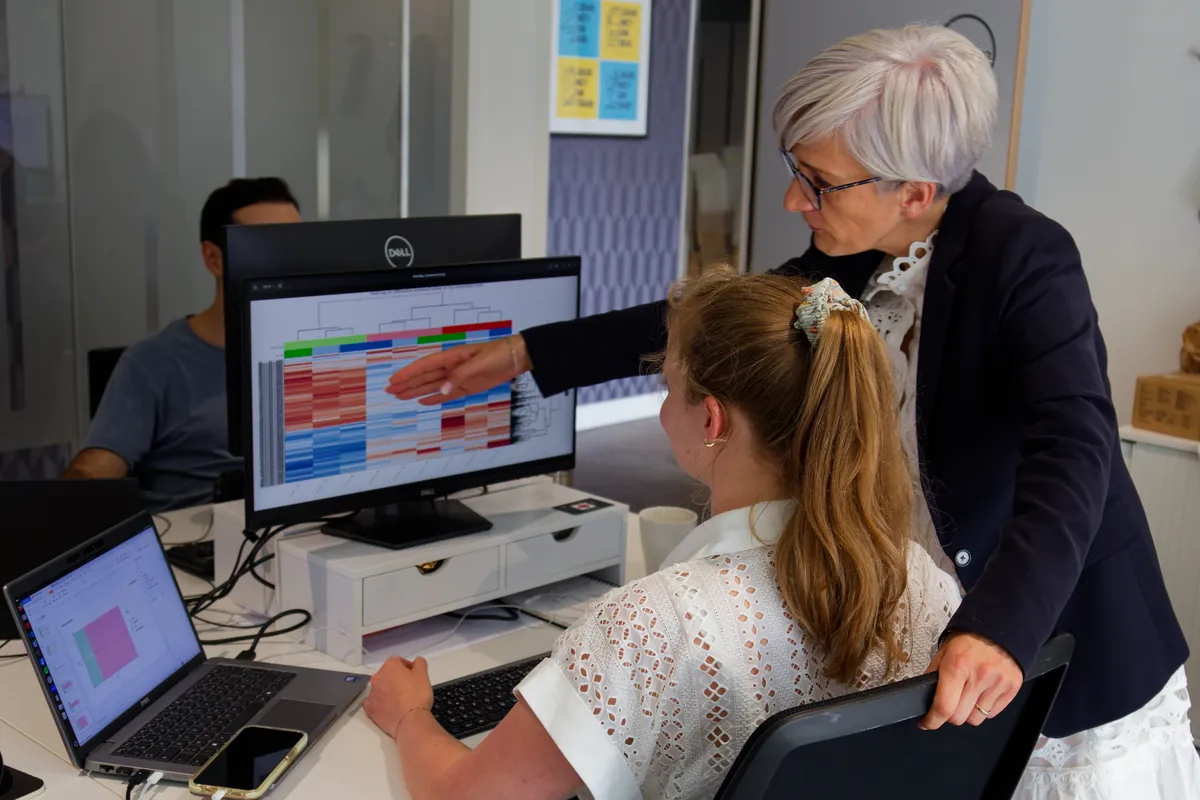 Microbial intelligence can help scientists use process data to identify promising fermentation pathways and troubleshoot scale-up challenges (Image credit: Abolis).Pauthenier says manufacturers could use fermentation to revisit existing products with a clean label approach, including plant-based foods where microbial cultures can modify texture, flavor, and digestibility.
He also argues that fermentation could reduce the use of additives in certain foods.
“Ferments can also be selected to create a bacteriostatic environment, increasing shelf life, and reducing the use of food preservatives.” He points to fresh foods as one potential application.
“For instance, vegetables, salads, and even meat can be preserved by introducing the right bacterial treatment on the surface, to prevent the development of rot or fungi, in the absence of heavy plastic packaging or argon treatment.”
Where microbial intelligence could go next
Looking ahead, Pauthenier expects the biggest change while working with AI and microbial intelligence will be in how quickly companies can decide which ideas are worth pursuing.
“A lot of development effort in food still goes into finding out that something does not work, often quite late, once time and money have already been invested. Metabolic models and multi-omics data let you make that decision earlier, which is worth more than any single experiment you avoid running,” he explains.
He spotlights five food and ingredient application areas that could emerge from AI and microbial intelligence advancements.
 Microbial intelligence could support future advances in dairy alternatives, sauces and flavor systems.“The first is alternative proteins, converting plant proteins and sugars into protein products that people actually want to eat. Food preservation is probably the nearest-term opportunity, because better protection for fresh fruit, salads, vegetables, and meat would reduce reliance on additives and packaging.”
“Then there are milk alternative products, and sauces and flavoring, where the challenge is sensory rather than nutritional. Lastly, there are probiotics selected for gut retention and a measurable metabolic effect in most of the people who take them, rather than just a small proportion.”
Regulation and validation remain constraints
While computational tools can narrow down development options, predictive models depend heavily on the quality of the biological and process data used to inform them. Promising candidates must also ultimately be validated experimentally and under industrial conditions.
For genuinely new ingredient categories, Pauthenier argues that the constraint is “not really technical.”
“Regulation and consumer acceptance are likely to move more slowly than the technology itself, and in many cases they will determine how quickly products reach the market.”



Upcoming webinars

Oat-Standing Ingredients - Showcasing Irish Grain Through Innovation
Tirlán Ingredients

2027 Food Safety Risks for Quality & Compliance Leaders
FoodChain ID

Formulating for function: Developing benefit-led beverages with natural colours, botanicals, and flavours
Givaudan Sense Colour