



AI’s food safety potential faces trust and data barriers, finds Cornell study


Key takeaways
- A Cornell study highlights AI’s potential to improve food safety through earlier risk detection and outbreak prediction.
- Data-sharing concerns and competitive risks are key barriers to AI adoption in food safety.
- The study calls for stronger data governance and collaboration to unlock AI-driven insights.

F&B companies recognize AI’s potential to strengthen food safety by identifying risks earlier and predicting outbreaks, but are concerned about data sharing and competition, a Cornell University, US, study finds.
The findings highlight the need for stronger standards around secure data exchange and industry collaboration as manufacturers explore how shared datasets can enable more proactive food safety management.
The researchers interviewed 27 food industry executives, food safety directors, and managers representing the dairy, meat, produce, food manufacturing, and food safety laboratory sectors for the study.
Concerns over losing control of their data once it leaves the company, data misinterpretation, and possible regulatory scrutiny were some of the key points raised.
Co-author, Renata Ivanek, professor in the College of Veterinary Medicine and co-director of Cornell Institute for Digital Agriculture (CIDA), says sharing confidential food safety data with competitors to generate AI-driven insights from larger datasets “is a tempting proposition.”
“It has enormous potential benefits, but also many ways to fail.”
CIDA and the USDA National Institute of Food and Agriculture’s AI Institute for Next Generation Food Systems supported the study. The University of California-Davis and the University of California-Berkeley were collaborators in the research along with Cornell.
Data sharing in food safety
The study, published in npj Science of Food, states that “voluntary horizontal sharing” of confidential food safety data among companies for joint analysis can improve food safety, efficiency, and decision-making, especially for rare events.
 F&B companies are concerned over how confidential food safety data is shared, stored, and used.However, despite its potential benefits, the Cornell research states that “horizontal data sharing in the food industry has lagged, with limited research exploring the reasons for hesitation.”
Lead author Linda Kalunga says before starting the research, she expected that companies would be hesitant to discuss sharing their food safety data, “especially when it came to collaboration with competitors.”
“I was surprised by how openly participants shared their perspectives. Many were willing to discuss not only the broader industry-level hurdles, but also their own company’s challenges, highlighting a shared recognition of the issue and a willingness to talk about potential solutions.”
The participants agreed that larger shared datasets could help companies identify trends and risks earlier and better understand rare foodborne outbreaks. It could also improve predictive models and give smaller businesses access to insights that would otherwise require costly analytics and R&D investments.
IFT’s president previously told Food Ingredients First that in food safety applications, AI can help companies analyze large datasets for identifying patterns. “This allows AI to identify when processes are trending toward a control limit before an unacceptable data point is reached, supporting earlier intervention in quality monitoring and risk management.”
Trust and technical barriers limit AI adoption
While companies recognize the value of pooling data, they struggle with technical barriers and a lack of trust that their data would be treated well, the study notes.
Companies are concerned that sharing confidential food safety information could expose operational weaknesses or provide competitors with an advantage.
“Once I give that data away, unless I’m absolutely confident that it’s protected, it can be used as a weapon against me,” one participant told the researchers.
Companies remain hesitant because the risks are borne by individual companies while the benefits are distributed broadly across the industry, Kalunga explains.
Besides data, technical barriers are also holding back AI use in food safety, the study notes. This is because food companies use different data systems, reporting formats, and levels of digital maturity.
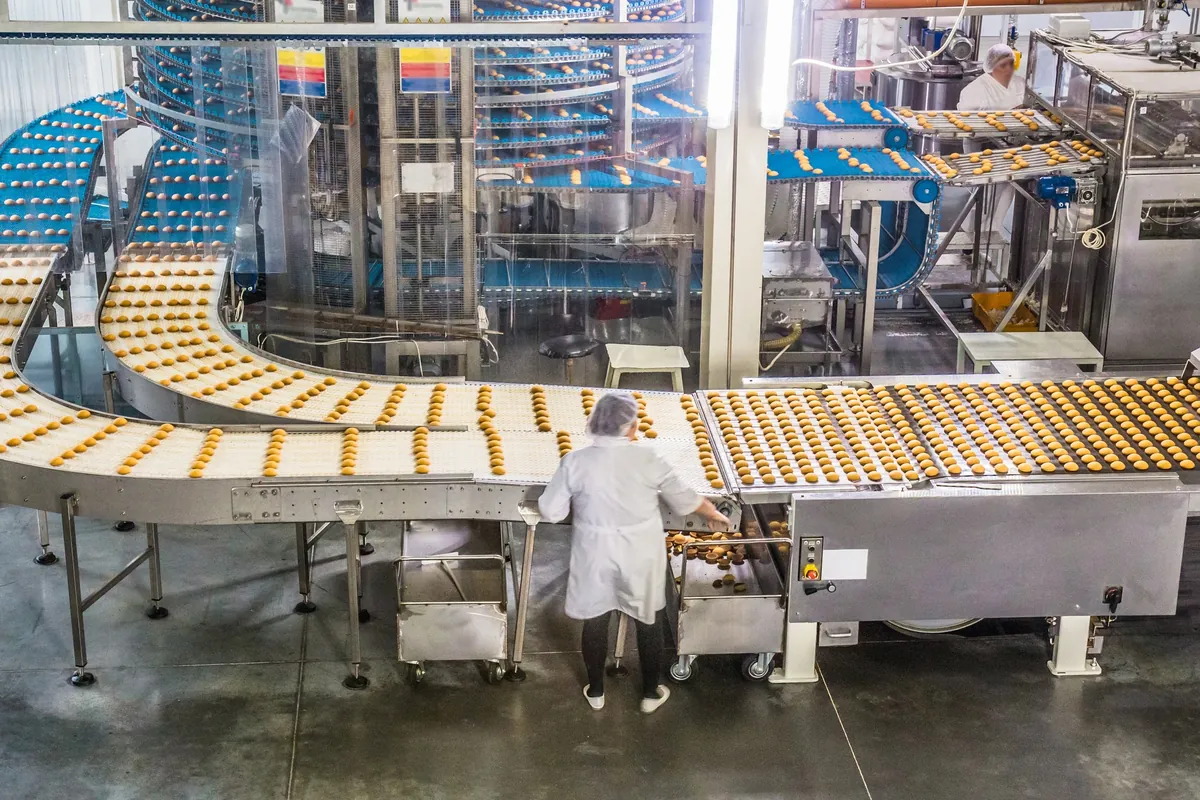 While food safety remains a priority across production lines, manufacturers are exploring data-driven approaches to improve decision-making.While larger companies may have advanced digital platforms, the Cornell research says smaller manufacturers may still rely on spreadsheets or manual records, which makes data integration difficult.
This is in line with previous reports on the F&B industry’s digital divide, where experts told us that outdated systems like manual workflows are stifling industry potential and slowing down innovation.
Calls for neutral collaboration
The study’s participants emphasize that collaboration between universities, industry organizations, or independent platforms could help establish rules for data governance.
Clear standards around ownership, privacy, and data use could make companies more willing to participate in AI-driven food safety initiatives.
The authors conclude that the study’s findings offer “timely insights to guide data sharing initiatives and prioritize areas for future research.”
“Taken together, the findings reveal underlying tensions between individual firm incentives and collective benefits, including uneven cost-benefit distributions, opportunism concerns, and participation cost asymmetries.”



Upcoming webinars

Oat-Standing Ingredients - Showcasing Irish Grain Through Innovation
Tirlán Ingredients

2027 Food Safety Risks for Quality & Compliance Leaders
FoodChain ID

Formulating for function: Developing benefit-led beverages with natural colours, botanicals, and flavours
Givaudan Sense Colour