


AAK launches cocoa butter equivalent amid cocoa price volatility and reformulation pressure

Key takeaways
- AAK launches ILLEXAO EN 10, a cocoa butter equivalent designed to improve enrobing performance at higher inclusion levels amid cocoa price volatility.
- The ingredient is formulated to maintain stable flow, reduce buildup in enrobing equipment, and support more consistent coating performance.
- Beyond functionality, the solution is designed to preserve premium chocolate sensory attributes, including gloss, snap, melt, and fat bloom resistance, even under reformulated recipes.
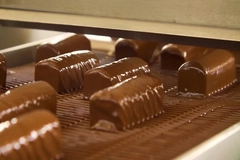
Specialty fats supplier AAK has launched a cocoa butter equivalent (CBE), which is designed to tackle one of the confectionery industry’s growing production challenges — maintaining efficient enrobing performance, as manufacturers increase their use of cocoa butter alternatives.
AAK’s new ingredient, ILLEXAO EN 10, comes at a time when chocolate manufacturers are under mounting pressure to reformulate in response to sustained cocoa price volatility, supply uncertainty, and rising production costs.
Across the industry, many producers have been increasing their use of CBEs — mainly vegetable fat alternatives that can partially replace cocoa butter to help manage ingredient costs.
Enrobing is the process used to coat products, such as chocolate bars, wafers, biscuits, and cakes, in chocolate. It has emerged as a particular pain point for manufacturers pushing CBE inclusion levels higher.

Delivering enrobing performance
Conventional CBEs can alter chocolate flow properties, increase viscosity, and contribute to buildup on equipment curtains and rollers, reducing throughput and affecting coating consistency. AAK says its latest solution offers improved processing efficiency, with potential reductions in energy use and waste.
ILLEXAO EN 10 performs much like cocoa butter, even at higher CBE levels, helping maintain smooth flow, consistent coating, and premium appearance and texture across enrobed products.
ILLEXAO EN 10 was developed to maintain the sensory characteristics consumers expect from premium chocolate, including gloss, snap, smooth texture, and clean melt performance. The ingredient also supports crystallization stability and resistance to fat bloom.
“Manufacturers are facing unprecedented raw material price pressures, but consumer expectations remain unchanged. This means reformulation poses a risk, and getting it wrong could prove costly. AAK’s ILLEXAO EN 10 solves the production challenges associated with the use of cocoa butter equivalent at high levels, ensuring a straightforward enrobing process and a superb end-product that consumers will love,” says Morten Daugaard Andersen, principal research scientist, Chocolate Confectionery Fats at AAK.
AAK’s latest development also reflects a broader evolution in the role of specialty fats suppliers. Increasingly, suppliers are positioning themselves not simply as ingredient providers, but as process-performance partners helping manufacturers navigate complex reformulation challenges under volatile market conditions.
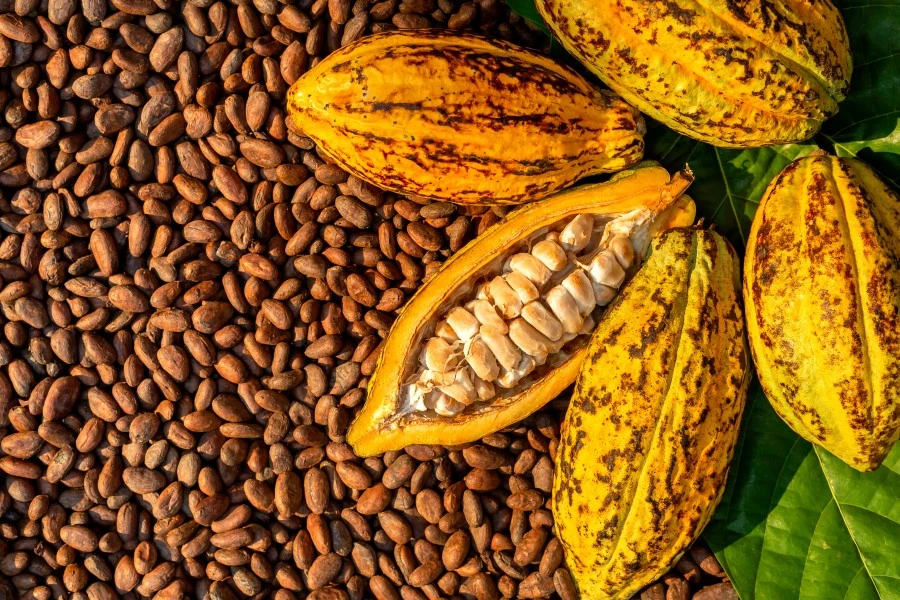 Sustained cocoa price increases have driven manufacturers to reformulate chocolate recipes, accelerating the use of cocoa butter equivalents and other alternative fat systems to manage cost and supply pressures.
Cocoa volatility keeps reformulation in focus
Cocoa prices have eased from the beginning of 2026, but have been going through a sustained period of volatility, as poor harvests in West African growing regions impact volumes and push up prices.
Reformulation has become a strategic priority for many confectionery manufacturers.
Cocoa reduction, cocoa-free systems, and alternative ingredient technologies have been accelerating recently, with major players exploring new ways to improve formulation flexibility and supply chain resilience. Meanwhile, chocolate is increasingly being repositioned as a functional ingredient platform, extending into protein, fiber, and reduced-sugar applications beyond traditional confectionery.
Alternative chocolate technologies gain momentum
Last month, Mondelēz International created what it claimed to be the world’s first milk chocolate bars made with cultivated cocoa butter. The cocoa butter was produced by Mondelēz’s strategic partner, Celleste Bio, using its cell suspension culture technology.
UK-based Fermtech raised £2.5 million (US$3.3 million) in April to scale Koji Cocoa, a cocoa alternative made from cocoa shells using fermentation, and offers cost savings to manufacturers.
Similarly, Italian foodtech company Foreverland secured €6 million (US$7 million) in funding to boost its organic cocoa-free alternative, which helps confectionery manufacturers reduce exposure to cocoa price volatility, and future-proof ingredients.
Earlier in 2026, Puratos, via its venture arm Sparkalis, invested in cultured cocoa with California Cultured. It is designed to match traditional cocoa in taste, melting behavior, viscosity, and performance across bakery, patisserie, and confectionery.
Barry Callebaut has also been investing heavily in chocolate. In February, the company opened a global innovation center in Singapore, featuring the “world’s first” AI center of excellence for chocolate. This closely followed Barry Callebaut joining forces with Planet A Foods to scale ChoViva, a cocoa-free chocolate alternative made from sunflowers and oats.
The next phase of cocoa reformulation is expected to focus less on substitution alone and more on ensuring production efficiency is not compromised in the process.



Upcoming webinars

2027 Food Safety Risks for Quality & Compliance Leaders
FoodChain ID

Formulating for function: Developing benefit-led beverages with natural colours, botanicals, and flavours
Givaudan Sense Colour

Let's reveal the grain potential: Innovate
Meurens Natural