


Beyond cereals: Beneo pushes fiber into beverages, meal replacers and confectionery


Key takeaways
- Fiber is expanding from cereals, bakery, and snacks into beverages, meal replacers, and confectionery.
- Gradual intake “gut training” and dose thresholds are important when formulating for tolerance and benefits.
- Beneo says fiber-plus-plant-protein combinations work well for satiety and better-for-you indulgence.

Research suggests that most consumers still fall short of recommended fiber intake, even as many look for everyday ways to manage appetite, blood sugar, and weight. Meanwhile, industry experts point to a growing interest in foods that encourage the body’s own GLP-1 response. At the same time, fiber is moving beyond its familiar home in cereals and breads into drinks, meal replacers, and even sweets.
Food Ingredients First speaks with Imen Ouerdiane, sales director EMEA at Beneo, about how chicory root fibers, barley beta-glucans, and slow-release carbohydrates can help brands meet expanding fiber demand.
Ouerdiane tells us how manufacturers can raise fiber levels without upsetting digestion, why indulgent categories are being rethought as better-for-you options, and how pairing fiber with plant protein can support fullness in new product formats.
How do you approach digestive tolerance when fiber inclusion goes up?
Ouerdiane: Within the field of sports nutrition, we often hear about the training effect. What is less known is that dietary fiber can also offer this training effect benefit, as it essentially trains your gut. With current fiber intake being relatively low, the gut needs to be trained for and eased into higher fiber amounts.
This means that consumers should start slowly and with small amounts to kick-start the training routine. It doesn’t take much to start seeing benefits: as little as 3 g/d of inulin or oligofructose delivers a prebiotic effect, while higher — but still realistic — amounts (8–12 g/d) support digestive health, mood, and weight management. While for beta-glucans, 3 g/d is enough to deliver a cholesterol-lowering effect. Possible on-pack claims depend on the regional regulatory requirements and conditions of use. Imen Ouerdiane, sales director EMEA at Beneo.
Which categories are driving fiber demand for you at the moment?
Ouerdiane: Fiber demand in Europe is currently being driven most strongly by everyday staple categories where “high or added fiber” is already a familiar cue. Looking at new product launches with a “high or added fiber” claim in Europe between 2023 and 2025, breakfast cereals account for the largest share, followed by snacks and bakery.
In Nordic markets, snacks have even overtaken cereals and bakery as the top category for high or added fiber claims. Consumer attitudes also support the bakery category as a key platform for fiber in Europe, with 60% of UK consumers agreeing that bread is an important contributor to their fiber intake.
These findings confirm the traditional main applications for fiber enrichment. But rising consumer interest is opening up innovation opportunities in applications such as beverages, meal replacers, and even confectionery. Combining soluble and insoluble fibers with different health benefits, such as chicory root fibers with barley beta-glucans or combining fibers with plant-based proteins for nutrient-dense solutions, will also inspire new products.
Where do you see the biggest opportunities for fiber in beverages and meal replacers?
Ouerdiane: Figures show that 38% of global consumers who have heard of prebiotics have purchased prebiotic beverages in the last 12 months, demonstrating how this category is benefiting from the growing fiber focus.
Melting tea gummies with chicory root fiber and smart carbohydrate isomaltulose demonstrate the innovative opportunities for new beverage concepts. When dissolved in hot water, they turn into a tea infusion that can even offer a prebiotic effect. Other beverage categories can also benefit from a fiber boost: prebiotic chicory root fiber can be included in a ready-to-drink coffee, for example.
Meal replacers and yogurt drinks are another ideal application for fiber enrichment, offering the potential to combine plant-based protein and fiber to support nutrient density and satiety — a key focus for weight-conscious consumers.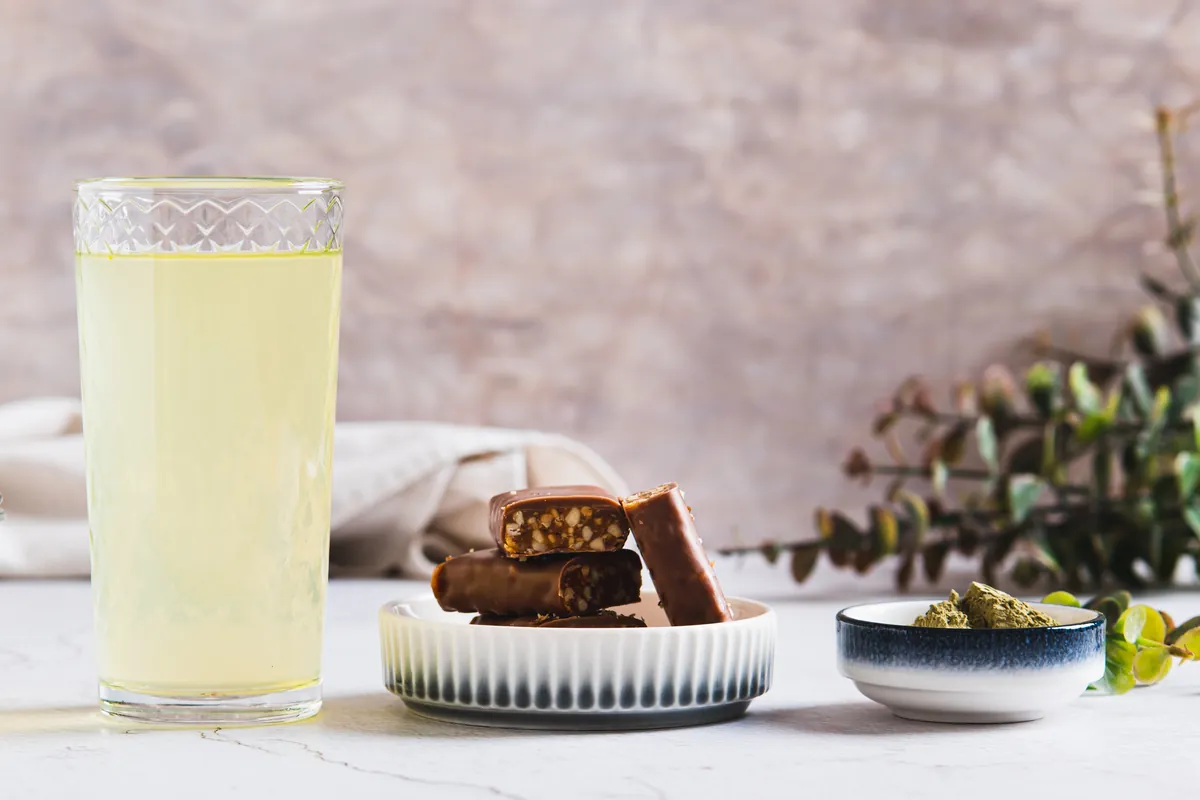
Ouerdiane points to beverages, meal replacers, and confectionery as fiber’s next growth frontier.
The application experts at the Beneo-Technology Center have showcased such product potential with a plant-based, ready-to-drink chocolate meal replacement. Thanks to the inclusion of faba bean protein concentrate and Orafti Inulin chicory root fiber, a 500 mL serving supports satiety and allows for high protein and fiber claims.
With the addition of Beneo’s low-glycemic carbohydrate Palatinose, the drink also promises a reduced blood glucose response and natural GLP-1 stimulation. This further enhances its appeal among the large number of global consumers interested in food and beverages that stimulate GLP-1 hormones naturally.
How do you see fiber fitting into confectionery and snack formats?
Ouerdiane: Moving beyond traditional snack formats, confectionery is another category with emerging potential for fiber enrichment. That’s because consumers increasingly want more functionality as the perception of indulgence shifts from excess toward better-for-you options. In fact, figures show that 73% of global consumers wish they had healthier options in indulgent food or beverage categories.
More than one in three aim to reduce ingredients perceived as unhealthy, while more than one in five value the addition of functional benefits. Gummies or chocolate with reduced sugar and high fiber content are great examples of the potential for confectionery to increase appeal with consumers.
Lastly, savory snacks like crackers or tortilla wraps are ideal for including whole grain barley flour rich in beta-glucans.




Upcoming webinars

Oat-Standing Ingredients - Showcasing Irish Grain Through Innovation
Tirlán Ingredients

2027 Food Safety Risks for Quality & Compliance Leaders
FoodChain ID

Formulating for function: Developing benefit-led beverages with natural colours, botanicals, and flavours
Givaudan Sense Colour