


- Industry news
Industry news
- Category news
Category news
- Reports
- Key trends
- Multimedia
- Journal
- Events
- Suppliers
- Home
- Industry news
Industry news
- Category news
Category news
- Reports
- Key trends
- Multimedia
- Events
- Suppliers
As agricultural production faces challenges, and the risk of supply shortages increases, Symrise is looking to future-proof supply chains. Barbara Malmezat, global purchasing and risk director at Symrise Food & Beverage, Naturals, talks us through the Secure Sourcing Campaign, a project that aims to ensure business continuity through sustainable sourcing strategies.

Welcome everyone, this is Elizabeth Green.
As agricultural production faces challenges and the risk of supply shortages increases, SymRse is looking to futureproof supply chains.
Barbara Malmazat, Global purchasing and risks Director at Symrise, joins us today to talk through a project that ensures business continuity through sustainable sourcing strategies.

Hi Barbara, welcome and thanks for joining us.
Can you firstly share some background?
Welcome.
Can you firstly share some background on how the secure sourcing campaign came about?
How does it match with Symrise's key strategies for sustainability?
The reason why we started this secure sourcing program is that the context around the production of agricultural raw materials is becoming more and more complex.
First of all, climate change.
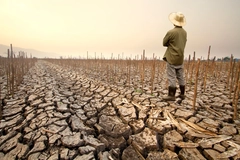
Since 2022, we are experiencing very concretely how climate change is already impacting production with multiple examples worldwide of floodings, heat waves, fires.
As an example, the heat wave frequency tripled in the last 60 years in the USA.
Second, geopolitical change, sadly we see the surge of wars, commercial wars, rates of insecurity, sometimes to oil price or drug deal that tremendously disturb global trade flows.
The consumers are asking for more transparency, sustainability, clean labeling for what they have in their plates, and at the same time, we have regulatory and legal constraints that are rising for food safety and the environment, in particular in Europe.
Global population keeps increasing and it becomes less and less certain that global production can feed the global population, and that creates tension between rich countries that can pay for enough food and the others.
Therefore, the risk of supply shortage is growing very fast, and overall the level of risk is increasing for all the steps of the food supply chains from farmers to food and beverage manufacturers to end consumers.
So when it comes to SIMRRIS, SIMRI has already put in place a sourcing with purpose approach on one side and a responsible production and consumption on the other side.
The sourcing risk purpose approach defines 3 layers of sustainability targets that drive for more transparency and traceability, and the secure sourcing roadmap is within this approach, a new way based on risk management to ensure business continuity through sustainable sourcing strategies.

OK, fantastic, thank you for that rundown.
So why is secure sourcing more important than ever in food ingredient supply chains?
As I said, in the current context of agricultural raw material production, the number and the level of risk is increasing at all steps of the supply chain.
Risk for the growers who see yields decreasing, production costs increasing, and price volatility, which develops uncertainty, and unfortunately it does not necessarily cover the cost.
And that situation is forcing farmers to become less loyal and more opportunistic, in particular for annual crops as they switch to less risky or costly crops or more profitable crops.
Then risk for natural ingredients suppliers, and that is the risk of shortage of raw materials from one year to the other with high price volatility, and it also creates a risk on the quality of the fruit and veg that we can get.
Then risk for the food and beverage manufacturers to be delivered in volume and quality.
Not even thinking of the price increase they have to pay.
And finally, the risk for the consumers who may not find all the products they want in the shelves of their supermarkets.
So, we are seeing something happening right now, which is that the power balance is starting to shift from the end of the value chain where food and beverage manufacturers and retailers were putting a lot of price pressure over the last decades to the beginning of the value chain.
With producers that are in the position to say if you want the volume and this quality, give me the price I want.
Mhm, mhm, OK, super interesting.
And then what strategies has Symrise implemented to secure ingredient sourcing and what has been achieved through the campaign so far?
In 2022, we started to anticipate these growing concerns about this context and its consequences, and we initiated what we call a secure sourcing approach.
Our in-house agronomists have started to assess a wide range of fruit and vegetable species from Acerola to mushrooms, carrots, cranberries, addressing risk related to water, weather events, access to labor and land, loss of interest from farmers, among other factors.
The project themselves in the long term, and this long term risk assessment was the basis to define key strategic directions to mitigate those risks.
Based on this analysis, we were able to define a roadmap with 5 key pillars, and that involves such things concretely like, implementing regenerative agricultural practices, using smart agriculture tools, covering soil to sequester carbon, or, identifying drought resistant varieties.
OK, thank you, and then in your experience then, what are the biggest challenges ingredient suppliers face in terms of sustainability and ingredient sourcing, and how, how can they be overcome?
The biggest challenge that ingredients suppliers face and must overcome are first to ensure business continuity in this context of massive changes, and that means bringing to our customers secured volume and quality and limited price volatility.
And that means identifying and addressing weak points together with our customers and propose innovative supply agreements.
Another key challenge is to set up and measure KPIs on sustainable agriculture, and that means reliable data on environmental footprint and moving from an obligation of means to an obligation of results.
And last but not least, we are convinced that most of the solutions will come from a close collaboration with networks of local partners.
And so we send a warm invitation to all stakeholders, including farmers, public, organizations, research institutes, NGOs, to contact us.
OK, Barbara, thank you very much for your insights.