

- Industry news
Industry news
- Category news
Category news
- Reports
- Key trends
- Multimedia
Multimedia
- Journal
- Events
- Suppliers
Suppliers
- Home
- Industry news
Industry news
- Category news
Category news
- Reports
- Key trends
- Multimedia
Multimedia
- Events
- Suppliers
Suppliers
Joyjit Saha, R&D manager and Saurabh Kumar, senior business development director, share their insights on the current food safety practices and using predictive models and AI to minimize R&D spend and accelerate product development. They also discuss the emerging need for an extended shelf life and control of resistant lactic acid bacteria and spore formers for improved food safety.
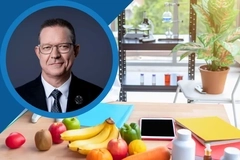
Hi, this is Insha Noreen from CNS Media, journalist at Food Ingredients First.
Kerry has recently unveiled a new food protection and preservation lab in Wisconsin, US to test the effectiveness of food safety protocols.
And today I'm pleased to be joined by two guests from the company, Joijit Saha, R&D manager, and Saurab Kumar, senior Business Development Director FPP, to share their insights on the significant development.
Welcome both of you.
Thank you so much.
Thank you so much, Isa.
Welcome.
So Saab, can you start by telling us about the latest consumer trends you are observing in the food safety practices?
Absolutely.
Kry food protection and preservation is a key strategic growth figure for Cry, and we have been making strategic investments over the last years to create a food preservation powerhouse to meet the food industry needs, and this is underpinned by scientific investments and scientific research.
The key trends that are driven by the consumers are sustainable nutrition.
Sustainability is a key focus by the consumers.
Less food waste, food hunger focus to make sure that we are extending the shelf life by using ingredients and thereby making sure more population have access to, to nutrition and food is also a key driver in the industry and the consumer.
And enhanced food protection.
There are different risks that are being outlined with the new research and, and new processing and new supply chain conditions, and to manage those risks, yeah, there are, there are key needs as.
Clean label and natural ingredients are also a key driver from the, from the consumers in this area, which requires a very specific set of research and.
And in a data-driven science to meet the needs.
There's also a preference for fresh and refrigerated food area, not, not, canned, and that also gives a new challenges as.
And there's also a drive for minimalistic processing to give more, you know, less processed, more fresh appeal.
All these needs of the trends, food industry is under a lot of pressure to meet those under, you know, accelerated timelines and the R&D spend is also under pressure.
Hence, the industry is looking for advanced analytical tools, AI tools, and predictive modeling.
And scientific research to be able to meet those needs and ultimately to drive value throughout the chain and that's what Kerry is investing and is working towards the goal.
I see.
And moving over to Joy, can you please tell us more about the new lab and what activities it will focus on?
Yeah, like Sara mentioned that this lab would focus on all the food protection and preservation technologies, and the new lab that we built here is a 21st century state of the art la lab, and it has all the robotic technologies and also a world-class team of researchers.
That are dedicated to the food protection research and the needs.
The lab is a part of our global food protection hubbub labs.
We have other labs that are spread across the global regions, across Europe, across, in Asia, and also in the Latin regions.
And this has all been strategically built to kind of promote this high-end and the New age instruments to reduce time and effort and increase accuracy and using predictive model tools.
So all has been designed to reduce time and effort and giving that help to the customers that they need for their validation studies or any kind of validating their micro, say battery reduction or increasing shelf life, and it will do.
Most of the work that would be focused from this lab, would be on the three heads, and that is validation, study, shelf site determination, ingredient screening.
And this would also provide an accelerated solution development need, which would use a lot of predictive modeling tools, along with the lab data to kind of meet those needs.
And, as sort of mentioned, the food industry is under, pressure to innovate faster, consumer.
Needs require a lot of resources, and this lab would be a pivotal to those needs as a service to the customers to help speed up their turnaround times, product development, or any help that is needed with food protection or pathogen safety as of that matter.
That it sounds really interesting.
And talking about the lab and its certification, Kerry has also received the BSL 2 certification for the lab.
What does it mean and what impact will it have on the lab, and, how do you think the isolation of bacteria will help in maintaining food safety?
Yes, so BSR 2 lab, which technically means biosafety Level 2, which gives us a freedom to work on certain foodborne pathogens which you normally see as of that of Listeria, salmonella, or E.
Coli.
So that gives us a freedom to operate in that space, which means a great deal for the customers as as carry.
Because we have an in-house lab, which we can, validate all the ingredients for our customers to develop safe food and overall help in the process of reducing, food illnesses or recalls as of that manner.
So overall capability to conduct this kind of challenge studies in-house with these pathogens and develop safe food products is a great deal, for us, and we are really grateful that we can provide, these kind of services to the customers.
And in-house isolation capabilities of such strains also makes it, kind of makes us stand out in the crowd at which we can offer these services.
To the customers.
It helps, us, also the customers to, if they are thinking of any new product development or they're thinking of that extra food safety, insurance policy that they need, so we can all validate those studies, using biosafety to level, pathogens or organisms in our lab.
And, yeah, and overall, it will help us, develop very effective, food protection systems and strategies.
And give that extra bit of confidence to the customers.
OK.
So, when we talk about Kerry's ingredients specialty, Sarah, could you tell us about the techniques and ingredients that the company is exploring, to extend the shelf life and to reduce food waste?
Absolutely.
Carry has, in the food protection area the widest and deepest portfolio, food protection portfolio that is serving our food industry globally, and we have the mix of conventional clean label, natural and flavor systems that are developed in to particular region regulatory needs and customer needs as as such.
All that portfolio that we are, we have.
Over the years that are all scientically backed and we are continuously investing to make sure the latest research and science is built into the value proposition so that our customers can use our ingredients with very high confidence.
Our portfolio spectrum goes from conventional organic acid salts like acetate and propionates which have been the backbone for the preservation system for a long time.
And then moving across the spectrum over clean label and natural, we have, we have our fermentation-based metabolites which, which are based on organic acid, peptides, and different metabolites which can be labeled under clean label categories for our customers which provide food safety and shelf life solutions as.
We also have a dedicated plant extract portfolio which is, which we, I will also explain in more detail.
Also, Kelly is the global leader vertically integrated technology provider for vinegar portfolio.
We ferment our own vinegar, straight low pH vinegar.
And then we are using that in the industry as as we then transform that into higher pH buffer system, liquid and, and powdered buffet systems.
We also develop the systems which are combining a few different technologies together.
Sometimes the technologies cannot be combined due to different hurdles such as compatibility.
Such as, you know, hydrophobic coefficients, but Carry has a unique capability to unlock the value of these interactive chemistries and overcome those barriers so that the synergistic solutions can be given to the industry and that's our key focus as.
Carry also is the global leader in smoke portfolio, plant extract smoke portfolio.
And we are working in our innovation funnel to make sure all these technologies are being explored and next generation solutions are being developed for emerging needs.
Emerging needs in the industry are extended shelf life, resistant lactic acid bacteria, spore formers, gram negative controls.
So our innovation strategy is market-led, customer-driven.
So all our innovation is based on what does our customers need to meet the consumer demands and that it allows us.
To make sure that our portfolio that we are developing is relevant.
Also, all our portfolio is globally backed by intellectual property rights, as as fundamental science and research built into that, and that is a key differentiation.
The preservation powerhouse that Gary has built is continuously invested by scientific inputs, and we collaborate.
With the leading researchers across the globe to make sure that our science is world class and leading to meet those emerging and current needs, so we are staying ahead of all these elements by making sure our innovation funnel is 5 to 15 year forward looking.
And then when our customer needs it, whether it is through different technology deployment, we are relevant for our customers.
That's really insightful.
And talking about the future outlook, what can you tell us about Kelly's future plans in helping manufacturers have effective food safety practices?
Absolutely.
Sustainability, like we discussed, sustainable nutrition and, and reducing food waste, those are underpinning the development in the industry.
That means every, every customer is looking to reduce their carbon footprint.
At the same time, there's a regulatory landscape evolution, advanced technologies coming into place, which Requires us to reassess our food safety programs, our validation studies, so this requires an extensive res resource driven program for our customers which are sometimes prohibited just because of time constraint, resource constraint, or ecosystem constraints.
How Kerry is serving that is by investing in.
AI tools, predictive modeling platforms, and a dedicated ecosystem of data generation for food safety and shelf life needs for emerging platforms.
In our labs, we generate every week 10,000 curves, microbial curves globally.
To be able to analyze those which are, which is very difficult in the sense if you don't have state of the art data analytical architecture, and we are fortunate that Kerry has very unique data architecture groups so we can analyze those curves and generated data and convert that into predictive models.
Which are very scientifically bagged, and we will Take this, these tools to our customers and then help them minimize their R&D spend, accelerate their product development, and meet those needs with minimalistic resources, and this is a game changer that we are working for our customers at the same time, our customers are also trying to, like we mentioned earlier, trying to serve less processing.
Some of the customers are looking at us to complement or replace high pressure processing for reduced carbon footprint or also to add secondary shelf life, so Carri has developed a targeted portfolio of our fermented solutions to meet those needs, which is again published globally.
With, with science back then in collaboration with key academics.
And in light of regulatory changes and, you know, advancement in scientific methods, there's also a need for review of the current practices for food safety management systems and your antimicrobials and validation studies.
So, we are developing predictive models for shelf life and Listeria control food safety models, which will help our customers to do those thorough reviews with much more Powerful data banks with much efficient resource consumptions and you know accelerated timelines.
This is achieved by us by working in close collaboration with leading academics and we publish like as a preservation powerhouse every year we publish more than 60 to 70 posters, symposium, webinars, scientific articles globally in leading.
Food safety and, and microbiology conferences, along with leading academic and regulators.
And this lends a leading credibility to our research and that, you know, really helps our customers to trust and accelerate their product development.
And for us, we have been investing in this area for a long time.
And now we are seeing that all those strategic elements are able to serve our customers, so we are very happy to see the progression.