


A banner featuring a sample box and dried vegetables
Home
Videos
Innovation in Sustai...

Innovation in Sustainable Ingredients

04 Dec 2013 | DSM Food Specialties

DSM Food Specialities was the winner of the Savoury/Meat Innovation of the Year award at the Food Ingredients Excellence Awards 2013. Its innovative enzyme Maxipro HSP is a unique protease that is able to extract valuable protein from existing animal-based products, thereby offering the world a sustainable, tasty and cost-effective extra source of protein. Calculations show that if all pork and beef blood would be available for human consumption, an additional 65 million people could meet their protein need for a full year.
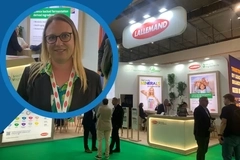
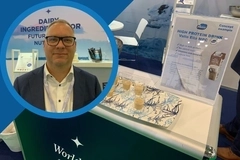
This is Rob Wires at the FIE in Frankfurt and I'm here with Hans Christian Ambierg from DSM Food Specialties, and DSM are highlighting a very innovative new product here based on enzymes for for a more sustainable kind of concept.

Can you tell me a little bit about what you're offering and the benefits?

Yes, I'm happy to do that.

Basically what we have done is to enzyme where you can apply.

Directly to blood and by adding the enzyme to blood you're able to separate the hemoglobin from the protein and thereby utilizing a source of protein that has not really been used to its full extent in foods, taking a basic ingredient from the waste stream and bringing it into commercial.

Exactly because we see a bigger and bigger need and request from the food industry to carefully look at the different side streams.

I'm carefully not using the word waste streams, but really the side streams and upgrade the value of those side streams, and I've got to say from a sustainability point of view we're very, very happy.

How to be part of that because we really generate value together with the manufacture of food products.

What type of applications is it suitable for?

You can basically take the protein that I press in the blood and apply that into a number of different meat applications because the protein is virtually no color, no flavor, just pure protein.

A good functionality in terms of water binding, mobility and so on, so it keeps its, it's, functional properties.

How does it have to be labeled?

It's protein and basically part of it can go into any meat products you would like to.

OK, when can we expect to see commercial applications taking place?

When can we expect to see commercial applications?

Hopefully very soon.

We're very excited about it.

We introduced.

The enzyme today is called MaxA4 ASP, and we're introduced basically here today at the FIE in Frankfurt.

It cannot get more new than that.

OK, it can get more new because you've you've also announced recently that you're going to have some new technology related to.

Fermentation of stevia.

Can you say a little bit about what that's going to be?

We have already announced it to a certain extent during our market capital, Capital day, that one of the examples of our power in innovation in biotechnology, we're going to apply that in terms of also in the area of producing stevia biofermentation.

OK.

Thank you very much.

Thank you much.

More videos

Image