

- Industry news
Industry news
- Category news
Category news
- Reports
- Key trends
- Multimedia
Multimedia
- Journal
- Events
- Suppliers
Suppliers
- Home
- Industry news
Industry news
- Category news
Category news
- Reports
- Key trends
- Multimedia
Multimedia
- Events
- Suppliers
Suppliers
Cargill innovates to “new heights“ while sharpening customer co-creation strategy
27 Nov 2023 | Cargill
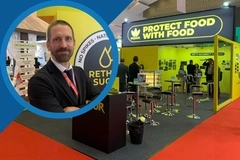
In conversation with Food Ingredients First, Geert Maesmans, Cargill group R&D leader, details how the company innovates to “new heights” to co-create with customers. Cargill is positioning itself beyond an ingredient supplier to set new standards for innovation and collaboration. We discuss future trends and regulations, investing in research, innovation, safety, food application, formulation and scaling capabilities.
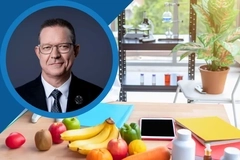
Hi, this is Gaynor Selby for Food ingredients.
First, I'm here with Hurt Masmans from Cargill.
Hi Hert, thanks for joining me today.
Very welcome, Gaynor.
Hello, how are, how are you?
I'm very.
I'd like to dive straight into, some questions, some things that we're gonna talk about today, because I understand that the enterprise has, has got a new name and a new sort of expanded strategy as you focus on key growth spaces in 2024.
So let's start there.
So how about the name and outlining the strategy?
Happy to, and thank you for that question.
We're, we're changing our name from our previous food ingredient in bioindustrial space to what is nowadays going to be called Cargill Food and bio.
And in Cargill Food and bio in that enterprise, we have two parts that we're focusing on.
One is what we call our cargill food solutions, which might interest most people here, and the other part is cargill bioindustrial.
And that name change really comes from listening to first and foremost our customers.
And, and next to the stakeholders related to that because from those interviews and from those checking on what's going on in our markets we've learned that more and more people are looking at us to do a little bit more than what we did previously.
So not just being a reliable supplier of the ingredients on which we're very proud.
But also bringing much more growth ambition, bringing much more innovation to them and helping them out with their challenges that they face on, for instance, sustainability.
And because of that, we're really going through this change now and, and for us it, it really means that we are changing.
We're embracing much more an approach where we come with much more integrated solutions to, to our customers and to the world, and it's, it's really about that.
It's changing.
The way we interact with customers, it's changing the way we're trying to bring solutions on that.
It's really, it's, if you want more detail, it's really 4 big things that we're trying to get there.
It's it's bringing innovation at a different level, embracing collaboration, co-creation much more.
Right?
That part, it's about being much more comprehensive in the solutions that we offer rather than just having single ingredients.
How can we help by showing customers and by working with customers and really showing that total of our portfolio?
It's the thing I said earlier, it's about sustainability.
It's clear.
And, and for instance, this year alone, Cargill is aiming to, to take some 60,000 tons of, of CO2 out of our supply chain.
So that is really helping customers in that space.
And then it's really that coherence across our entire portfolio.
It's how do we bring all of that together and make sure that the whole makes sense and we can truly become an innovation and a growth partner for our customers.
That's what it's about.
OK, I see, it sounds really interesting because your position in the enterprise is, is, like you say, it's going beyond an ingredient supplier.
And you mentioned those kind of four pillars there, but can you explain a bit more about what you mean by this and how it sets the new standards for innovation particularly and for collaborating?
What that might look like.
Yeah, I think we're all in the same industry, right?
So we all know that with growth in global population and with all the challenges that we face as an industry, we have to grow and we have to start doing things a little bit differently, and that is what we're talking about here.
If you look at the macro trends, if you look at the triangle that we're all playing in between, call it health and nutrition, sustainability, and at the same time affordability.
In that changing context of what consumers want today, but also that changing concept, context of what regulatory environment, for instance, and societal needs are offering, we have to show up differently, and it's really what we're trying to do here is really try to integrate those different challenges that our customers have, have and come up with the right solutions for that, because if our customers cannot stay ahead of where they're going and where consumers are going, then we'll all be in trouble as, as an industry.
And that is why we really try to push it a little bit further than we've done so before.
We've, we've got some pretty interesting and some good examples of that already.
So for instance, in example, in China, we are selling flavored syrups, so not just the pure sweetener, but the flavored syrup, and that goes then to people in tea shops and people in coffee shops in Turkey.
Our teams are developing cooking oils.
And selling those to the markets.
Or another example might be the efforts and the investments we're doing in, in specialty chocolates.
We're, we're bringing the, we're not only just bringing it together in a different way, we're also continue to invest and make sure that we have the right things going on there, so that customers have an integrated solution and can have that option to, to, to offer that to the market.
The thing, the additional element I could maybe refer to is that we're adding also or we continue to deliver those services around what we offer.
Like for instance, we have in Europe, we talk, we talk about infuse as our system where we bring together ingredients and for convenience of our customers, but also as a way of sharing what we've learned about ingredient interactions.
We provide blends of ingredients and additives for them.
That's one other example.
OK, it sounds that there that the examples of collaborations will obviously be different across different geographies and you'll be able to kind of like tailor make depending on what your customers' needs are.
Yeah, yeah, exactly, because the starting point for what we're trying to do is really what consumers and what our customers want.
And given that that is different across different categories across different regions, we have to create that flexibility inside of Cargill to make sure that we can, that we can answer those questions in the right way, right?
Sure.
OK, so what can you tell me about some of the investments in the research and the innovation and the scaling capabilities that we might see?
Yeah, we continue our journey there and we push it to a new level, and that's so because if you think about it, we, we, because your question has different elements in there.
So, so yes, our, a lot of our inventors, if you like, are people from the R&D family, but they're not exclusively coming from there.
But the innovators that we have in the business come from the entire enterprise and, and in a, in a way, if you think about innovation as a team sport, then we absolutely want also our suppliers, other partners, startups, definitely also our customers to be on that same team because the innovation needs to be delivered and only shows up if it is something relevant for, for, for consumers, right?
And so in order to do that, we first and foremost invest in people.
Innovation as a team sport is a people sport, so we keep investing in our people and making sure we have the right technical expertise, the technical depth that we, that our people, that our people need and the people that the scientists that can help building these solutions, that's one.
We do need journalists.
We need, we need to invest.
In people who can bring things together.
We're investing deeper and differently in how we go to market in our marketing, activity itself, making sure that we do understand what's happening on markets and what, what is relevant for consumers and customers.
And then lastly, maybe also our networks of, of people that are playing actively innovation innovation network.
How, how do we co-create with customers?
How do we co-create with, with startups, for instance, is part of that people investment play.
So you will see it.
Because we've really created a dedicated center of deployment for innovation in our enterprise.
You, those people inside and some of our partners will see that we have created an innovative studio, really a training, moment where people can, can come and learn how, how to do things differently and how that changes.
So that is, that is the first big part of, of our investment.
Second big part of our investment really has to do with the fact that, yes, innovation is, is work.
It's even, it's even really hard work.
So you need to create the environments and the spaces and the tools that people have for that.
And so we've, we've recently, we, we keep investing in facilities and upgrading our facilities to make sure that we can host people and that we can find the right spaces where we can bring all these different things together.
And then I'm talking about recently we've done a beverage innovation center in China.
We've opened our innovation center in India.
We just opened our tropical Foods Innovation Center together with some, some other players in the industry in in Brazil.
In Wil in, in our Brussels area, we, we keep expanding and growing the, the, the teams we have here is about 200 people already in innovation working here.
We invest in that and you might have seen earlier that we've also opened.
The house of Chocolate, close, it's very close to one of our, our chocolate factories, but it's really a place where we can bring customers in and, and focus really on all things chocolate related, and, and in a few days you can have all the experts there together and you can really push things forward.
So that's really is that that investment next to people, the investment in really in facilities in places where we can do things together.
And then thirdly, I would say that not only with our pilot plans, but, but also as Cargill, we have the luxury of being a global company and a global corporate.
So that allows us really to help people also scale because again, innovation in a lab is one thing, innovation only lives in the real world and with real consumers, and therefore we need to be able to reach them and we have that global reach.
We have that global opportunity to reach scale and to set up the right supply chains.
And to set up the right delivery moments on that.
And lastly, I would say internal, but that's an internal discussion.
We are investing in, in things like innovation board on how we govern innovation, but we also have an , a venture fund, and that venture fund that we have there truly invests also in startups that do make a difference into that food system.
And that's how we can help people as in growing that.
So we really try to build it as an innovation ecosystem.
That allows really us that allows everybody to go from that idea all the way until it's, it's on the market and until consumers can benefit from that.
That's the approach that we're taking right.
OK, so what about the, the newly developed strategy and how it's being applied across the categories?
I know you're targeting established categories like bakery, confectionery, beverages and so on.
So what can we see there?
And then what about the newer development spaces such as plant-based, dairy and meat alternatives?
Mhm.
Yeah, that, that's a very broad question.
But maybe to start with, with some of those at the end, like I said before, we're trying to really focus on what consumer needs and what the planet needs.
It is that triangle between Health and nutrition, sustainability, affordability.
If that triangle gets too much out of balance, things don't show up on markets neither.
And some of these categories will have a higher ask for things like sustainability.
Some other categories will have a higher demand or a higher need for more nutritional or more health in the solution, and that's how we're trying to build it, really build it from market back from, from what consumers need.
Are we doing the right things there?
And for us internally, it means then that if we have that understanding of where a certain category is going to, then we need to do and do the homework internally that looks at which of our different product lines are already good elements or good, good parts of building that solution for consumers to start with.
And if we don't have them in the portfolio, then where can we find them?
Like we, like I said, we, we don't want to do everything on our own.
We are looking for partners and we are working together with, with other people.
And, and if need be, we will create some of those products or new building blocks that help to reach that, that final solution.
Yes, some of those newer, categories that, that you mentioned there, if you talk about meat alternatives, or dairy alternatives, those are good examples of where, we're currently playing and we're very active and we're, we're participating in that, in the growth of that business.
But we're still also not very, very happy with where we are.
We do see that consumers are still asking for other things an improvement in taste, improvement in texture, improvement of nutritional profile of those things.
And so those are the ones where that relative contribution on what is it that we innovate and how do we change new ingredients, new opportunities that help formulate in that space are more important than in some of the others.
But at the end it comes down to the same logic.
It's we have the advantage of being able to look at the different components of these solutions and thereby building a total integrated opportunity for consumers and for markets that fits their needs better than what it does today.
And that's how we're trying to tackle it.
It's a It, it plays again along those different lines.
If, if you talk about those people looking for sustainability, we do have a couple of these things, already in place and we're building them across value change if you like, because if it doesn't happen on the agricultural side, then of course consumers won't be able to access it and be benefited and that's why.
We have initiatives on that.
Some of them, for example, re, regen agriculture projects that we have, in Europe, which we're expanding also over different countries.
In Turkey, we have a program which we call 1000 Happy Farmers.
We're, we're working on that part and so each time we're helping farmers to bring things.
We are, working even at the supply chain at transportation things.
We have projects ongoing where we're using, where we work together with others and we bring wind energy, for instance, on boats and, and our, and our wind wings, solution is they're really helping to reduce and increase the sustainability of, of transportation solutions and it really goes across.
The whole value chain and that's what we mean by Cargill being able to really leverage all of these connections anchored by connections is one of those drivers of strategy that we were talking about and this is how this is some examples of how.
OK, interesting.
So just going back there to the plant-based space which obviously you, as you say you're participating in.
And that's been, that's been around now for a good many years and it's evolving and it's hit some roadblocks recently, perhaps on the taste and texture and consumers demanding more from a clean label perspective and all that kind of stuff.
So.
Those are the challenges and the opportunities that remain in that space and and you're really kind of looking in that direction too.
Mhm.
Yeah, we are because it is part of that big challenge that we're all facing, right?
So if we, I think if you look outside, everybody understands what's going on.
If you look in that growth in world population, global population that we see, then most of us understand that we'll have to keep strengthening and building out that food system as we have.
And, and plant-based is a big part of that, and it's, and, and no, it's, it's, yes, it's old, and a lot of people historically, it's always been there.
We, we know tofu and Saitan and tempe and those kind of things for many, many centuries already, but, but we're not there yet and people are asking for more and so there is more work that will have to be done in that entire formulation space, and I'm calling it on purpose like that because It's not only protein alternatives.
It also needs to be how do you adjust and how do you, how do you make sure that it has the right lipid and fat content that goes into that space?
How do you make sure the fiber is balanced so that you can formulate and make something that consumers really, really like and will buy again?
And so building that up over those different areas.
It is going to take more research.
It is going to take more innovation as.
A plant-based, we're not going to stick to only plant-based burgers and plant-based, plant-based sausages in the dairy space as.
There's quite a lot of things that already happened, but people are looking for more.
People are looking for different, and that solution in a, in a, in a meat space or meat analog space will be different than in a dairy and a dairy analog space.
And then we're not even talking about the whole world of hybrids that's coming in there, where we will have to learn and get deeper and how do you combine these different things and how do you make sure that the combination between maybe something plant, plant-based, something animal-based is, is getting the right customer appeal, the right, the right price points, the right customer's liking.
So from that point of view, we're really trying to build that up from, do we have the right building blocks.
Where can we find partners, people that can help us with, with that, and you, you might have seen some of our recent investment in startups like, like, like Beeflike or C Cubic Food or Coco.
We're, we're really trying to embrace and look for anybody who can help us and make that change faster.
Because that's part of our challenge that we see.
We see that the world really needs this, but we also want to make people aware that there is a certain urgency that we all have to start embracing in order to get there.
The historical innovation rates that we had as food, as food industry are probably not sufficient anymore for where we're going now.
So, and that's why we're pushing and that's why we're really reaching out to people.
We think it's a, it's a great moment in the history of, of food and agriculture, because it's needed and that need for people drives really that urgency that drives that willingness to collaborate and to create different types of value chain, different types of how people play.
So, so it really is moving and we're really looking forward to that.
OK, let's finish then about some of these trends that you mentioned, the sustainability and alternatives or protein alternatives and all those kind of things.
So how do you see them evolving as we go forward and how's the company anticipating future trends?
Maybe like cultivated meats and all that kind of thing.
Yeah.
Yeah, again, again, a very wide question, right?
So the way we try to anticipate and try to understand what's going on is that we do look at markets and we have a couple of proprietary tools on how we look at that and how we see those trends happening.
We call them, we look at ingredient, ingredient trackers.
We look at things that we call trend trackers that really looks at consumers and at markets.
Macro, but also in very specific trends.
And then we complement that with how we know and how we're watching technologies evolve and technologies mature, right?
And, and how does that, we, we, together with also how regulatory environments evolve and how things change in there.
The changes that we see in the system, like I said before, it's, it's the three big ones are still there, right?
So it is like, How is health and nutrition needs changing?
What are sustainability needs, driving and triggering this change, and how does affordability and, and simply the price and the cost of what we can offer for people, how does that change in that changing consumer context, in the changing regulatory context?
And that's how we, in that space, we try to bring things together.
And then you do see, we do see a couple of those macro trends coming back.
The trend for A cleaner label that's been out there for a while that is probably going to continue for a while because no, we're not good enough yet because if we change.
Ways of extracting ingredients if we change, if we want to reduce the amount of energy and water and whatever we need to create the right type of ingredients that will create the need for reformulation as.
So it's not just the ingredient that needs to be cleaner, it's also we need to adjust the formulation technologies.
And the formulation, yeah, even the ways of how things are formulated and put together on the market.
So that is going to continue and we push on, on that.
We just want to flag that because people sometimes underestimate the level of complexity that comes with it.
A lot of these ingredients were developed and that we're used to.
They work very precisely and therefore will, will never go away.
We truly believe that they have a space.
But how do those newer ingredients, how do you formulate that and integrate it with the rest?
And again, it's something where we believe that co-creation and working together between different people is something that is pushing us further, but definitely there, the label, how it's recognized by consumers, the sustainability dimensions on it, how, how does that, how does that play and how does that play out, what needs to change there, those are some of the crucial things.
So, so that's definitely one of them.
The, the other ones we called out, for instance, are things like, like plants and plant popularity.
And then yes, that has dimensions simply for people liking that has dimensions of sustainability that has for some people who don't want to eat meat anymore, that has other implications like ethical and animal welfare and so on as.
Now we try to again for us, we try to look at the different options that we have there and try to make sure that we can formulate and can make sure that we can feed people in a sustainable, reliable and safe way.
Not only this year, but also for the years to come.
And it does force us to really look at the different technologies and the different options which are, which are out there and which are available.
So we are looking at, , example, microprotein as a, as an alternative source of, of creating meat and meat analogs and, and we do have a partnership there with a company called Enough, that where we are co-working together in order to bring that to market.
Our venture fund is investing in cell cultures and in meat cultures as , and so that is a continuous dialogue that we have with our colleagues in our meat businesses as.
It's, it's really changing and That whole historically for us as cargo food and bio being plant-based, that's what we've always done, right?
So we've, we've always built our solution based on things that we can get from agriculture and directly from agriculture, so it's not new to us, but it is changing in the way we look at what we call the 100%.
Because what we get from the farmer, we try to really use 100% of that with dust, which for us does mean that we're not only looking at how does it apply to food and how can it go into human consumption, we also integrate in there the opportunities it creates to use certain side streams in bioindustrial applications and in feed, of course.
And it's that, that whole interplay.
If we don't get the full value chain right where if we take 100%, which is coming from agriculture, and only and don't find outlets for that full 100% that we do, we're not going to get there.
And so those are the kind of things that we are looking for into that whole plant-based, and that whole plant-based story.
And maybe another one as an example is, is what we then call, I think we call it conscious consumption.
Yeah, my marketing colleagues, that we, we really think about people saying, how do we make sure that the food system remains sustainable?
Because, and that really has to do with Farming practices, but also making sure that we can minimize food waste and food losses that we'll work on those kinds of things.
And that again is a way that we try to work together across and we try to create solutions that people can access and that give, gives them the opportunity to, to at least be able to answer those concerns as.
And then for instance, we've done, we're working on our red seaweed promise is something where we do work with seaweed farmers and making sure that they have the right income, the right practices as on doing it so that our consumers of seaweed and seaweed derived products can be resting assured on that.
And the same is true for we've got a waxy corn promise, we've got a stevia sustainability program.
We have, cocoa-wise, we have palm-wise as, as ways of even digitally allowing our customers to assess, access where things are coming from and where things are, are going to, and, and all of these, and I, and I gave you earlier that example of, of the wind wings, right?
So that's another one where it's, it's not just the, the product in itself, it's also how does it get transported across the world.
And how do we make sure that we set up things from local supply chains where needed to global supply chains where they are more appropriate, but even on those global supply chains, how do we make sure that we maximize or we minimize our ecological footprint and maximize sustainability of that?
It, it is a, it is a way, I think we are really at this space of where Our world is changing and where partners are changing, where value chains are evolving, right?
Luckily, it's evolving and not, not a complete revolution because that would be another discussion that we could have then.
But you do see that it is happening and you do see that there is a need of urgency of being much more collaborative.
And again, it goes back to what we said in the beginning and why part of this strategy is really reaching out to others and trying to co-create, co-create across that, really across that entire value chain from, from agricultural suppliers all the way to involving consumers in some of the things that we're doing.
And that's an exciting journey and, yes, it's a lot of work.
Yes, it's a lot of, of, of things happening for us, but it's really interesting.
It's a really a nice moment for us.
Thanks so much for your insights and explaining some colorful examples and we wish you all the best with the future endeavors.