
- Industry news
Industry news
- Category news
Category news
- Reports
- Key trends
- Multimedia
- Journal
- Events
- Suppliers
- Home
- Industry news
Industry news
- Category news
Category news
- Reports
- Key trends
- Multimedia
- Events
- Suppliers
At a special Happy Hour event in Chicago, US, Food Ingredients First sampled a selection of innovative beverage concepts designed by ADM to inspire its customers. We sat down with Justin Solomon, category marketing director for alcoholic beverages, to discuss key consumer trends, including premiumization, health and wellness and affordability.
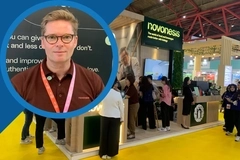
So this is Foo and Greens first reporting from the ADM Happy Hour event in Chicago.
I'm joined today by Justin Solomon, who is the category marketing director for alcoholic beverages.
Hi Justin.
Hello.
So, what is the purpose of this event this evening?
What are you trying to showcase and demonstrate?
Yeah, great question.
So this event is really to share some of the trends that we've been seeing out in the marketplace within beverages and then also to kind of get to know you better and, and.
Share what we do with you in more depth, OK.
And what type of role is the research that you're conducting playing in your formulation of these interesting beverages that you have on displayed today?
So, so I use a lot of research.
So we use a number of different data sources to try and understand really what's happening in the market overall.
So looking at what products are selling out in the marketplace, looking at.
What flavors are trending, where consumers are moving.
Sometimes consumers are going in different directions than they have before.
So we use a lot of research in my role to really try and understand the market and then predict where things are going to go in the future.
So in, in a nutshell, that's kind of my job around alcoholic beverages.
Sure.
And what are some of the sort of key consumer insights you're retargeting today?
Yeah, great question.
So, certainly one is around premiumization within alcohol.
So we're seeing a lot of products, a lot of consumers move toward more premium products in the marketplace.
So, products that might be at a significant price premium versus other.
Consumers, despite some inflationary pressures that we're seeing in the marketplace, we're seeing a lot of consumers still go toward those products because they like the way that product represents who they want to be perceived as as a person.
So those premium products really represent them as people, and they like that.
Another trend we're seeing is is toward health and wellness, so we're seeing a lot of health and wellness trends, so lower calories, lower sugar, lower carbs, and with that also lower alcohol within the alcohol landscape of.
When you think about calories, alcohol itself contributes towards a lot of the calories in an alcoholic product, so you're seeing consumers kind of go towards some lower alcohol products or alcohol free products in the market.
Another, another trend we're seeing would be, I, I call it more bang for your buck.
So consumers in North America are largely going toward higher ABV products right now.
It doesn't mean the kind of standard 4 to 6% ABV products are not doing.
They're doing very.
They are growing, but you're seeing pretty dynamic growth and kind of that higher than 8% ABV product.
So across the spectrum and ready to drink in ciders, in beers, you're seeing a lot of interest in that space and then at home entertainment is another big space we're seeing where consumers are really wanting to stay at home in order to save some money but still get kind of the flavor experiences of cocktails and things like that.
So those are kind of the four biggest trends I'd say that we're seeing right now in tracking.
And you mentioned the proliferation of low and zero alcoholic options.
How might that impact the more conventional alcoholic solutions?
Yeah, it's a great question.
So right now the low and no alcohol segment is still quite small in North America in particular.
It's much bigger within Europe, so the alcohol-free beer space within Europe is pretty substantial.
In North America it's really a developing market right now, I would say.
So you're.
Seeing a lot of new big players come into the alcohol-free beer space in particular, and that is also the most developed.
That's about 90% of the alcohol-free marketplace in North America is alcohol-free beer within cocktails and things like that.
That's really in its infancy right now, seeing a lot of new products coming out.
On the market, lots of consumer interest kind of building and coming right now, but beer is for sure the biggest space.
So then wine is the second biggest, so beer is about 90% of the market.
Wine right now is about 8%, so everything else is about 2% of that alcohol-free market space right now.
And do you expect wine, alcohol-free wine to challenge the domination of alcoholic-free beer?
Not, not in the North America market.
Beer is, beer is, beer is very large in North America.
It's definitely larger than wine.
I think you will see growth within the alcohol-free wine space as it becomes more widely available.
I don't believe consumers today really know that alcohol-free wine is an option in a lot of cases, so there's certainly an educational aspect to it.
I think beer has done a much better job of raising awareness about it as a as a segment of the marketplace that's an option for consumers that don't want to consume alcohol for whatever reason.
And of course sustainability and planetary health is also top of mind for many consumers, particularly younger consumers, in what ways can brands increase the.
Environmental credentials of their of their brews.
Yeah, so the biggest way we've kind of seen that come to life would be kind of locally sourced has been a big one.
Packaging is one way you see a lot of a lot of brands trying to play in that space.
It's also a difficult one because primarily within alcohol you're packaged in aluminum which can be recycled in glass which can also be recycled, so pack the packaging.
Of course there are other aspects that brands can play with to try and address that, but really you're seeing it primarily through the ingredients that that can that make up the product is where there's an opportunity to really play with sustainability and build the story.
Certainly a space brands are trying to figure out how to navigate still, but you are seeing some brands start to make some headroads in the space.
Let's bring in Justin, thanks for your time tonight.
Thank you.