


Vitafoods Europe 2026: From Starbucks protein foam to bone broth coffee, fortified foods go mainstream
Dairy is making a nostalgic comeback as a health ingredient delivery system


Key takeaways
- Flavor houses are moving deeper into nutraceuticals as bars, beverages, coffees, and vitamin formats become more indulgent, convenient, and routine-friendly.
- Dairy proteins are gaining renewed momentum as consumers prioritize protein quality, taste, and texture across GLP-1, longevity, and active nutrition trends.
- Starbucks’ protein foam rollout signals a mainstream shift toward functional foods that lead with sensory indulgence rather than overt health messaging.
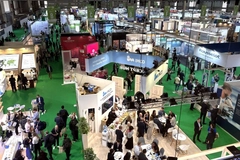
Health ingredients are getting delicious makeovers as the food and supplement industries increasingly converge. This notion was highlighted at Vitafoods Europe 2026, which took place in Barcelona, Spain, May 5–7. Food Ingredients First walked the show floor, where suppliers demoed fizzing probiotics, slurpable vitamin jellies, and an array of beverages, bars, and RTM soups packed with protein.
While taste has always been important for repeat purchase, the industry seems to be at a tipping point. Two French flavor houses — Mane Kancor and Prova — exhibited for the first time at Vitafoods, signaling an expansion of flavor in nutraceuticals.
Mane demoed two beverages created using the company’s own colors, flavors, preservation system, and a patent-pending botanical extract blend. Prova distributed samples of bars coated in luxurious chocolate, demonstrating their expertise in sweet brown flavors.
The first-time presence was no surprise to Melin Pasho, a flavor scientist at Glanbia Nutritionals, which acquired the flavor business Foodarom in 2020. Foodarom specializes in flavors for the nutrition industry.
“You can’t escape health when it comes to formulating food and beverages today. Food is health,” he tells us from the show floor.
Foodaroom showcased two flavorful beverages at the trade show. One was positioned for the beauty-from-within category, flavored with cherry blossom, ginger, and basil, while the other one was for hydration, flavored with refreshing green grape, cucumber, and lime flavors.
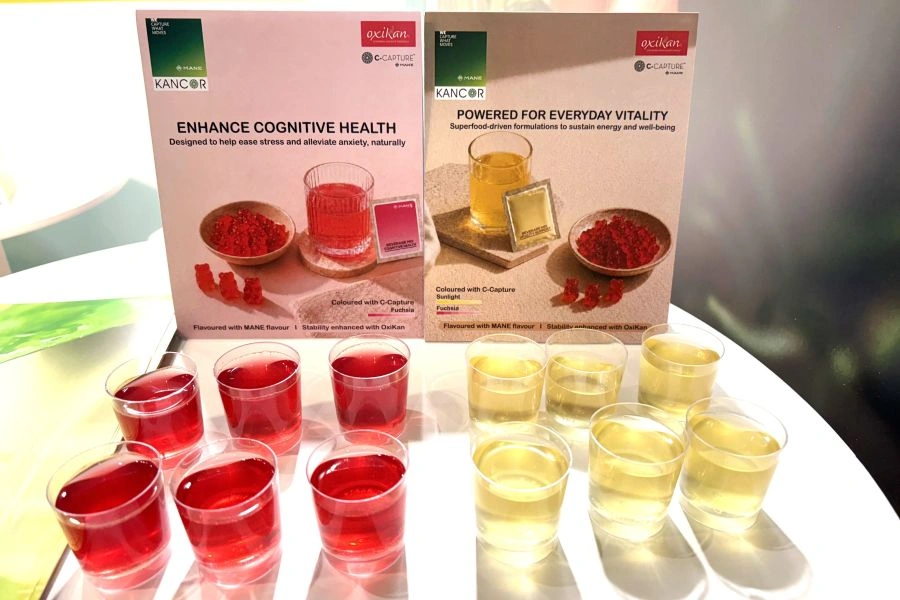 Mane showcased two drink prototypes using its own colors, flavors, preservation system, and botanical extracts.Among the most interesting fortification ingredients, creatine stood out as a top ingredient trend, positioned for improved cognition, sleep, and general well-being. Balchem promoted its power combination of creatine and magnesium in its Creatine MagnaPower from its Albion Minerals portfolio.
Meanwhile, Dutch company Qura Creatine showcased its highly dispersible creatine in a video demonstration that attracted visitors to its booth.
Vitamin D3 from light-activated mealworm flour was also featured in foods at the Nutriearth stand. The France-based company highlighted the new vitamin source, which is positioned for its strong bioavailability and high absorption rate that is “unmatched on the market.” Vitamin D-fortified fruit purees and madeleines are available today in senior living facilities using its N-utra ingredient.
Powerhouse protein
However, the fortification ingredient most focused on was protein. Demand for protein is only growing, as it sits at the intersection of three converging megatrends: GLP-1 consumer needs, longevity to support muscles in older age, and a social media-driven obsession with the macronutrient.
An Innova’s Trends Survey for 2026 found that three in five consumers are actively looking for more protein in their diets. However, the trend is higher among younger consumers, with 65% of Gen Z and 62% of Millennials eating more, compared to 55% of Generation X and 51% of Boomers.
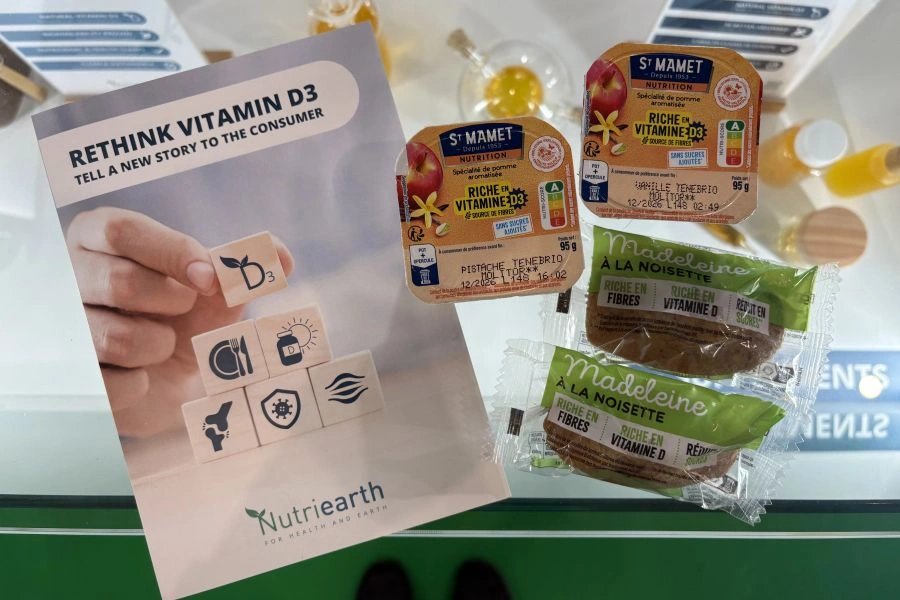 Nutriearth showed the versatility of its bioavailable Vitamin D3 ingredient produced in France.Those factors are putting increased pressure on high-value protein supply, which has made Europe an attractive market for US dairy ingredients.
“Traditionally, US dairy ingredients have not been very competitive with Europe, but because of the tight supply we’re seeing, the market is willing to pay more for whey proteins even if it means absorbing the price of US tariffs,” says Marina Crocker, senior director of product category and marketing at Hilmar, a US dairy supplier, which exhibited for the first time at Vitafoods this year.
Responding to the rise in demand, FrieslandCampina Ingredients recently announced the expansion of its whey protein capacity in the Netherlands, citing that the whey protein market is expected to double in value by 2033.
Floor van der Horst, marketing director of performance and active nutrition at FrieslandCampina Ingredients, explains that the industry today is rediscovering the goodness of dairy.
“A few years ago, dairy was under a lot of pressure from a sustainability perspective, and alternatives were on the rise through plant-based proteins and fermentation. Today, we see a bit of a dairy revival. Proteins are becoming a cornerstone of nutritional formulations, and consumers are leaning toward dairy proteins as a credible, nutritious product.”
.webp) Niina Gerritsen, customer development manager, Valio, at Vitafoods Europe 2026.Niina Gerritsen, customer development manager at Valio, sees similar trends in a renewed appreciation for dairy. “Consumers are paying more attention to the quality of protein over the quantity. It’s not about packing in as much as possible anymore,” which also comes with its sensory challenges.
Niina Gerritsen, customer development manager, Valio, at Vitafoods Europe 2026.Niina Gerritsen, customer development manager at Valio, sees similar trends in a renewed appreciation for dairy. “Consumers are paying more attention to the quality of protein over the quantity. It’s not about packing in as much as possible anymore,” which also comes with its sensory challenges.
Dairy proteins also have formulation advantages in taste and texture. At Vitafoods, the Finnish milk and oat supplier provided samples of instant soups and oatmeal enriched with its Eila MPC 65 milk protein concentrate.
A jolt of protein
One of the most notable classes of fortified innovation on the show floor was coffee, coming on the heels of Starbucks rolling out protein foam across the US and Europe. The coffee chain introduced the dairy-based protein add-on in September 2025 in the US and Canada. Dunkin’ followed in the US in January 2026 with Protein Milk, which can be added to coffee, lattes, or refreshers. Additionally, this April, Starbucks released its protein cold foam concept in Europe, providing 15 g of whey protein per serving in vanilla and caramel flavors.
At Vitafoods, more than one supplier showcasing fortified coffee mentioned Starbucks’ foray into functional nutrition as an indication that consumers are ready for mainstream functional foods.
Essentia showcased its bone broth “broffee” concept, which can provide up to 10 g of protein per 100 g serving using its OmniBroth organic beef bone broth concept.
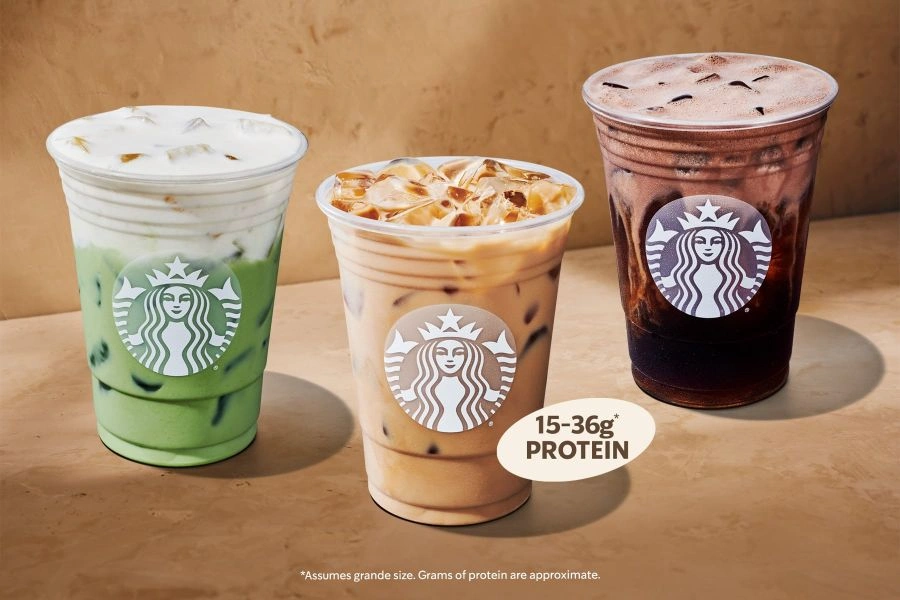 Starbucks rolled out high-protein coffee options across North America and Europe.“Coffee wins people over,” says Irene Plats, global marketing director for Essentia Proteins. She shares that coffee is a suitable application for bone broth because it has a great taste and it is a good masker. “There are no beef notes in the drink. We’ve had really good feedback from visitors.”
For Plats, incorporating protein into coffee is a natural next step — not just for the protein market — but for the coffee industry. “For the last ten years, consumers have seen the premiumization of coffee. We know the different types and styles of espresso drinks. The question now is, where do you take it next? You can capture a new audience when you add the benefits of protein and collagen that bone broth can provide.”
Ireland-based dairy supplier Carbery demoed an RTM protein coffee with hazelnut flavor with 20 g of protein per serving using its Optipep whey protein hydrolysate and Isolac whey protein isolate. Carbery presented its heat-stable protein in hot beverages some years ago, ahead of the trend that seems to only be accelerating.
“Protein coffee is hot at the moment,” says Fiona Rawlinson, head of marketing, citing the recent Starbucks launch and one from Butlers, an Irish coffee brand. “Butlers has come out with a whey protein concentrate foam with vanilla flavor. They charge an extra euro for it, and there seems to be a lot of interest in this space. We’ve had a lot of customers interested in tasting our coffee, and adding protein to either hot or cold applications.”
Carbery also showcased a vanilla matcha latte with 10 g of protein to round out the offerings for consumers interested in either tea or coffee, while FrieslandCampina Ingredients let show attendees try a high-protein RTD iced coffee as a grab-and-go option.
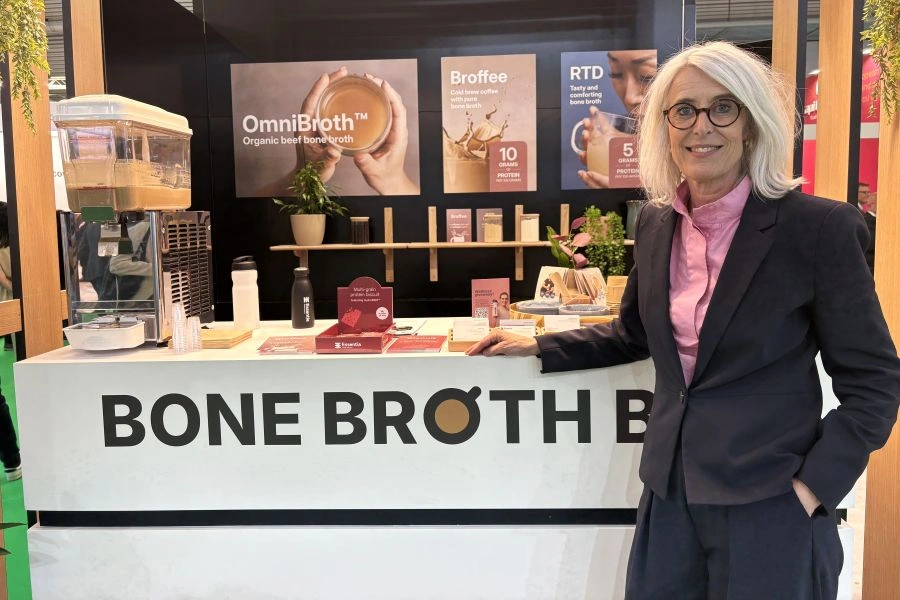 Irene Plats, global marketing director for Essentia Proteins.Coffee and tea flavors came up as some of the top trending flavors for supplements, as spotlighted by US-based Gold Coast Ingredients on the show floor. Examples included cappuccino, caramel latte, vanilla coffee, mocha, strawberry mocha, matcha, and vanilla chai.
Health meets indulgence
Great taste and texture experiences are becoming inseparable from health ingredients that fit neatly into a recurring daily routine. That was seen at Vitafoods 2026, and it’s also the takeaway from Starbucks’ cold protein foam launch.
The coffee chain’s marketing promotes the luxurious sensory aspects of added protein, rather than emphasizing health benefits or muscle synthesis. It is positioned as “a smooth, velvety layer that adds texture and flavor in a way that feels intentional.” Emphasizing taste and experience can help brands win when creating fortified and functional foods for today’s global market.



Upcoming webinars
Oat-Standing Ingredients - Showcasing Irish Grain Through Innovation
Tirlán Ingredients

2027 Food Safety Risks for Quality & Compliance Leaders
FoodChain ID

Formulating for function: Developing benefit-led beverages with natural colours, botanicals, and flavours
Givaudan Sense Colour